
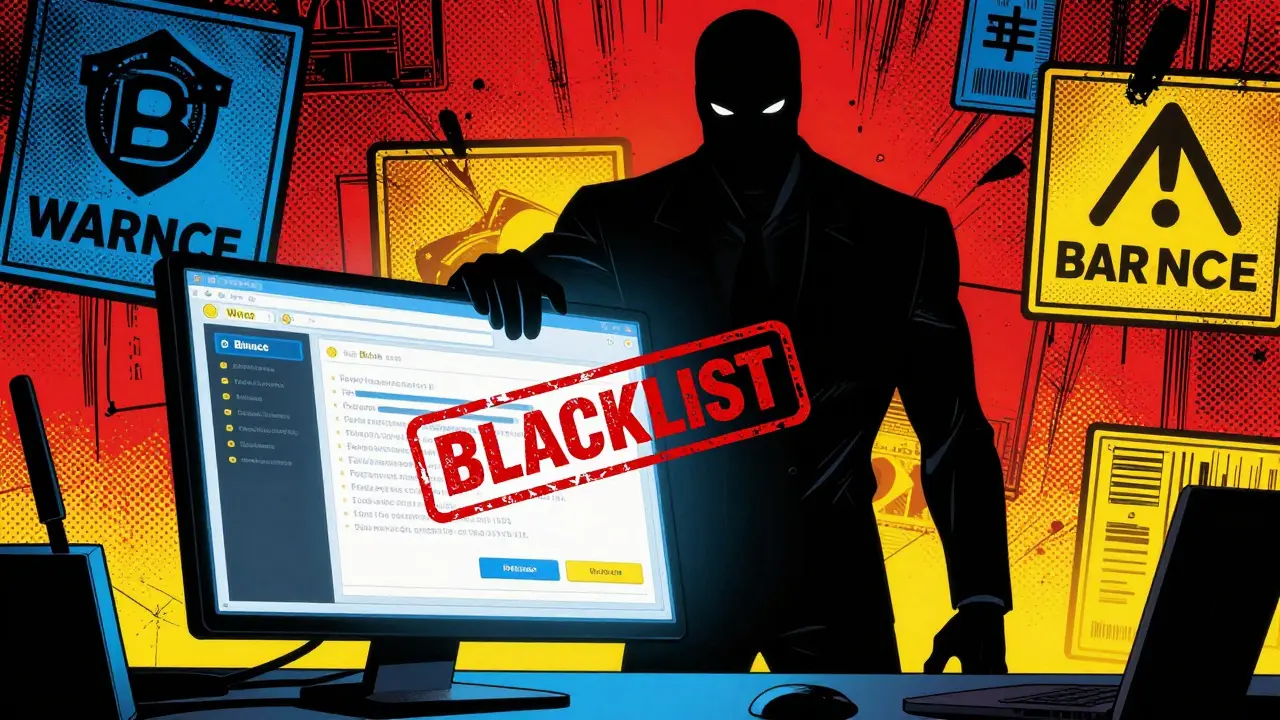
CommEX Crypto Exchange Review: Blacklisted Scam or Legit Platform?
Imagine depositing your hard-earned money into a platform that looks exactly like the industry giant Binance. The interface is familiar. The trading pairs are there. But when you try to withdraw your profits, the phone lines go dead, and email support vanishes into the void. This isn’t a hypothetical nightmare scenario; it is the reality for users of CommEX, a cryptocurrency exchange that has been flagged as a high-risk operation by multiple regulatory bodies and financial watchdogs.
In the crowded world of digital assets, trust is everything. You need to know where your funds are sitting, who is watching over them, and whether you can actually get them back. CommEX fails on every single one of these counts. If you are looking at this platform today, in mid-2026, you are walking into a trap that has been documented for years. This review breaks down why CommEX is currently on official blacklists, how it disguises itself as a legitimate broker, and what red flags you should never ignore when choosing a crypto exchange.
The Red Flags: Why CommEX Is on the Blacklist
Let’s cut straight to the chase. CommEX is not just an unregulated exchange; it is actively listed on the official blacklist of Traders Union, a prominent authority in broker and exchange evaluation. Being placed on this list means the platform has demonstrated behaviors that pose severe risks to investors. We aren't talking about minor customer service delays or slightly higher fees. We are talking about structural fraud indicators.
Here are the specific reasons CommEX has earned its reputation as a dangerous platform:
- Complete Anonymity: Legitimate financial institutions must disclose their ownership structure, legal registration documents, and physical headquarters. CommEX operates with zero transparency. There is no verifiable information about who runs the company, who owns it, or where the servers are physically located.
- Unreachable Support: Users report an inability to contact the exchange through standard channels. When you cannot reach human support via phone or email, especially during critical moments like withdrawal attempts, you have no recourse if things go wrong.
- Copycat Design: The platform’s interface closely mimics Binance, one of the world's largest and most reputable exchanges. This is a common tactic used by scammers to create a false sense of security. However, unlike Binance, CommEX offers none of the underlying security infrastructure or regulatory compliance.
- Offshore Registration: The entity is registered in Seychelles, a jurisdiction known for loose financial regulations and lack of oversight. While many legitimate companies use offshore structures for tax purposes, combined with anonymity and poor support, it becomes a major warning sign.
The absence of user reviews on trusted platforms like Trustpilot or Reddit crypto communities is also telling. A platform serving thousands of traders would naturally generate noise online-both positive and negative. The silence surrounding CommEX suggests either a very small, trapped user base or a deliberate effort to scrub any public footprint.
A History of Regulatory Sanctions
You might think that because crypto is new, regulation is still catching up. That was true in 2017, but even then, regulators were cracking down on bad actors. CommEX has a documented history of running afoul of authorities long before the recent market booms.
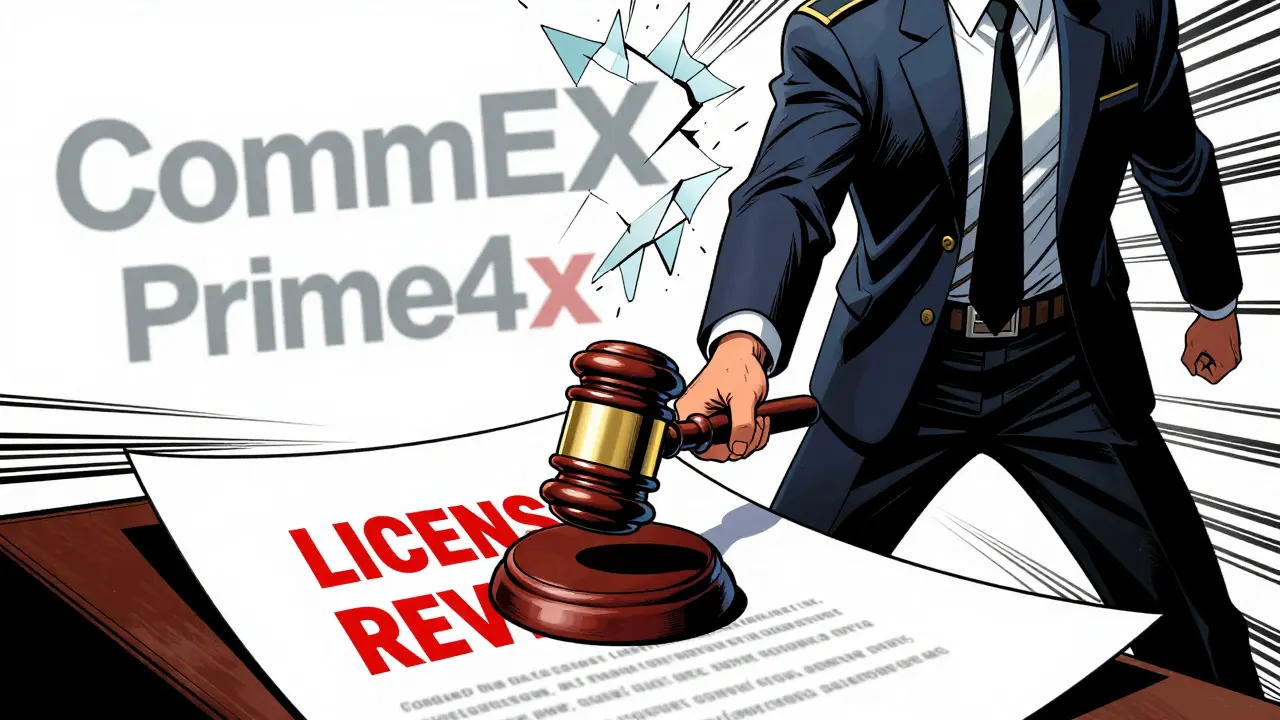
In April 2017, the Cyprus Securities and Exchange Commission (CySEC) took decisive action against the platform. They didn't just issue a warning; they revoked CommEX's operating license entirely. Furthermore, CySEC imposed substantial financial penalties totaling EUR 400,000. Sanctions were also applied against specific individuals associated with the platform, including Abdel Rahman Alimari and other unnamed parties connected to its operations.
This is crucial context. Many people assume that because an exchange is "crypto-only," it falls outside traditional banking laws. Not so. CommEX was operating under a license that required compliance, and it failed miserably. The fact that this happened nearly a decade ago, yet the platform continues to operate under a rebranded identity, shows a pattern of evading accountability rather than correcting course.
The Prime4x Connection: Rebranding Fraud
If you dig deeper into the operational background of CommEX, you will find a concerning link to another disreputable name: Prime4x. Research indicates that CommEX was previously operating under the name Prime4x, which was identified as a scam broker before the rebranding.
This is a classic move in the fraudulent finance playbook. When a platform gets too much heat, accumulates too many complaints, or faces legal action, it simply changes its name. It keeps the same backend technology, the same anonymous owners, and the same questionable practices, but gives itself a fresh coat of paint. For investors, this means the "new" CommEX carries all the baggage and risks of the old Prime4x, plus additional scrutiny from regulators who recognize the pattern.
Why does this matter? Because it proves intent. A legitimate business improves after criticism. A fraudulent business hides behind a new logo. CommEX chose the latter path.
Comparison: CommEX vs. Legitimate Exchanges
To understand why CommEX is dangerous, you have to compare it to what a safe, regulated exchange looks like. Let’s look at two industry standards: MEXC and Coinbase. These platforms represent different ends of the spectrum but share core principles of safety and transparency that CommEX lacks entirely.
| Feature | CommEX | MEXC / Coinbase |
|---|---|---|
| Regulatory Status | Blacklisted by Traders Union; License revoked by CySEC | Licensed and regulated in multiple jurisdictions |
| Transparency | Anonymous ownership; No legal docs available | Publicly traded (Coinbase) or fully transparent corporate structure |
| Customer Support | Unreachable; No phone/email access | 24/7 Live chat, email, and extensive help centers |
| User Base | Unknown; No verifiable reviews | Millions of users; High ratings on App Store/Google Play |
| Fees | Opaque; Varies unfairly based on status | Clear maker/taker fees (e.g., 0% - 0.6%) |
| Security Measures | None disclosed; Copycat design | Advanced encryption, cold storage, insurance funds |
Notice the disparity. Platforms like MEXC serve over 40 million users across 170+ countries. They invest heavily in security measures, clear fee structures, and robust customer support systems. Coinbase maintains high ratings (4.7/5 on Apple Store, 4.6/5 on Google Play) because they deliver on their promise of accessibility and safety. CommEX delivers none of this. Instead, it offers a shell of a trading interface with no substance behind it.
How to Spot Similar Scams in 2026
The crypto landscape in 2026 is more sophisticated than ever. Cyberattacks are evolving, and so are the scams designed to prey on inexperienced traders. While CommEX is a specific example, the tactics it uses are widespread. Here is how you can protect yourself from falling victim to similar platforms:
- Check the Blacklists: Before you deposit a single cent, search the exchange name on sites like Traders Union, Forex Peace Army, and the SEC’s investor alerts database. If it’s on a blacklist, walk away immediately.
- Verify Contact Information: Try calling their support line before you sign up. Send an email asking a simple question. If you don’t get a response within 24 hours, or if the number goes to voicemail permanently, it’s a red flag.
- Look for Real Reviews: Don’t trust the testimonials on the exchange’s own website. Go to independent forums like Reddit (r/CryptoCurrency), Trustpilot, or Bitcoin Talk. Look for patterns in complaints, specifically regarding withdrawals.
- Examine the Domain Age: Use WHOIS lookup tools to see when the domain was registered. If a platform claims to be established but the domain was registered six months ago, be suspicious.
- Ask About Insurance: Legitimate exchanges often have insurance funds to cover losses from hacks or insolvency. Ask CommEX about their insurance policy. You won’t get a real answer.
Remember, if an offer seems too good to be true, or if a platform feels secretive, it probably is. In finance, opacity is rarely a feature; it’s usually a bug-or worse, a weapon.
What Should You Do If You Are Already Using CommEX?
If you have already deposited funds into CommEX, time is of the essence. Do not add more money to "unlock" features or pay "fees" to withdraw. This is a common secondary scam where victims are pressured into paying more to recover their initial investment.
- Attempt Immediate Withdrawal: Try to withdraw your entire balance now. Do not wait for profits to grow. Even if the process is slow or difficult, initiate the request.
- Document Everything: Take screenshots of your account balance, transaction history, and any communication attempts. Save these files locally and in the cloud.
- Contact Your Bank: If you funded the account via bank transfer or credit card, contact your financial institution immediately. Explain that you suspect fraud and ask if a chargeback or recall is possible. Success rates vary, but it is worth trying.
- Report to Authorities: File a complaint with your local financial regulatory body and cybercrime units. In New Zealand, this would be the Financial Markets Authority (FMA). In the US, it’s the FTC or SEC. Reporting helps build a case against the operators and may prevent others from being victimized.
Recovery is never guaranteed with blacklisted entities, but taking these steps maximizes your chances and contributes to broader regulatory efforts.
Better Alternatives for Safe Trading
There is no reason to risk your capital on a platform like CommEX when dozens of secure, regulated alternatives exist. Depending on your needs, here are some reliable options:
- Coinbase: Ideal for beginners. Publicly traded, highly regulated in the US and Europe, with excellent educational resources and strong security protocols.
- Binance: The global leader in volume and variety. Offers advanced trading tools, low fees, and a vast array of cryptocurrencies. Ensure you are using the main binance.com site, not copycats.
- Kraken: Known for its strong focus on security and privacy. Has a long track record of resisting hacks and maintaining solvency.
- LocalBitcoins / Paxful: If you prefer peer-to-peer trading without a central exchange holding your funds, P2P platforms offer more control, though they require more diligence in vetting individual sellers.
Each of these platforms has transparent fee structures, active development roadmaps, and verifiable user bases. They invite scrutiny because they have nothing to hide.
Is CommEX a legitimate crypto exchange?
No, CommEX is not considered a legitimate or safe crypto exchange. It is listed on the Traders Union blacklist, had its license revoked by CySEC in 2017, and operates with complete anonymity. Multiple sources identify it as a high-risk platform with potential fraudulent practices.
Can I withdraw my money from CommEX?
Withdrawals from CommEX are reportedly extremely difficult or impossible. Users frequently cite unreachable customer support and blocked withdrawal requests. If you have funds on the platform, attempt to withdraw them immediately, but do not expect a smooth process.
What happened to CommEX's license?
In April 2017, the Cyprus Securities and Exchange Commission (CySEC) revoked CommEX's operating license and fined the company EUR 400,000 due to non-compliance with regulatory standards. Despite this, the platform continued to operate under different names.
Is CommEX related to Binance?
No, CommEX is not affiliated with Binance. However, it copies Binance's interface and design elements to appear trustworthy. This is a deceptive tactic used to mislead users into thinking they are on a reputable platform.
Who owns CommEX?
The ownership of CommEX is completely anonymous. The platform provides no registration documents or legal information about its founders or operators, which is a major red flag for any financial service provider.
What is the connection between CommEX and Prime4x?
Research suggests that CommEX was previously operating under the name Prime4x, which was identified as a scam broker. The rebranding appears to be an attempt to distance the operation from its negative history while continuing similar business practices.



man this is wild. i mean seriously who copies binance like that? it’s so obvious to anyone who has actually used the real thing. the layout is just... off. like a cheap knockoff toy version of the real deal. and the silence from support? that’s not just bad service, that’s criminal negligence at best. i feel for anyone who lost money here. it’s heartbreaking really.
you people are too naive. if you cant tell a scam when you see one then maybe crypto isnt for you. it’s survival of the fittest out there. stop whining about blacklists and start reading the terms of service. nobody owes you safety.
look i’ve been in this game since 2013 and commex was always shady. they rebranded from prime4x because they got burned by regulators. it’s basic info if you actually follow the space. don’t blame the platform for being dumb enough to deposit funds without checking cysec records first. do your own research isn’t just a meme it’s a necessity.
this is why we need stricter laws on these offshore entities. they hide in seychelles and laugh at us while stealing our hard earned american dollars. it’s an insult to our financial system. these guys should be hunted down and prosecuted to the fullest extent of the law. no more leniency for international scammers targeting us citizens.
oh my gosh!! 😱 i had a friend who tried to withdraw from them last year and she was so stressed out!!! 😭 please everyone stay away from this place!!! use coinbase or kraken instead they are so much safer and easier to use!! 💖🙏
i think the whole concept of regulation is flawed but yeah this looks sketchy. maybe its just a glitch in their system? or maybe they are testing something new? who knows man. life is weird sometimes. i just hope people get their money back eventually even if it takes forever.
stop making excuses for yourself. you deposited money into a blacklisted site. that is user error pure and simple. the interface mimics binance yes but any competent trader would check the url and the regulatory status before funding an account. this post is just victim blaming wrapped in helpful advice but the truth is you got played because you were lazy.
it is truly tragic how many people fall for these copycat sites every single day. the emotional toll on victims is immense and often overlooked. we need more empathy in this community rather than judgment. let’s help those who are stuck instead of mocking them. together we can make the space safer for everyone involved.
so what exactly did you put in the account? 🤔 i bet it was way more than you should have risked. typical behavior for inexperienced traders. you probably saw some fake ads promising high returns and jumped right in without thinking. now you’re crying on reddit. classic. 😂
It is indeed quite alarming to observe the sheer lack of transparency exhibited by such platforms, which operate with complete anonymity and disregard for established regulatory frameworks that are designed to protect investors from fraudulent activities. The fact that CommEX has been blacklisted by Traders Union and had its license revoked by CySEC serves as a stark reminder of the importance due diligence plays in selecting a reliable cryptocurrency exchange for trading purposes. One must always verify the legal registration documents and physical headquarters of any financial institution before entrusting them with one's capital assets.
the data doesn't lie. look at the comparison table. zero security measures disclosed. zero contact info. it’s a textbook scam operation. if you are still holding out hope that they will magically release your funds you are delusional. cut your losses report it to the ftc and move on to a regulated exchange like mexc or coinbase where your money is actually insured.