Bitcoin Limited Edition (BTCLE) Explained: What It Is and How It Works
Imagine a coin that promises to be the "governance key" for a future Bitcoin network, but currently lives on a completely different blockchain. That is Bitcoin Limited Edition, or BTCLE. It is a microcap asset with a hard cap of just 210,000 tokens, designed to mirror 1% of Bitcoin’s total supply. If you are wondering what this coin actually does today versus what it plans to do in the future, the answer lies in understanding its dual identity: a speculative BNB Chain token now, and a potential Layer 2 governance asset later.
What Exactly Is BTCLE?
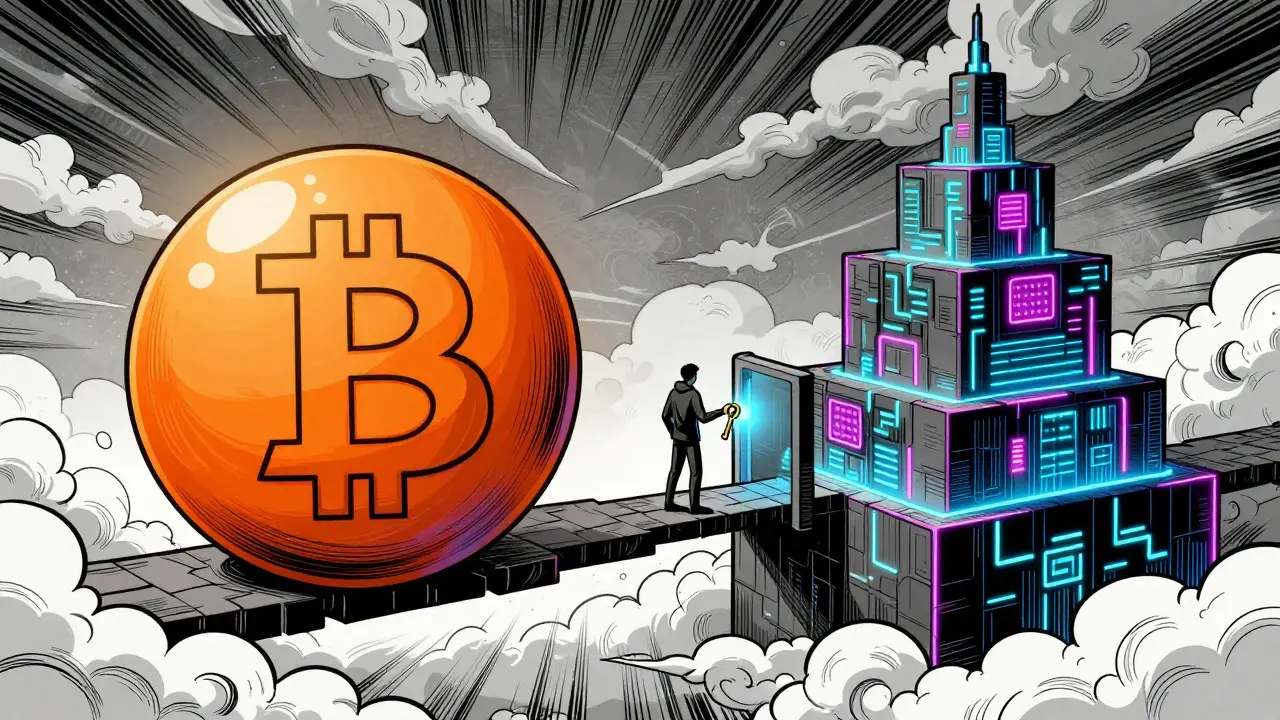
Bitcoin Limited Edition is a digital asset built on BNB Chain, using the BEP-20 standard. Despite its name, it has no official connection to the original Bitcoin network. It is not a fork, nor does it represent ownership in Bitcoin. Instead, it acts as an independent token intended to manage a proposed second-layer network called "Bitcoin Layer 2 Limited." The project’s core pitch relies on extreme scarcity. With a maximum supply of 210,000 units, every single token represents a tiny fraction of the whole, aiming to create a sense of exclusivity similar to limited-edition collectibles.
The primary function of BTCLE is governance. Holders are expected to vote on decisions regarding the future development of the Bitcoin Layer 2 Limited ecosystem. This includes choices about which real-world assets (RWAs) should be tokenized and how the network operates. However, as of mid-2026, this governance role is largely theoretical because the Layer 2 network itself is still under development. For now, most holders treat BTCLE as a high-risk, high-reward speculative trade rather than a functional utility tool.
Tokenomics and Supply Mechanics
The supply structure of BTCLE is where the project draws much of its attention. The total supply is capped at 210,000 tokens. As of recent data from August 2026, only about 15,579 to 16,000 tokens are actively circulating. The remaining 189,000 tokens are locked in smart contracts under a strict 10-year vesting schedule. This means that for the next decade, new tokens will drip into circulation slowly, preventing massive sell-offs that often plague newer cryptocurrencies.
| Attribute | Value |
|---|---|
| Maximum Supply | 210,000 BTCLE |
| Circulating Supply (Aug 2026) | ~15,579 - 16,000 BTCLE |
| Locked Supply | 189,000 BTCLE (10-year vesting) |
| Blockchain | BNB Chain (BEP-20) |
| Market Cap Range | $5.45M - $7.21M |
This low floating supply creates significant volatility. When a small number of coins change hands, the price can swing dramatically. For instance, while some aggregators showed prices around $350 in early 2026, others reported figures exceeding $460 by late summer. This wide variance highlights that BTCLE trades in thin markets where liquidity is limited, and price discovery can be inefficient compared to major assets like Ethereum or Solana.

Technical Architecture and Security
Technically, BTCLE exists as a smart contract on BNB Chain. Its contract address is 0x9d2144328e1d618F54Cd38540F5eE50671f6A208. Because it sits on BNB Chain, it benefits from that network's speed and lower transaction fees compared to the Bitcoin base layer. However, its security currently depends entirely on BNB Chain's consensus mechanism and the integrity of its own smart contract code.
A notable gap in the project's documentation is the lack of publicly available formal audits or detailed technical specifications for the future Layer 2 network. While the goal is to build a scalable system that can handle more transactions than Bitcoin's ~7 per second, there are no concrete benchmarks for throughput or latency yet. Investors need to keep in mind that until the Layer 2 launches, BTCLE's security profile is standard for a BEP-20 token, meaning risks related to smart contract bugs remain relevant.
Market Position and Comparisons
How does BTCLE stack up against other governance tokens? Compared to established players like Optimism (OP) or Arbitrum (ARB), BTCLE is minuscule. Those projects have live networks, billions in total value locked (TVL), and active developer ecosystems. BTCLE, by contrast, has a market cap between $5.45 million and $7.21 million, placing it firmly in the microcap category. Its share of the total cryptocurrency market is effectively 0.00%, indicating it has negligible influence on broader market trends.
The name "Bitcoin Limited Edition" might confuse newcomers who think it is a type of Bitcoin. It is crucial to understand that BTCLE does not give you access to Bitcoin mining rewards or Bitcoin staking yields. It is a separate asset with its own risk profile. Some data providers, such as CryptoRank, have even described it as having "no specific usable value" at this stage, reflecting the skepticism that arises when a token's utility is promised for the future rather than delivered today.
Where to Trade and Access
Accessing BTCLE requires familiarity with decentralized finance (DeFi) tools on BNB Chain. You cannot simply buy it on all major centralized exchanges; availability varies significantly. Platforms like PancakeSwap v3 list a trading pair for BSC-USD/BTCLE, allowing users to swap their BNB or stablecoins for BTCLE directly. Other exchanges like Bybit and Bitget have listed the token, though data inconsistencies exist across these platforms regarding circulating supply and current prices.
To get started, you typically need a wallet compatible with BNB Chain, such as MetaMask or Trust Wallet. You would then connect your wallet to a decentralized exchange like PancakeSwap to perform swaps. Keep in mind that because the volume is low, slippage (the difference between the expected price and the final execution price) can be higher than on liquid pairs. Always check the latest contract address before buying to avoid fake tokens, a common risk in the microcap space.
Risks and Long-Term Viability
Investing in BTCLE comes with heightened information risk. There is no clear, publicly documented founding team with verifiable identities, which adds a layer of uncertainty. The project's success hinges almost entirely on whether the "Bitcoin Layer 2 Limited" network actually launches and gains adoption. If the Layer 2 fails to materialize or remains unused, BTCLE could lose much of its perceived value proposition, leaving holders with a scarce but potentially useless token.
Furthermore, the conflicting data points from various aggregators-ranging from zero circulating supply on some sites to over 200,000 on others-suggest that tracking this asset accurately can be difficult. This data opacity is a red flag for many institutional investors. For retail traders, the opportunity lies in the scarcity narrative and the potential upside if the Layer 2 succeeds, but the downside is equally significant due to the lack of current utility and thin liquidity.
Is Bitcoin Limited Edition (BTCLE) the same as Bitcoin?
No, BTCLE is not Bitcoin. It is an independent token on BNB Chain that uses Bitcoin branding and a similar supply ratio (1%) but has no official affiliation with the Bitcoin network. It does not grant ownership or control over Bitcoin itself.
What is the maximum supply of BTCLE?
The maximum supply of BTCLE is 210,000 tokens. This number was chosen to represent exactly 1% of Bitcoin's maximum supply of 21 million coins.
Where can I buy BTCLE?
BTCLE is primarily traded on decentralized exchanges like PancakeSwap v3 on BNB Chain. Some centralized exchanges like Bybit and Bitget may also list it, but availability and liquidity vary. You will need a BNB Chain-compatible wallet to interact with DEXs.
What is the purpose of the 10-year vesting schedule?
The 10-year vesting schedule applies to 189,000 of the 210,000 total tokens. It locks these tokens on-chain to prevent immediate selling pressure, ensuring a slow release of supply over time. This design aims to promote long-term alignment among holders and maintain scarcity.
Does BTCLE have any real-world utility right now?
Currently, BTCLE functions mainly as a speculative asset. Its planned utility as a governance token for the Bitcoin Layer 2 Limited network is still under development. Until that network launches, the token's practical use is limited to trading and holding in anticipation of future features.