Binance Restricted Countries List 2026: Where You Can and Cannot Trade
Imagine logging into your favorite crypto exchange, ready to buy Bitcoin, only to see a stark message: "Service unavailable in your region." It happens more often than you might think. If you are trying to figure out if Binance works where you live, the answer is rarely a simple yes or no. The landscape of cryptocurrency regulation has shifted dramatically between 2021 and 2026. What was once a wild west of digital assets is now a patchwork of strict laws, heavy fines, and complete bans.
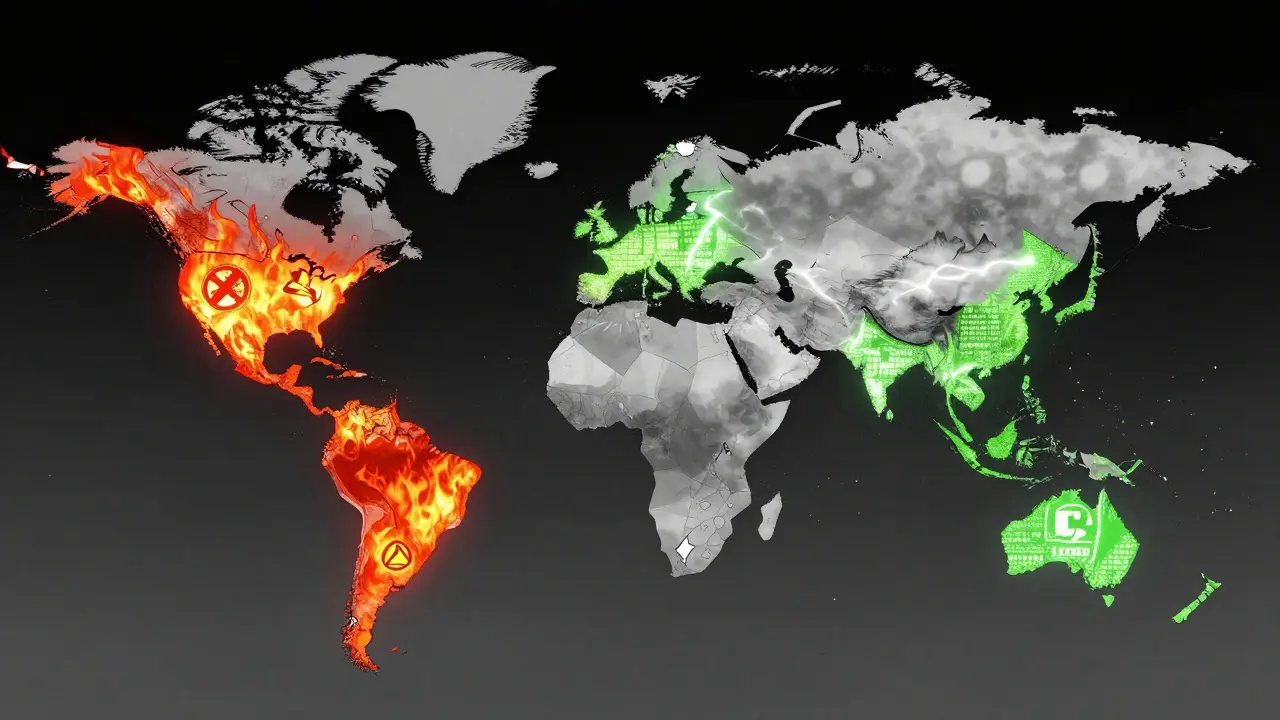
As of mid-2026, Binance, the world's largest cryptocurrency exchange by volume, operates actively in about 120 countries but faces restrictions in over 70 others. These restrictions aren't just about blocking access; they involve complex layers of service limitations, regional exits, and specific product bans like futures trading. Understanding this map is crucial for any trader who wants to keep their funds safe and avoid legal trouble.
The Three Tiers of Restriction
To make sense of the chaos, we can break down the restricted countries into three distinct categories. This isn't just bureaucratic jargon; it determines whether you can trade at all, what products you can use, or if you need a different platform entirely.
Category 1: Complete Bans Due to Sanctions
These are the hardest lines in the sand. Binance completely blocks users from these jurisdictions due to international sanctions enforced by bodies like OFAC (Office of Foreign Assets Control). There is no workaround here. Attempting to bypass these blocks using VPNs can lead to immediate account freezes and loss of funds.
- Cuba (banned since 2017)
- Iran (added 2018)
- Syria (added 2018)
- North Korea (DPRK) (added 2018)
- Crimea region of Ukraine (enforced 2019)
- Non-government-controlled areas of Ukraine (added 2022)
Category 2: Total Digital Asset Bans In these countries, the government has banned cryptocurrencies entirely. This means not only is Binance blocked, but almost every other centralized exchange is too. Using crypto here can carry severe legal penalties, including fines or imprisonment, depending on local laws.
- Afghanistan (Taliban decree, 2022)
- Algeria (Finance Law 18-04, 2018)
- Bangladesh (Digital Security Act, 2018)
- Bolivia (Central Bank Circular, 2014)
- China Mainland (comprehensive ban, Sept 2021 - note: Hong Kong and Taiwan have separate rules)
- Egypt (Central Bank ruling, 2020)
- Iraq (Central Bank warning, 2022)
- Kuwait (Central Bank Circular, 2022)
- Morocco (Foreign Exchange Regulations, 2017)
- Nepal (Nepal Rastra Bank directive, 2017)
- North Macedonia (ban enacted 2023)
- Tunisia (ban enacted 2018)
Category 3: Partial Restrictions and Market Exits This is the most confusing group for traders. In these places, Binance might still allow spot trading, or it might have exited the market entirely, forcing users to switch to local entities or competitors. Sometimes, only specific features like futures or lending are disabled.
| Country/Region | Status | Key Limitations |
|---|---|---|
| United States | Exited Global Platform | Must use Binance.US; NY residents excluded; limited coin selection |
| United Kingdom | Limited Services | FCA revoked permissions in 2023; lending products banned; strict KYC |
| Netherlands | Exited | Left market in July 2023 after €3.3M fine |
| Canada | Exited | Left in Oct 2023; CAD deposits suspended Feb 2024 |
| Nigeria | Suspended | Operations halted Feb 2024; Naira transactions blocked |
| Australia | Limited Services | Futures trading suspended July 2024 per ASIC rules |
| New Zealand | Limited Services | Web3 Wallet restricted since Sept 2024; spot trading available with high scrutiny |
The Derivatives Ban: A Global Shift
If you are a day trader who relies on leverage and futures contracts, the news is particularly tough. As of August 2025, Binance Futures is unavailable in 44 countries. This includes all 27 European Union member states, as well as Norway, Iceland, Liechtenstein, the UK, Switzerland, Australia, New Zealand, Canada, and the US.
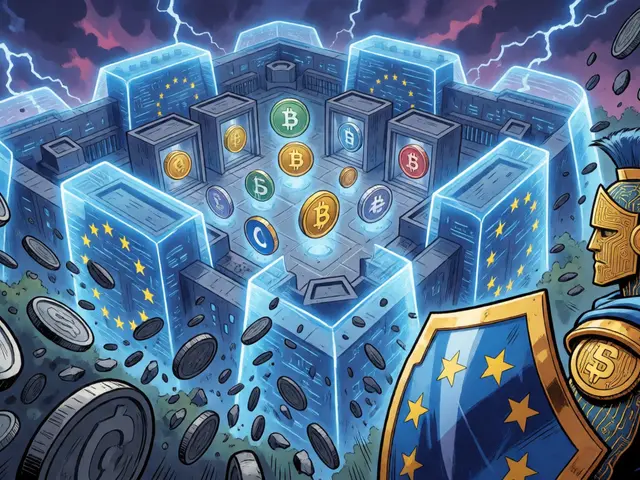
This shift is largely driven by MiCA (Markets in Crypto-Assets) regulations in Europe. MiCA requires explicit approval for derivatives trading, which many global exchanges haven't secured yet. Consequently, even if you can log in to Binance in Germany or France, you will likely find that the futures tab is greyed out or missing entirely. This bifurcation of technology stacks means that the "global" Binance experience is becoming increasingly fragmented based on your IP address.
Why Are These Restrictions Happening?
It’s not just about red tape. Regulators worldwide are cracking down on Anti-Money Laundering (AML) and Combating the Financing of Terrorism (CFT) violations. Binance itself has faced massive scrutiny. In July 2024, the exchange settled with the US SEC for $4.3 billion, agreeing to operate solely through Binance.US in America. Similarly, in March 2024, Canada’s Ontario Securities Commission fined Binance CAD$6 million for failing to verify high-risk transactions.
Dr. Ross Buckley, a professor at UNSW Sydney, noted in early 2025 that MiCA has created the "most significant regulatory divergence" in crypto history. Governments are no longer willing to let anonymous exchanges operate without strict oversight. The result? Higher barriers to entry for users, especially in emerging markets.
The Reality of Living in a "Gray Zone"
What if you live in a country that isn’t explicitly banned but isn’t fully supported either? These "gray zone" countries include places like Serbia, Bosnia, and Myanmar. Users here often face sudden account closures without warning. According to Reddit discussions from May 2025, thousands of users reported frozen accounts in these regions. Trustpilot reviews from restricted countries average a dismal 2.1 out of 5 stars, compared to 4.3 in unrestricted regions.
The biggest complaint? Verification hurdles. If Binance flags your location as high-risk, you may be forced into mandatory video KYC (Know Your Customer) checks. In countries like Turkey and Vietnam, this process adds an average of 3.2 business days to account activation, compared to less than a day in low-risk zones. And if you try to use a VPN to mask your location, there’s a 78% chance of negative outcomes, including permanent bans.
Alternatives for Restricted Users
If Binance is off the table, what are your options? The market has adapted. Regional competitors are gaining ground as global giants retreat.
- In the United States: Coinbase remains the dominant player, though it also faces state-level restrictions (e.g., New York). Kraken is another robust alternative with strong security records.
- In Europe: With MiCA rolling out, look for exchanges licensed under local authorities. Kraken has expanded its EU presence significantly. Local platforms like Bitstamp (Luxembourg) offer compliant services.
- In Asia: CoinDCX has become a major player in India despite tax challenges. In Japan, bitFlyer and Coincheck remain reliable local options.
- In Latin America: Bitso dominates Mexico and Brazil, offering localized fiat on-ramps that global exchanges struggle to match.
For those in countries with total bans, the only legal option is often self-custody wallets combined with peer-to-peer (P2P) networks, though this carries higher risk and lower liquidity. Always check your local laws before engaging in P2P trades.
Practical Tips for Navigating Restrictions
If you are unsure about your status, don’t guess. Here is how to protect yourself:
- Check the Official Terms: Binance updates its Terms of Service regularly. Section 3.4 explicitly states they can terminate accounts at their sole discretion. Read it.
- Avoid VPNs for Trading: While tempting, using a VPN to access restricted services violates Binance’s terms. If caught, your funds will be locked. The geolocation system uses GPS, IP, and SIM data-it’s harder to fool than you think.
- Diversify Your Platforms: Don’t keep all your eggs in one basket. Many users in partially restricted countries maintain secondary accounts on compliant local exchanges to ensure liquidity.
- Prepare Documentation: If you live in a high-risk jurisdiction, have your ID and proof of address ready. Video KYC sessions are common and delays can cost you during volatile markets.
- Monitor Regulatory News: Laws change fast. Follow sources like CoinGecko’s regulatory database or official announcements from financial regulators in your country.
Looking Ahead: More Fragmentation?
The trend is clear: the era of borderless crypto trading is ending. Bernstein Research forecasts that by 2027, 65% of Binance’s previously unrestricted markets will require customized regulatory adaptations. This means more regional entities, more licensing fees, and potentially fewer coins available in certain jurisdictions.
Binance has invested $1.2 billion in compliance since 2023, establishing regional hubs in the UAE, Japan, and Mauritius. However, JPMorgan’s 2025 Crypto Outlook rates Binance’s stability lower than Coinbase due to ongoing "regulatory overhang risks." For traders, this translates to a need for vigilance. The platform you use today might not be available tomorrow.
Understanding where you stand on this map isn’t just about convenience; it’s about financial safety. Whether you are in a fully restricted country like China or a partially restricted one like the UK, knowing the rules helps you avoid costly mistakes. Stay informed, stay compliant, and always prioritize platforms that respect your local laws.
Can I use Binance in the United States?
No, you cannot use the global Binance platform in the US. Since September 2019, US residents must use Binance.US, a separate entity with a limited selection of cryptocurrencies and features. Additionally, residents of New York are currently excluded from using Binance.US entirely.
Is Binance banned in Canada?
Yes, Binance exited the Canadian market in October 2023 following regulatory pressure and a CAD$6 million fine. Canadian users lost access to CAD deposits in February 2024. Residents should consider local alternatives like Coinsquare or Newton.
Why is Binance Futures unavailable in Europe?
The unavailability of Binance Futures in the EU is due to MiCA (Markets in Crypto-Assets) regulations, which came into full effect in late 2024. These rules require strict licensing for derivatives trading, which Binance has not obtained in most EU member states. Spot trading remains available in many European countries.
What happens if I use a VPN to access Binance from a restricted country?
Using a VPN to bypass geographic restrictions violates Binance’s Terms of Service. The platform uses advanced geolocation tracking including IP, GPS, and SIM data. If detected, your account will likely be frozen, and you may lose access to your funds permanently. It is highly risky and not recommended.
Which countries have completely banned cryptocurrency trading?
Countries with total bans on cryptocurrency trading include Afghanistan, Algeria, Bangladesh, Bolivia, China (Mainland), Egypt, Iraq, Kuwait, Morocco, Nepal, North Macedonia, and Tunisia. In these jurisdictions, using any crypto exchange is illegal and can result in severe penalties.
Is Binance available in New Zealand?
Binance offers limited services in New Zealand. While spot trading is generally available, Web3 Wallet services were restricted starting September 2024 under the Financial Markets Conduct Act. Users should expect stricter KYC requirements and potential limitations on certain features.