
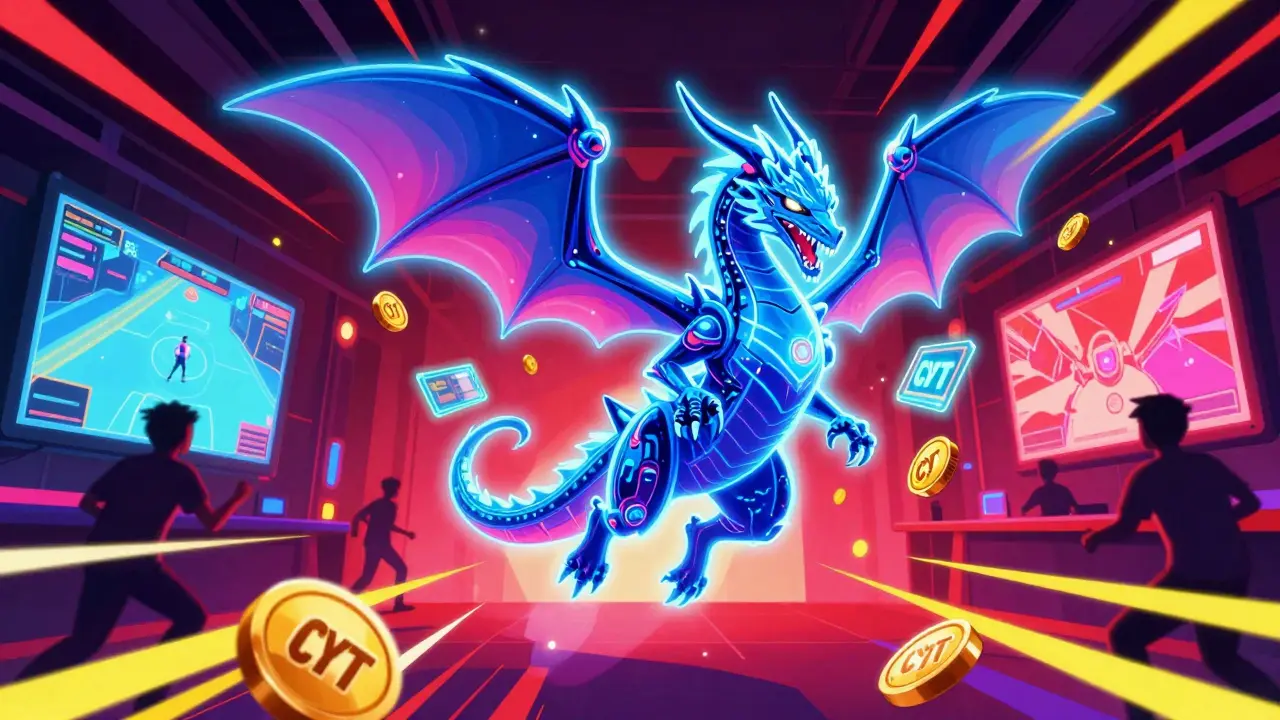
What is Coinary Token (CYT)? A Critical Look at the Dragonary Gaming Crypto
Remember when everyone was talking about making money just by playing video games? That was the promise of the play-to-earn boom. But if you are looking at Coinary Token today, you need to know that the landscape has changed drastically. CYT is the native cryptocurrency for a game called Dragonary, and while it sounds exciting on paper, the reality is much more complicated-and risky-than most beginners realize.
You might be asking yourself: Is this still a viable way to earn crypto? Or is it a ghost town from 2021? Let’s break down exactly what Coinary Token is, how it works within the Dragonary ecosystem, and why you should proceed with extreme caution in 2026.
The Core Concept: What Exactly is Coinary Token?
Coinary Token (CYT) is a utility token built on the Binance Smart Chain (BSC) using the BEP-20 standard. It was created by Coinary LTD and launched in August 2021. Its sole purpose is to function as the currency inside the Dragonary game.
Dragonary is an NFT-based game where players breed digital dragons. The idea is simple: you play, your dragons get rarer, and you earn CYT tokens as rewards. The project marketed itself as "free-to-play" to attract people who didn't want to spend hundreds of dollars upfront like they did in other games like Axie Infinity.
However, "utility" is a tricky word here. Outside of the Dragonary game, CYT doesn't do much. You can't use it to pay for coffee, buy goods on major marketplaces, or stake it for significant yield elsewhere. Its value is entirely tied to whether people are actively playing Dragonary and wanting to trade their rewards.
How the Tokenomics Work (And Why They Matter)
To understand if CYT is worth your attention, you have to look at its economic model. The creators describe it as "hyper-deflationary." This means that every time someone sends or trades CYT, a portion of those tokens is permanently burned (destroyed). The theory is that as supply decreases, scarcity increases, and price goes up.
Here is the catch: For deflation to work, there needs to be high demand. If no one is buying or trading the token, burning a few cents worth of coins won’t move the needle.
- Total Supply Cap: Approximately 1 billion CYT tokens.
- Circulating Supply: Only about 21% of the total max supply is actually in circulation.
- Burn Mechanism: Automatic burns happen during transactions, but specific rates are not transparently published.
The problem is that nearly 80% of the tokens were held back or unissued at launch. When a large chunk of supply is controlled by a central team rather than distributed among users, it creates a risk of future dumping if those holders decide to sell.
Current Market Reality: Liquidity and Price
If you check data aggregators like CoinMarketCap or CoinGecko, the picture isn't pretty. As of late 2023, CYT was ranked outside the top 5,000 cryptocurrencies. The price hovered around $0.0007, and the 24-hour trading volume was often less than $1,000.
Why does low volume matter so much? Because of slippage. If you try to sell $100 worth of CYT on a decentralized exchange like PancakeSwap, you might only receive $80 or $90 because there aren't enough buyers in the pool to absorb your sale without crashing the price. One user reported losing over 20% of their value just trying to exit a position.
Furthermore, the token is almost exclusively traded against WBNB (Wrapped BNB) on PancakeSwap. There are no listings on major centralized exchanges like Binance, Coinbase, or Kraken. This lack of institutional interest signals that professional traders see very little potential in the asset.
| Feature | Coinary Token (CYT) | Axie Infinity (AXS) | The Sandbox (SAND) |
|---|---|---|---|
| Blockchain | Binance Smart Chain | Ethereum / Ronin | Ethereum |
| Market Cap (Approx) | $160k - $200k | $1 Billion+ | $1.8 Billion+ |
| Liquidity | Very Low (High Slippage) | High | High |
| Exchange Listings | DEX Only (PancakeSwap) | Major CEX & DEX | Major CEX & DEX |
| User Base Trend | Declining Sharply | Stabilized | Growing/Stable |
The User Experience: Playing Dragonary
Let’s talk about the actual game. Dragonary involves breeding NFT dragons and increasing their rarity. The promise was that higher rarity equals better CYT rewards. In practice, many players found the grind exhausting.
Community feedback from Reddit and Discord groups highlighted several issues:
- Time Investment: Players reported needing over 200 hours of gameplay to see meaningful returns.
- Technical Glitches: Wallet connectivity failures were common, especially when claiming rewards.
- Gas Fees: While BSC fees are generally low, network congestion could cause transactions to fail or cost more than expected if gas prices weren't adjusted manually.
For a beginner, setting up MetaMask, adding the BSC network, and connecting to the game takes about 45 minutes. But once you start playing, the support system is weak. Users complained about 72-hour response times from customer support when things went wrong.
Security Risks You Cannot Ignore
This is the most critical section. Before you put any money into CYT, you need to understand the security landscape.
First, there is no public record of a third-party security audit for the CYT smart contract. Audits by firms like CertiK or Hacken are standard for reputable projects. Without one, you are trusting the code blindly. If there is a bug, hackers could drain the liquidity pool.
Second, the regulatory environment has tightened significantly since 2021. The U.S. SEC and other global bodies have scrutinized play-to-earn tokens heavily. Many are being classified as securities because they promise profits based on the efforts of others (the development team). Investing in unaudited, small-cap gaming tokens carries a high legal and financial risk.
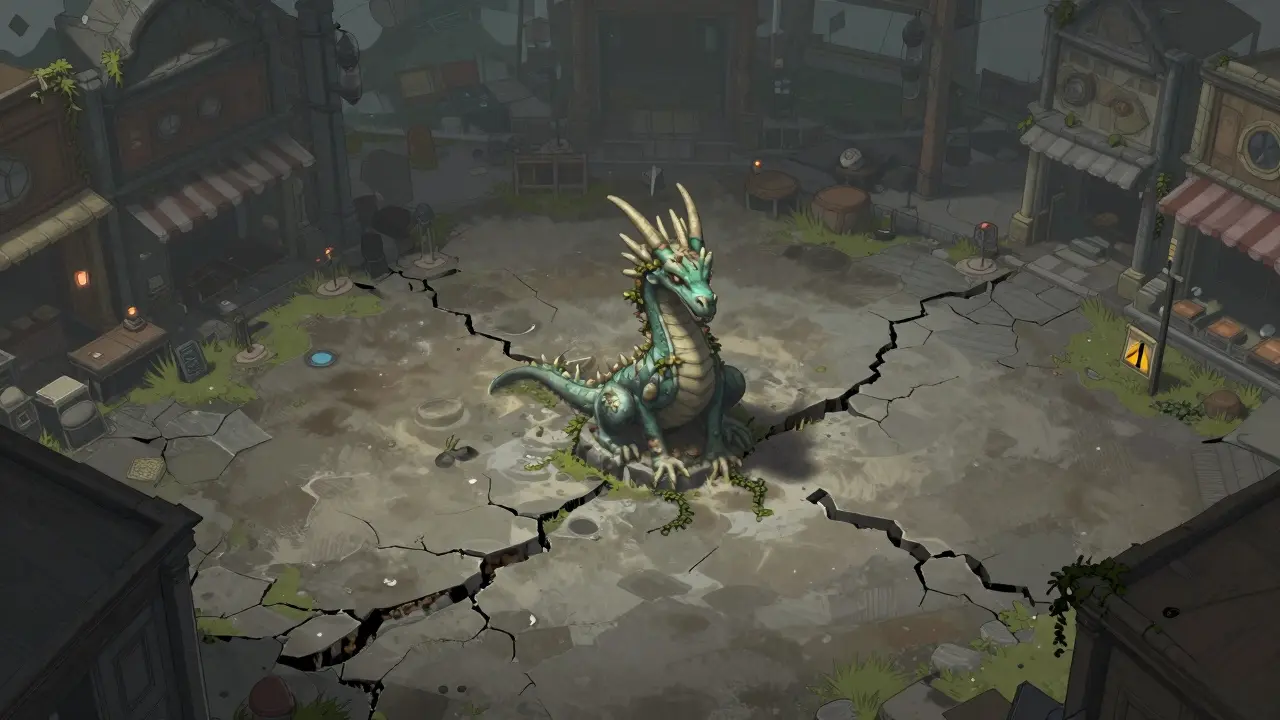
Is Coinary Token Still Alive in 2026?
By 2026, the play-to-earn bubble has long burst. The market contracted by over 80% from its peak. Dragonary’s daily active users dropped from 12,500 at launch to fewer than 2,000. With such a small community, the network effect is broken. New players don’t join because there are no opponents or partners, and existing players leave because there are no rewards.
Development activity on GitHub slowed to a trickle. Promised features like an NFT marketplace integration were delayed indefinitely. When a project stops updating its roadmap and its user base shrinks month over month, it is usually a sign of life support mode, not growth.
Final Verdict: Should You Buy or Play?
If you are looking for a serious investment, CYT is not it. The liquidity is too thin, the risk is too high, and the utility is too narrow. If you already own some CYT from 2021, exiting might be difficult due to slippage, but holding onto it hoping for a miracle rebound is statistically unlikely.
If you are a gamer who loves dragons and wants to try a casual NFT game for fun, you can download Dragonary. But do not expect to make money. Treat any CYT earned as a novelty, not income. Always keep your main funds in secure, audited, and widely adopted assets.
What blockchain is Coinary Token (CYT) built on?
Coinary Token operates on the Binance Smart Chain (BSC) and uses the BEP-20 token standard. This means you need a wallet compatible with BSC, such as MetaMask, to store and trade it.
Can I buy CYT on Coinbase or Binance?
No. CYT is not listed on major centralized exchanges like Coinbase, Binance, or Kraken. It is primarily traded on decentralized exchanges like PancakeSwap, which requires you to swap BNB for CYT directly from your wallet.
Is Dragonary game still popular?
Dragonary has seen a significant decline in popularity. Daily active users have dropped from thousands to barely over a thousand. Community sentiment is largely negative due to low rewards and technical issues.
Has the CYT smart contract been audited?
There are no publicly available third-party security audits for the CYT smart contract. This is a major red flag for investors, as unaudited contracts carry a higher risk of vulnerabilities or exploits.
What is the maximum supply of Coinary Token?
The theoretical maximum supply of CYT is approximately 1,016,264,762 tokens. However, only about 21% of these tokens are currently in circulation, with the rest remaining unissued or held by the team.
Why is the trading volume for CYT so low?
Low trading volume indicates a lack of buyer interest. With daily volumes often under $1,000, there is insufficient liquidity. This causes high slippage, meaning you lose a significant percentage of your value when buying or selling larger amounts.



Look, I get the hype around play-to-earn when it first started, but this analysis is spot on. The liquidity crunch is real and if you cant move your assets without losing half their value to slippage then its not an investment its a trap. People need to wake up and realize that most of these BSC tokens are just vaporware with fancy dragon graphics.
It is quite fascinating how the market has corrected itself over the last few years. The data presented here regarding the decline in active users is particularly telling. It seems that the initial excitement was not backed by sustainable economic models or genuine user engagement which is why we see such a stark contrast between projects like Axie Infinity and smaller tokens like CYT today.
Wait so you are saying the burn mechanism doesnt actually help the price if nobody is trading? That sounds like basic supply and demand but I always thought burning tokens automatically meant the price would go up regardless of volume. Can someone explain why low volume makes the burn irrelevant? Is it because there is no demand to absorb the reduced supply?
I have been following the Dragonary project since early 2022 and it is sad to see it end this way. The community used to be very active and supportive but as the rewards dried up people just left. It is important to remember that these projects rely heavily on new players joining to sustain the economy for existing players and once that flow stops the whole system collapses.
Oh please stop acting like everyone else is stupid. Some of us bought in early and made millions while you were still figuring out how to use MetaMask. Now you want to tell me it is a ghost town? Maybe you just missed the boat. There is always alpha if you know where to look and calling it dead is just cope from people who lost money because they held too long.
This is heartbreaking to read. I remember spending hours breeding dragons hoping to earn enough for groceries. The promise felt so real at the time and now looking back it feels like we were all part of some cruel experiment. I hope people learn from this and don't fall for the next shiny object that promises easy money through gaming.
The lack of audits is literally the biggest red flag ever. You do not put money into a smart contract that has never been checked by professionals. It is insane that people still trust these unaudited pools. One day someone will find a bug and drain everything and then everyone will cry about being scammed but they ignored the warning signs right in front of them.
This is exactly what happens when unregulated crypto schemes are allowed to flourish. The SEC should have stepped in years ago to protect retail investors from these predatory play-to-earn scams. It is a clear case of securities fraud disguised as gaming technology and the fact that nothing has been done shows how corrupt the financial system really is.
i mean yeah it looks bad but maybe there is still a chance for a comeback? i dont know much about crypto but sometimes these things bounce back unexpectedly. i guess i just prefer to stay optimistic rather than assuming everything is doomed forever. maybe the devs will release something new soon.
lol typical reddit crowd crying about their losses 😂 you guys are so weak. if you cant handle volatility then stay away from crypto entirely. this token is fine for those who understand the game theory behind it. stop whining and start playing or just accept you are not cut out for high risk investments 🤡
The technical analysis provided here is superficial at best. Real experts understand that market cap is not the only metric that matters. While liquidity is low the potential for explosive growth remains if the narrative shifts. Amateurs focus on current prices while elites look at long term utility and adoption curves which are often misunderstood by the general public.
In the grand scheme of digital existence what does value truly mean? We assign worth to symbols based on collective belief and when that belief fades the symbol becomes worthless paper or code. This token is merely a reflection of our fleeting desires for quick wealth. Perhaps we should question why we seek validation through virtual dragons instead of tangible human connections.
thanks for sharing this detailed breakdown. it really helps to see the facts laid out clearly. i was considering trying this game but after reading about the security risks and low liquidity i think i will pass. better safe than sorry especially when it comes to my hard earned money. appreciate the effort put into this post.
You clearly do not understand the fundamentals of decentralized finance. The fact that you are questioning the viability of this project suggests you are not educated enough to participate in modern markets. Stick to your savings account and let the informed traders handle the complex assets. Your ignorance is showing.
I am glad to see more people speaking up about the dangers of these unaudited tokens. It is so important for beginners to understand that just because something is called a game does not mean it is safe. Please keep educating yourselves and each other because the next scam will look even more convincing and we need to be prepared.
oh wow i had no idea it was this bad. i saw some ads for it recently and thought it looked fun. thanks for warning everyone. i guess i will stick to regular video games where i dont have to worry about losing money or getting hacked. this stuff seems way too stressful for me honestly.
why do you care so much about what other people invest in anyway. it is their money their problem. if they want to lose it then let them. you cannot save everyone from themselves. besides maybe they enjoy the game itself and the money is just a bonus who cares about your opinion on their personal choices.
Hey everyone! Just wanted to add that checking the contract address on Etherscan or BscScan is super helpful before buying anything 🔍 Always verify the official links from the project website and never click random links in DMs. Stay safe out there friends! 🙌💰
As a researcher in blockchain economics I can confirm that the tokenomics described here are classic examples of unsustainable Ponzi-like structures. The reliance on continuous new capital inflow to reward early adopters is mathematically destined to fail. Investors should prioritize projects with transparent governance and audited smart contracts to mitigate these systemic risks.