
Automated vs Manual Security Auditing in Blockchain: What You Need to Know
You’ve just deployed a new DeFi protocol. The code looks clean, the tests pass, and your team is ready to go live. But then you pause. Should you hire a human auditor for a deep dive, or rely on automated tools to scan every line of code in seconds? It’s not just a budget question; it’s a survival question. In blockchain, where a single logic error can drain millions in minutes, choosing between automated and manual security auditing isn't about picking a favorite-it's about understanding what each actually catches.
Here’s the hard truth: neither method alone is enough for serious projects in 2026. Automated tools are fast, consistent, and cheap. Human auditors are slow, expensive, but brilliant at spotting context. If you only use automation, you’ll miss business logic flaws. If you only use humans, you’ll burn cash and still miss simple syntax errors due to fatigue. Let’s break down exactly how they differ, why the industry is shifting toward a hybrid model, and how you can build an audit strategy that doesn’t leave gaps.
The Core Difference: Speed vs. Context
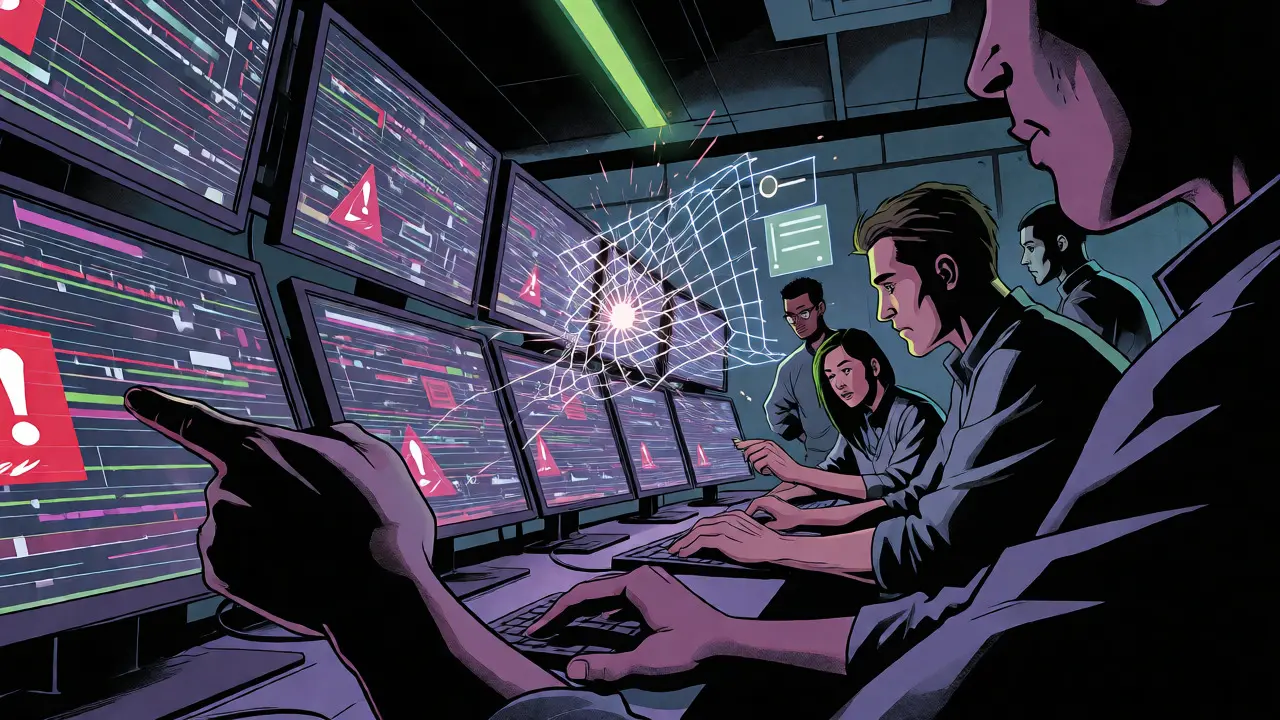
Think of automated security auditing like a metal detector. It scans the entire beach (your codebase) quickly, flagging anything metallic (known vulnerability patterns). It doesn’t care if the object is a valuable coin or a rusty nail; it just flags it. This process happens continuously, 24/7, across thousands of lines of Solidity or Rust code in minutes.
Manual security auditing, on the other hand, is like hiring a forensic accountant. They don’t just look for numbers that don’t add up; they understand why the transaction happened. Did this user have permission to move these funds? Does this function interact correctly with the oracle feed? Humans provide context. They read comments, check documentation, and simulate real-world attack scenarios that a script can’t imagine.
In the blockchain world, this distinction is critical. Smart contracts are immutable once deployed. A bug missed by an automated scanner might be minor, but a logic flaw missed by a human could mean total loss. For instance, automated tools excel at finding reentrancy bugs or integer overflows-classic, well-documented issues. However, they often struggle with complex state changes involving multiple external calls, which is where manual testers shine.
What Automated Tools Actually Do
Modern automated auditing platforms, such as those integrated into development pipelines, use static analysis and dynamic testing to identify vulnerabilities. According to recent industry data, automated tools can process over 50,000 components in under 30 minutes. That’s speed you simply cannot match with human eyes.
But here’s the catch: false positives. Automated systems generate false positive rates between 15% and 30%. This means for every 100 alerts, 15 to 30 might be harmless. Your developers spend hours triaging these alerts, deciding if a flagged issue is real or noise. While AI-driven tools are improving this metric, reducing false positives by nearly half in some cases, they still require human verification.
- Continuous Monitoring: Unlike manual audits that happen once, automated tools run with every commit.
- Coverage: They cover 100% of the code path, ensuring no line is skipped.
- Consistency: The tool doesn’t get tired, bored, or biased. It applies the same rules every time.
For early-stage projects or rapid prototyping, automation is a lifesaver. It catches low-hanging fruit before you even think about hiring a firm. But relying solely on automation is like driving with your eyes closed-you know the road is clear because the GPS says so, but you haven’t actually looked.
The Irreplaceable Value of Human Auditors
When you pay $15,000 to $25,000 for a manual audit, you aren’t just paying for code review. You’re paying for expertise in specific ecosystems. A manual auditor knows how Uniswap v3 liquidity pools work. They understand the nuances of cross-chain bridges. They can spot when a developer has misunderstood a protocol’s economic incentives.
Studies show that manual testers identify 32% more business logic vulnerabilities than automated tools in complex applications. These are the silent killers. An automated scanner sees a function call and checks if it’s safe. A human auditor asks, “Does calling this function here create a race condition with the governance vote happening simultaneously?”
Consider a real-world scenario: A lending protocol allows users to borrow against collateral. An automated tool confirms the math is correct. But a human auditor notices that if the price oracle updates slowly during high volatility, a user could repay less than they borrowed in value terms, effectively stealing from the pool. No algorithm flags that unless specifically programmed to check oracle lag times-a nuance humans catch naturally.
Cost and Time: The Real Trade-Offs
Let’s talk numbers, because budgets matter. Automated solutions typically cost between $3,000 and $8,000 for comprehensive scanning suites, plus setup fees. ROI usually hits within six to nine months. Manual audits, however, range from $15,000 to $25,000 per cycle. Why the disparity?
| Metric | Automated Auditing | Manual Auditing |
|---|---|---|
| Time per Cycle | Minutes to Hours | 2-6 Weeks |
| Cost per Audit | $3k - $8k (Annual/Sub) | $15k - $25k (One-off) |
| False Positive Rate | 15% - 30% | < 5% |
| Logic Flaw Detection | Low | High |
| Frequency | Continuous | Quarterly/Semi-Annually |
Manual auditing requires senior engineers with certifications like CISSP or CISA, who command hourly rates of $150-$200. A typical audit takes 40-60 hours of dedicated effort. If you deploy updates weekly, you can’t afford a full manual audit every time. That’s why most teams reserve manual reviews for major releases or pre-launch phases.
Why Hybrid Models Are Winning
Leading security firms and tech giants aren’t choosing one side anymore. They’re blending them. The consensus among experts, including guidance from Gartner and NIST, is clear: use automation for breadth and humans for depth.
A successful hybrid workflow looks like this:
- Pre-Commit: Developers run lightweight linters and static analyzers locally. Catch typos and basic errors instantly.
- CI/CD Pipeline: Automated scanners run on every pull request. If a known vulnerability pattern appears, the build fails immediately.
- Staging Phase: Dynamic analysis tools test the contract on a testnet, simulating transactions.
- Manual Review: Before mainnet deployment, human auditors review the architecture, business logic, and integration points.
- Post-Launch: Automated monitoring watches for anomalies in real-time, alerting humans to suspicious activity.
This approach reduces audit preparation time significantly. One financial services company cut their compliance prep from 14 weeks to 3 weeks by adopting this hybrid model. They used automation to handle the repetitive technical checks, freeing up their human auditors to focus on regulatory compliance and complex payment logic.

Pitfalls to Avoid
Don’t fall into the trap of thinking automation equals security. Over-reliance on automated scans has led to high-profile breaches. In 2023 alone, several organizations ignored manual verification of automated results, leaving critical vulnerabilities undetected. Remember, a tool can tell you what is wrong, but only a human can tell you if it matters.
Conversely, don’t underestimate the value of fresh eyes. Manual auditors can suffer from fatigue or bias, especially if they’ve worked on the project too long. Rotating auditors or using bug bounty programs alongside internal audits helps mitigate this. Also, ensure your automated tools are updated. Blockchain standards change fast; a tool tuned for Ethereum might miss Solana-specific risks.
Final Thoughts
If you’re building in blockchain today, ask yourself: Can I afford to miss a logic error? If the answer is no, you need manual oversight. Can I afford to wait two weeks for every small fix? If the answer is no, you need automation. The best security strategy isn’t about choosing sides; it’s about orchestrating both to cover each other’s blind spots.
Can automated tools replace human auditors completely?
No. While automated tools are excellent for finding known vulnerabilities and ensuring code consistency, they lack the contextual understanding to detect complex business logic errors. Human auditors are essential for verifying that the code behaves as intended within the broader economic and operational ecosystem.
How much does a manual blockchain audit cost?
Comprehensive manual audits typically range from $15,000 to $25,000, depending on the complexity of the smart contract and the reputation of the auditing firm. This cost reflects the time required for senior engineers to manually review code, simulate attacks, and write detailed reports.
What is the biggest risk of using only automated auditing?
The biggest risk is missing business logic flaws. Automated tools follow predefined rules and may not recognize when a technically correct piece of code leads to unintended economic consequences, such as a user exploiting a pricing mechanism.
How often should I perform automated security scans?
Ideally, continuous. Integrate automated scanning into your CI/CD pipeline so that every code commit triggers a scan. This ensures that new vulnerabilities are caught immediately after introduction, rather than waiting for a scheduled quarterly audit.
Do manual auditors also use automated tools?
Yes, almost all professional auditing firms use automated tools as part of their workflow. They use them to handle repetitive tasks and initial filtering, allowing their human experts to focus on the nuanced, high-value aspects of the audit.