What is NFT Metadata: The Invisible Backbone of Digital Ownership
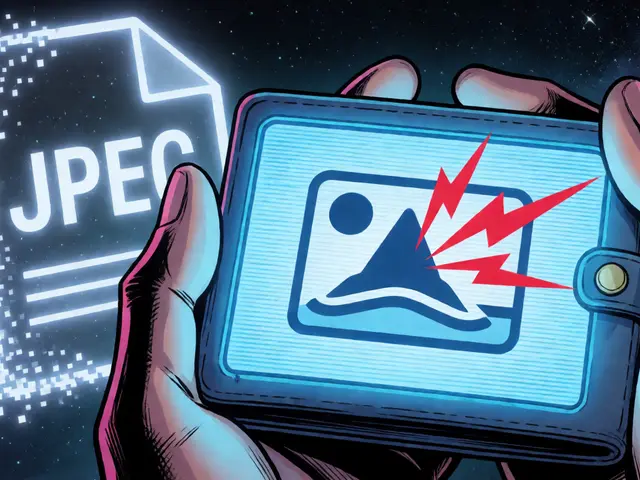
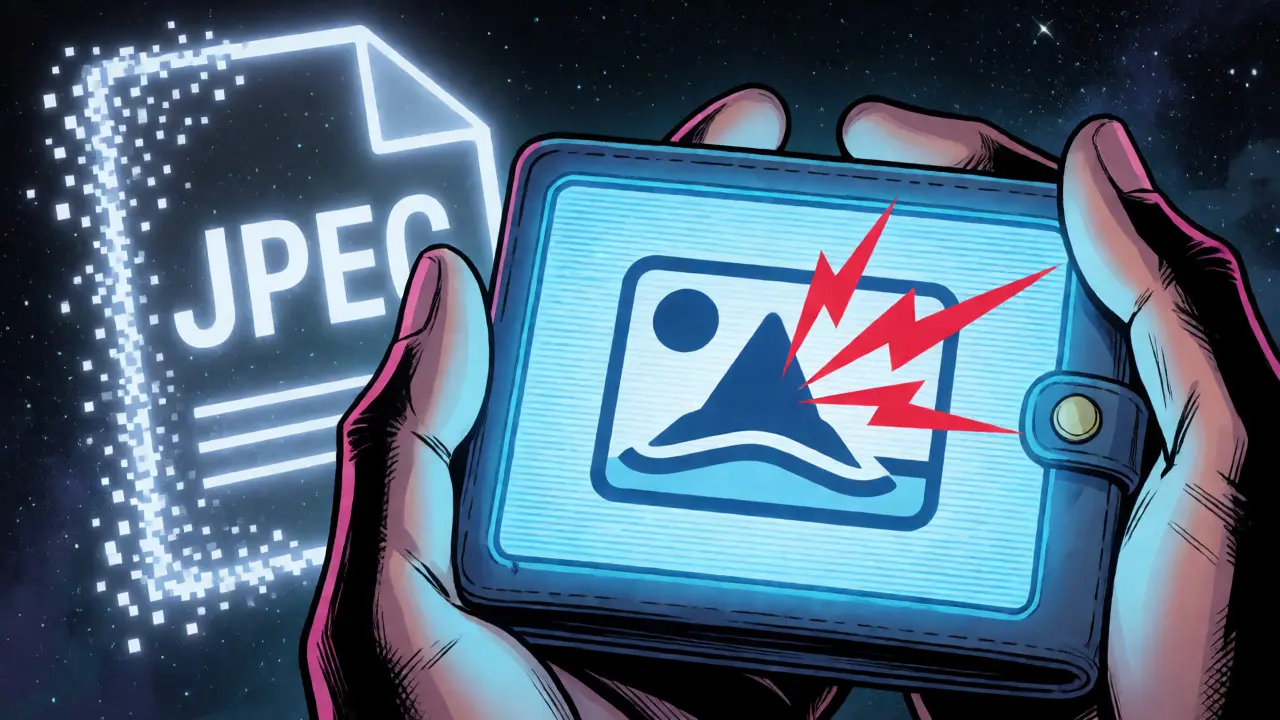
You bought an NFT for $5,000. You own the token on the blockchain. But when you try to view it, you see a broken image icon. Why? Because the NFT metadata was stored on a server that went offline. This isn't rare. It happens more often than most collectors realize. Most people think they are buying the JPEG itself. They aren't. They are buying a pointer to data that lives somewhere else. Understanding what this data is-and where it lives-is the difference between owning a digital asset and owning a broken link.
The Core Definition: More Than Just a Description
NFT metadata is a structured set of information that describes the non-fungible token, typically formatted in JavaScript Object Notation (JSON). Think of the blockchain as a library catalog card. The card tells you who owns the book and when it was checked out. But the card doesn't contain the story inside the book. The metadata is the index that points to where the story is kept. Without it, you have a receipt for something you can't find.
This concept emerged with the ERC-721 standard on Ethereum, created by Dieter Shirley at Dapper Labs in 2017. Before this, there was no standardized way to describe unique digital assets on-chain. Blockchains like Ethereum have strict size limits. A single transaction can only store about 256 bytes of data. That’s roughly the length of two tweets. A high-resolution JPEG image is usually 500KB to 5MB. You physically cannot fit the art file on the chain. So, developers invented a workaround: store a small text file (the metadata) on the chain or point to one off-chain, which then points to the actual media.
Anatomy of an NFT Metadata File
If you open the metadata JSON file for a popular project like Bored Ape Yacht Club, you won't see the picture. You will see code. Here is what actually goes into these files:
- Name: The title of the collection or specific item (e.g., "Bored Ape #8348").
- Description: A brief explanation of what the asset represents.
- Image: A URL pointing to the visual file (PNG, JPG, GIF).
- Attributes: Key-value pairs defining traits (e.g., "Hat": "Beanie", "Background": "Blue Gradient").
- External URL: A link to the project's website or social media.
The critical component here is the image field. In many early projects, this field contained a simple HTTP link to an Amazon Web Services (AWS) server. If Amazon deleted that file, or if the startup hosting it ran out of money, the link died. The NFT still existed on the blockchain, but its visual identity vanished. This is why smart contract developers now prefer content-addressed systems.
On-Chain vs. Off-Chain Storage: The Risk Factor
Where your metadata lives determines how safe your investment is. There are three main approaches, each with distinct trade-offs.
| Storage Type | Cost & Speed | Durability | Best For |
|---|---|---|---|
| Centralized Server (HTTP) | Low cost, fast load times | Low (Single point of failure) | Prototypes, low-budget projects |
| IPFS (InterPlanetary File System) | Moderate cost, variable speed | High (Decentralized, permanent) | Long-term value preservation |
| Fully On-Chain (SVG/Base64) | Very High gas fees, slow minting | Maximum (Immutable) | High-end art, generative art |
IPFS has become the industry standard for good reason. Unlike a traditional web server, IPFS uses cryptographic hashes to identify files. If you change even one pixel of the image, the hash changes. This ensures integrity. However, IPFS requires "pinning." If no node pins your file, it might disappear from the network over time. Services like Pinata or Filecoin solve this by paying nodes to keep your data alive. According to recent audits, projects using unpinned IPFS links face a significant risk of decay after 2-3 years.
The TokenURI Function: How Contracts Find Data
How does your wallet know where to look? It calls a function in the smart contract called tokenURI. This function returns a string. That string is usually a URL ending in .json. When you buy an NFT, your wallet queries the contract, gets this URI, fetches the JSON file, and then renders the image based on the instructions inside.
This process introduces latency. If the server hosting the JSON file is slow, your NFT takes longer to appear in your wallet. Worse, if the server blocks bots or rate-limits requests, your NFT might fail to load entirely during high-traffic mints. Some advanced contracts use dynamic URIs, where the metadata is generated on the fly. This allows for evolving NFTs-tokens that change appearance based on external data-but it adds complexity and potential points of failure.
Why Metadata Quality Impacts Value
It’s not just about whether the image loads. It’s about trust. A February 2024 study analyzing 1.2 million transactions found that NFTs with complete, decentralized metadata fetched prices 22.7% higher on average than those with incomplete or centralized data. Collectors are getting smarter. They check if the metadata is immutable. Can the creator change the image after selling it? If the answer is yes, the scarcity argument weakens.
Consider the collapse of Nifty Gateway in 2022. Thousands of NFTs became temporarily inaccessible because their metadata relied on centralized infrastructure that faced service interruptions. While the tokens weren't lost, the perceived value plummeted because users couldn't verify ownership visually. Conversely, CryptoPunks have maintained 100% uptime since 2017 largely because their metadata strategy has been robust and well-maintained.
Common Pitfalls and How to Avoid Them
If you are building an NFT project or buying one, watch out for these red flags:
- The "Link Rot" Trap: If the metadata URL starts with
http://instead ofipfs://, ask where the server is hosted. If it's a personal AWS account, it could vanish. - Mutable Metadata: Check if the contract allows the owner to update the metadata URI. If the team retains this right, they can swap your unique ape for a generic monkey.
- Missing Attributes: Good metadata includes detailed attributes. These allow marketplaces to filter and sort collections. Poor metadata makes your NFT harder to sell.
- Inconsistent Standards: Stick to recognized standards like ERC-721 or ERC-1155. Custom formats may break compatibility with major wallets like MetaMask or Phantom.
The Future: Standardization and Privacy
The ecosystem is maturing. Proposals like EIP-6454 aim to standardize metadata verification, reducing spoofing vulnerabilities. We are also seeing a rise in zero-knowledge proofs applied to metadata. This allows owners to prove certain traits (like holding a specific rare item) without revealing the entire history of the wallet. By 2026, experts predict that 80% of high-value NFTs will incorporate some form of privacy-preserving metadata verification.
For now, treat metadata as part of the asset. Don't just look at the floor price. Look at the storage solution. Ask the developer: "Is this pinned? Is it immutable?" The answers to those questions tell you more about the longevity of your purchase than any roadmap promise ever could.
Can I edit my NFT metadata after minting?
It depends on the smart contract design. Approximately 12% of NFT contracts allow metadata updates. If the contract is written with immutability in mind, you cannot change the name, description, or image link once it is minted. Always check the contract source code or documentation before assuming you can modify your asset.
What happens if the IPFS gateway goes down?
If the specific gateway you use goes down, your NFT might not display immediately. However, because IPFS is distributed, other gateways or local nodes can serve the same content using the same Content Identifier (CID). This redundancy is why IPFS is preferred over centralized servers, which offer no such fallback mechanism.
Does storing metadata on-chain make NFTs more expensive?
Yes, significantly. Storing large JSON files or images directly on the Ethereum blockchain requires much more gas (transaction fee) than storing them off-chain. Fully on-chain NFTs can cost 10x to 50x more to mint than those using IPFS pointers. This is why hybrid models are common.
How do I check if my NFT metadata is secure?
Look at the tokenURI in a block explorer like Etherscan. If it points to an IPFS CID (starting with Qm... or bafybe...), it is likely decentralized. If it points to a domain name owned by the project team, it is centralized. You can also use tools like Pinata or nftstorage.com to verify if the content is pinned and accessible.
Why do some NFTs show a placeholder image?
This usually indicates a failed metadata retrieval. The wallet tried to fetch the JSON file via the tokenURI but timed out or received an error. Common causes include high traffic on the host server, incorrect URL formatting, or the file being removed from the storage provider.