Staking vs Mining: Complete Comparison for Crypto Investors
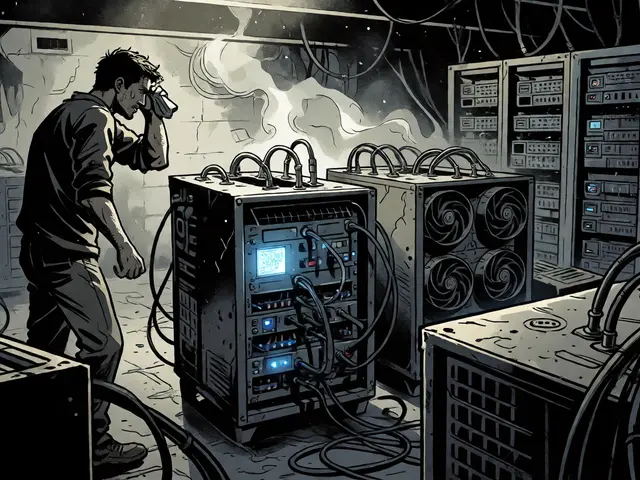
Imagine spending $9,200 on a rig, running it for 18 months, and ending up with a net loss of $4,600 after electricity bills. That’s the reality for many home miners in early 2023. Now imagine staking 32 ETH and earning over $5,000 in rewards with almost zero effort. The difference isn’t just luck-it’s the fundamental gap between Mining and staking. If you’re trying to decide which path suits your wallet and lifestyle, this breakdown cuts through the noise.
The Core Difference: Energy vs. Capital
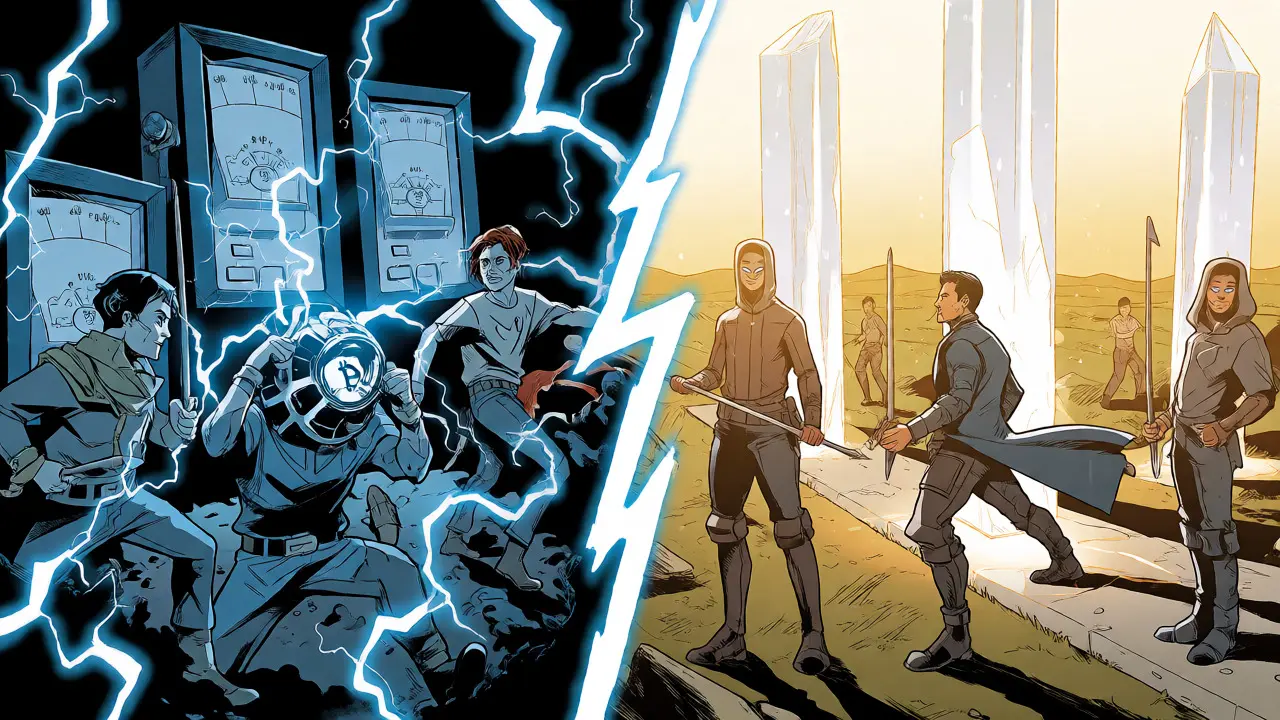
At their heart, both methods secure blockchain networks, but they pay for that security differently. Mining, or Proof-of-Work (PoW), is an arms race of computational power. Miners burn electricity to solve complex math puzzles. The first one to find the solution gets to add the next block and claims the reward. It’s raw physical force converted into digital trust.
Staking, or Proof-of-Stake (PoS), flips the script. Instead of burning energy, you lock up cryptocurrency as collateral. The network randomly selects validators based on how much they’ve staked. If you validate correctly, you earn rewards. If you act maliciously or go offline, you lose some of your stake (slashing). It’s financial commitment replacing electrical expenditure.
Ethereum’s “The Merge” in September 2022 proved this shift works. The network’s energy consumption dropped by 99.95%, falling from 78.9 TWh/year to just 0.0026 TWh/year. Meanwhile, Bitcoin mining still consumes over 120 TWh annually-more than countries like Argentina use in a year.
Hardware and Entry Costs
This is where most beginners get tripped up. You don’t need a garage full of humming machines to start staking. For mining, especially Bitcoin, you need specialized hardware called ASICs (Application-Specific Integrated Circuits).
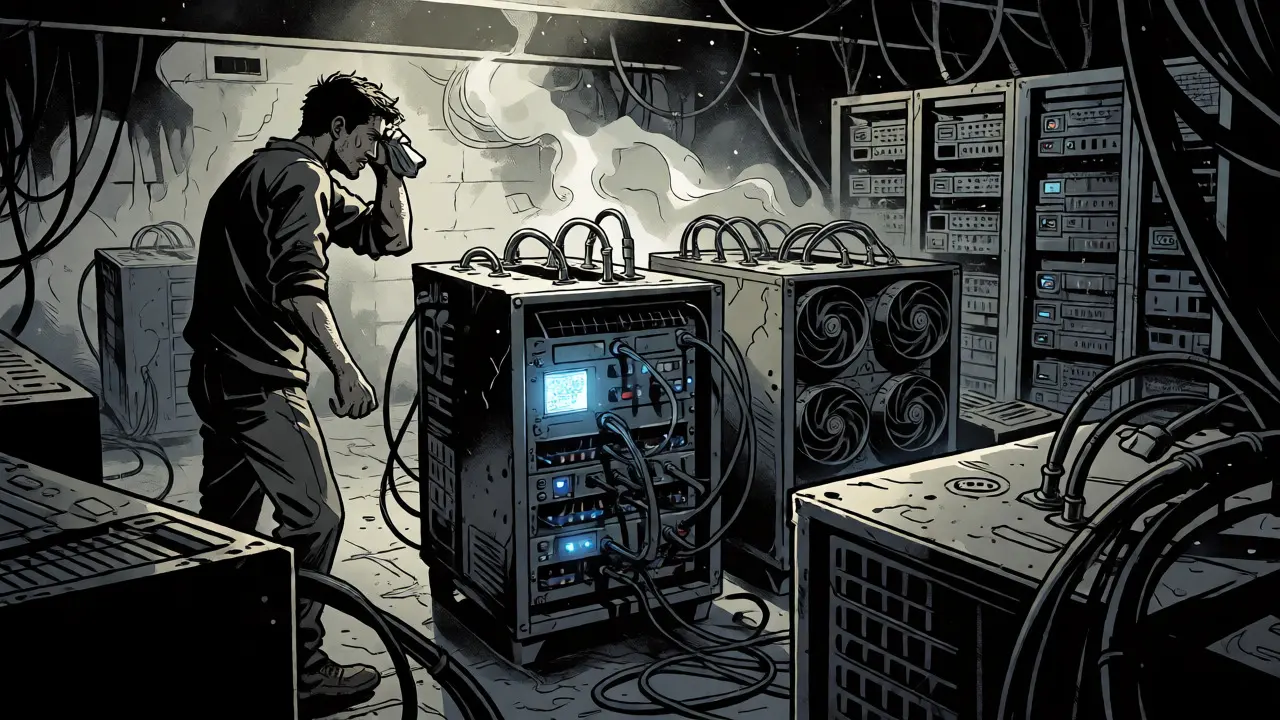
- Mining Hardware: A top-tier miner like the Bitmain Antminer S19 XP Hyd costs around $4,500. It draws 3,060 watts continuously. Add cooling solutions, noise mitigation, and wiring upgrades, and your setup cost balloons quickly. These machines also depreciate fast; many lose 50-70% of their value within 12 months due to rising network difficulty.
- Staking Hardware: For solo staking on Ethereum, a Raspberry Pi 4 ($50-$200) or a standard laptop is often enough. The real cost is capital. To run a solo validator node, you need 32 ETH. At recent prices, that’s roughly $58,000+. However, you can bypass this via liquid staking protocols like Lido or exchanges like Coinbase, allowing you to stake fractional amounts with no hardware requirements at all.

Profitability and ROI Reality Check
Let’s look at the numbers. Mining profitability is heavily tied to two volatile variables: the price of the coin and the cost of electricity. According to CryptoCompare data, home miners generally need electricity rates below $0.08/kWh to break even with current hardware. In places like Texas or Iceland, industrial-scale miners leverage cheap renewable energy to stay profitable. For a typical homeowner in New Zealand or Europe paying higher residential rates, the margins are razor-thin or negative.
Staking offers more predictable returns. Ethereum’s base reward rate hovers around 3.0-4.2% APY. Solana offers higher yields, often 6-8% APY. While these aren’t guaranteed if the token price crashes, the yield itself is consistent. There’s no monthly electric bill eating into your profits. Your return is purely dependent on the protocol’s inflation rate and your uptime.
| Feature | Mining (PoW) | Staking (PoS) |
|---|---|---|
| Primary Resource | Electricity & Hardware | Cryptocurrency Capital |
| Energy Consumption | Very High (e.g., Bitcoin >120 TWh/yr) | Negligible (e.g., Ethereum <0.01 TWh/yr) |
| Initial Cost | $2,000 - $10,000+ (Hardware) | $0 (Exchange) or High Capital (Solo) |
| Technical Skill | High (Setup, Cooling, Maintenance) | Low to Medium (Wallet setup, Uptime) |
| Risk Profile | Hardware failure, Electricity spikes | Slashing penalties, Lockup periods |
| Decentralization | Trending toward centralization (Pools) | Contested (Large entities hold majority) |
Risks You Can’t Ignore
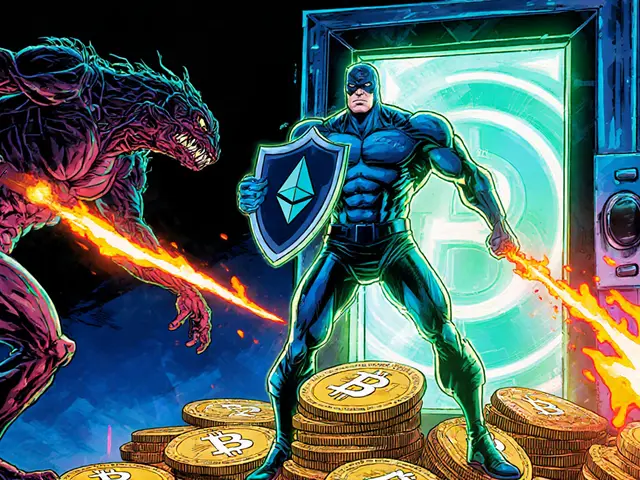
Neither method is risk-free. With mining, the biggest threat is obsolescence. When Bitcoin’s halving events occur or new, more efficient ASICs hit the market, older rigs become e-waste. Plus, regulatory risks are real. China banned mining in 2021, causing a massive hash rate drop overnight. New York State has also imposed moratoriums on PoW mining due to environmental concerns.
Staking risks are different but potent. The primary concern is slashing. If your validator goes offline or double-signs blocks, the network penalizes you by taking a portion of your staked funds. In Q1 2023 alone, Ethereum slashed 1,832 validators. Another issue is liquidity. Once you stake ETH in a solo validator, exiting the queue can take days or weeks. During bear markets, you might be locked in while the price drops, unable to sell without significant delay.
Liquid staking derivatives (like stETH) offer a workaround by letting you trade your staked position, but they introduce smart contract risks. Remember the March 2023 stETH depegging event? It showed that even popular liquid staking tokens can face liquidity crises.
Which One Should You Choose?
If you have access to cheap electricity, enjoy tinkering with hardware, and believe in the long-term value of Bitcoin specifically, mining might appeal to you. It’s an active business operation. You’re essentially selling computing power to the network.
If you prefer a passive income stream, want lower maintenance, and are bullish on Ethereum, Solana, or other PoS chains, staking is likely the better fit. It requires less technical overhead and aligns better with modern ESG (Environmental, Social, and Governance) standards. Gartner predicts that by 2025, 80% of new enterprise blockchain implementations will use PoS variants, signaling a broader industry shift.
For most retail investors, staking via a reputable exchange or liquid staking protocol offers the best balance of ease, yield, and accessibility. Mining has largely moved to institutional players who can negotiate bulk energy contracts and manage large-scale facilities efficiently.
Is staking safer than mining?
It depends on your definition of safety. Staking eliminates hardware failure risks and high electricity bills, making it financially more predictable for individuals. However, it carries slashing risks and potential lockup periods. Mining faces hardware depreciation and regulatory bans but doesn't have slashing penalties for honest participants.
Can I mine Bitcoin with a regular computer?
Technically yes, but practically no. Bitcoin mining now requires specialized ASIC hardware to be profitable. Using a CPU or GPU for Bitcoin mining would result in losses far exceeding any potential rewards due to the extreme competition and energy inefficiency.
How much money do I need to start staking?
For solo staking on Ethereum, you need 32 ETH (approx. $58,000+). However, using liquid staking protocols like Lido or exchanges like Coinbase, you can start with as little as $10-$50 worth of cryptocurrency, making it accessible to almost anyone.
What happens if my staking node goes offline?
You won't necessarily get slashed immediately. Most protocols impose minor penalties for downtime (missing attestations). Slashing usually occurs for malicious behavior like double-signing. However, prolonged downtime reduces your earnings significantly.
Is mining bad for the environment?
Mining consumes vast amounts of energy, comparable to medium-sized nations. However, the industry is shifting toward renewables; Cambridge University reports 57% of Bitcoin mining uses renewable energy. Still, its carbon footprint is significantly higher than staking, which uses negligible energy.