
Spot Market Liquidity and Execution in Blockchain and Crypto Trading
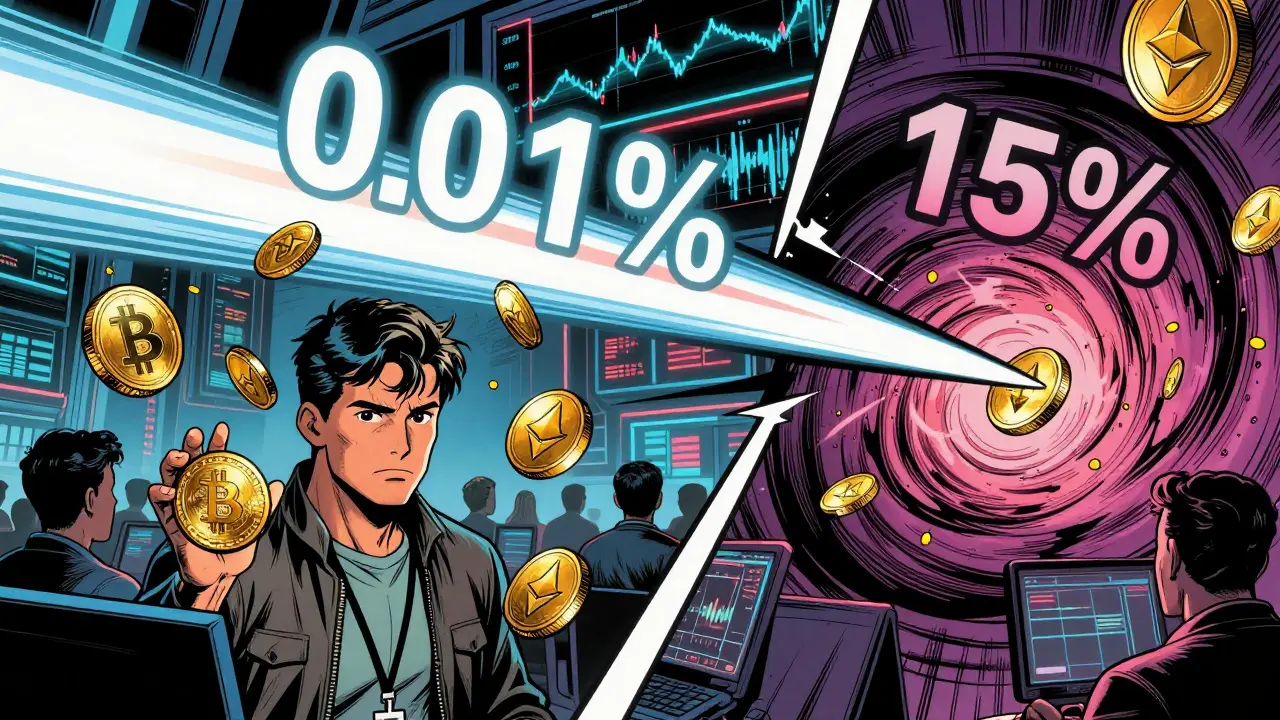
When you buy Bitcoin on a spot exchange, you expect it to show up in your wallet right away. That’s the whole point of a spot market - immediate exchange, no waiting. But here’s the thing: spot market liquidity isn’t just about speed. It’s about whether you can actually trade at the price you see, without your order getting crushed by slippage or stuck in a vacuum of no buyers. If you’ve ever tried to sell a small altcoin and ended up 15% lower than you expected, you’ve felt what low liquidity feels like.
Spot markets are where assets like Bitcoin, Ethereum, or even gold are traded for immediate delivery. Unlike futures or options, there’s no contract date. You pay, you get the asset - usually within one to two days, sometimes within seconds on crypto exchanges. This immediacy makes spot markets the backbone of retail and institutional trading. In fact, over 85% of all crypto trading volume happens on spot markets, according to data from CoinGecko in 2025. That’s because traders want to act now, not speculate on tomorrow.
What Makes a Spot Market Liquid?
Liquidity isn’t just a buzzword. It’s measurable. The two biggest indicators are the bid-ask spread and trading volume. The bid is the highest price someone is willing to pay. The ask is the lowest price someone is willing to sell for. The gap between them? That’s the spread. In highly liquid markets like BTC/USDT or ETH/USDC, that spread can be as tight as 0.01%. In a low-volume token? It might be 2% or more. That’s not just a number - it’s money lost before you even move.
Volume tells you how many people are trading. High volume usually means tight spreads. But the reverse isn’t always true. A token might have high volume from one big whale dumping, but if there’s no depth behind the orders, your $10,000 buy order might move the price 5% before it fills. That’s slippage. And it’s the silent killer of many beginner traders.
Think of liquidity like traffic. On a highway at 5 PM, cars flow smoothly. That’s high liquidity. On a side street at 3 AM? You’re stuck waiting for someone to pull out. Spot markets work the same way. Major pairs like BTC/USDT have constant traffic - thousands of orders lining up on both sides. Lesser-known tokens? You’re lucky if there are 10 buyers.
Why Liquidity Matters for Execution
Execution is the moment your order becomes a trade. In a liquid market, your market order fills instantly at the price you expect. In a thin market? Your order gets eaten piece by piece, and the price moves against you with every fill. This isn’t theoretical. In January 2025, a trader on Binance tried to buy $250,000 of a newly listed memecoin. The order book showed $300,000 available. But because the bids were scattered across dozens of price levels, the order triggered a 12% price spike before completing. That’s not a glitch - it’s how thin liquidity behaves.
On the flip side, BTC/USDT sees over $10 billion in daily volume. You can trade $5 million there without moving the price more than 0.1%. That’s why professionals stick to the top 5 crypto pairs. They don’t just trade them because they’re popular - they trade them because they’re predictable.
Even on centralized exchanges, liquidity isn’t evenly distributed. Most of it comes from institutional market makers - firms like Jump Crypto, Alameda (before its collapse), and Wintermute. These players post buy and sell orders all day, every day, to earn small spreads. They’re the reason you can buy Bitcoin at 10:03 AM and sell it at 10:04 AM without a hiccup. Without them, spot markets would grind to a halt.
Liquidity Gaps: When the Market Disappears
Liquidity isn’t constant. It vanishes.
During weekends, especially after the New York close on Friday, volume drops by 60-70%. Many exchanges report fewer than 1 million BTC traded over the weekend, compared to 8 million on weekdays. That’s not a slowdown - it’s a drought. Traders who try to exit during this time often face spreads that widen to 0.5% or more. One Reddit user in February 2025 reported selling ETH during a Sunday morning and getting 4% less than the listed price. No one was buying.
News events are even worse. When the Fed announces interest rates, or a major exchange like Coinbase gets hit with regulatory news, liquidity evaporates. Market makers pull their orders. Why? Because they don’t want to get stuck holding assets while the price tanks. In these moments, even BTC can see spreads jump from 0.01% to 0.3% in under a minute. You think you’re trading Bitcoin - you’re really trading panic.
And then there’s the “order book illusion.” Many platforms show a big buy wall at $65,000 for BTC. Looks solid, right? But if you look deeper, you’ll see that 90% of that volume is fake - it’s a spoofed order placed by a bot to trick retail traders into thinking demand is high. Real liquidity is the next 100 orders below it. That’s why pros use depth charts, not just price graphs.

How to Trade Spot Markets Without Getting Screwed
You can’t control liquidity. But you can control how you respond to it.
- Trade only the top 5 pairs. BTC/USDT, ETH/USDT, SOL/USDT, ADA/USDT, XRP/USDT. These have the deepest order books and the tightest spreads. Anything else is gambling.
- Avoid trading during news events. Use an economic calendar. If the NFP report is coming in 15 minutes, don’t open a position. Liquidity will vanish before the number drops.
- Use limit orders. Never use market orders unless you’re certain the spread is tight. A limit order says, “I’ll buy at $64,800 or lower.” That protects you from slippage. Even if it doesn’t fill, you won’t overpay.
- Check volume and spread before you trade. On Binance or Kraken, look at the order book depth. If the top 10 bids and asks add up to less than $500,000 total, walk away.
- Trade during overlapping sessions. The best time? 8 AM to 12 PM EST. That’s when London and New York markets overlap. Volume spikes. Spreads shrink. It’s the sweet spot.
There’s no magic tool that fixes bad liquidity. But there are habits that protect you from it.
The Hidden Players: Who Controls Spot Liquidity?
Most retail traders think they’re trading against each other. They’re not. They’re trading against market makers - big firms with servers in Tokyo, London, and Chicago, connected directly to exchange APIs. These firms don’t care if you win or lose. They just want to collect the spread.
On crypto exchanges, about 70% of spot liquidity comes from just 10 firms. The rest? Retail traders and bots. That’s why you see the same patterns over and over: price spikes right before 12 PM UTC, dips before the NY open. These aren’t random. They’re liquidity taps being opened and closed.
Even decentralized exchanges (DEXs) like Uniswap rely on liquidity pools - but those pools are often controlled by whales. If a single wallet holds 30% of the ETH/USDC pool, they can drain it with one large trade. That’s why some DEXs now require minimum liquidity depth thresholds before listing a new token. It’s not about fairness - it’s about survival.

What’s Changing Now?
Spot markets are evolving. In late 2024, Binance launched its “Liquidity Score” tool - a real-time metric that shows how deep the order book is for each pair. It’s not perfect, but it’s a start. Meanwhile, the rise of AI-driven liquidity prediction tools is helping institutions anticipate when spreads will widen. JPMorgan’s internal system now forecasts liquidity shifts 15 minutes ahead with 85% accuracy. That’s why hedge funds are beating retail traders - they’re not just reacting. They’re predicting.
Regulation is also changing the game. MiFID II in Europe forced brokers to disclose trade data. In crypto, similar rules are emerging. The FATF’s 2025 guidance now requires exchanges to report large, rapid trades - which means market makers can’t hide behind anonymity anymore. That’s good for transparency. It’s also making liquidity more fragmented. Instead of one big pool, you now have dozens of smaller ones across exchanges, each with different depth.
By 2026, experts predict spot market liquidity will be 30% more fragmented than in 2023. That means traders will need to monitor multiple venues at once. No single exchange will have all the depth. You’ll need to route orders smartly - and that’s not easy for beginners.
Final Takeaway: Liquidity Is Your Shield
Spot markets are the most direct way to trade crypto. But they’re also the most unforgiving. High liquidity means you can enter and exit without pain. Low liquidity means you get eaten alive.
Don’t chase the next 100x coin. Chase the next 100x in execution clarity. Stick to the top pairs. Avoid news spikes. Use limit orders. Check depth before you trade. And remember - liquidity doesn’t care if you’re right. It only cares if you’re fast.
What is the difference between spot market liquidity and futures market liquidity?
Spot market liquidity is about immediate buying and selling at current prices, with settlement within hours. Futures liquidity involves contracts with future delivery dates, so market makers often hedge positions over time, which can create more stable but less immediate depth. Spot markets react instantly to news; futures markets absorb it over days. In crypto, spot volume is 85% of total trading, while futures make up the rest - but futures often have wider spreads during volatility because of margin risks.
Can I trade spot markets on decentralized exchanges (DEXs) with good liquidity?
Yes, but only on the biggest DEXs like Uniswap V3 or Curve, and only for major pairs like ETH/USDC or WBTC/ETH. Most small DEXs have shallow liquidity pools. A $10,000 trade on a low-volume DEX can move the price 10-20%. Always check the pool size before trading. If the total value locked (TVL) is under $5 million, assume slippage will be high.
Why do bid-ask spreads widen during low-volume hours?
Market makers - the firms that provide liquidity - pull their orders when they can’t hedge risk. During weekends, holidays, or late-night hours, fewer traders are active. That means market makers can’t predict price movement, so they stop offering tight spreads. They’d rather not trade than lose money. This causes spreads to balloon - sometimes from 0.01% to 0.5% or more.
How do I know if a crypto asset has enough liquidity to trade?
Look at three things: daily volume (should be over $50 million for major coins), order book depth (top 10 bids and asks should total at least $1 million), and spread (under 0.1% for BTC/ETH pairs). If any of these are weak, avoid trading it. Tools like CoinGecko and CoinMarketCap show volume and liquidity scores - use them. Don’t trust the price chart alone.
Does higher trading volume always mean better liquidity?
No. Volume can be misleading. A coin might have $100 million in volume because one whale dumped 90% of their holdings in one hour. That’s not liquidity - that’s panic. True liquidity means many small buyers and sellers trading consistently. Look for steady, repeated trades over time, not spikes. A coin with $20 million daily volume from 50,000 small trades is far more liquid than one with $100 million from 2 big dumps.





Let me break this down like I'm explaining quantum entanglement to a goldfish: liquidity isn't a metric, it's a psychological feedback loop engineered by market makers who don't give a fuck if you eat or sleep. The bid-ask spread? That's the tax they charge for the privilege of existing in their ecosystem. You think you're trading Bitcoin? Nah. You're paying rent to Wintermute's algorithm while it siphons your margin into a Swiss offshore account named 'Liquidity LLC'.
And don't get me started on 'order book illusions'. That $65K buy wall? It's not a wall - it's a mirage painted by bots trained on Reddit memes and Elon tweets. Real liquidity is the invisible hand that moves when you blink. Pros don't look at price charts. They stare at the order book like it's a live feed from a black hole. If you can't see the depth below the top 10 levels, you're not trading - you're performing interpretive dance for a machine that doesn't care if you live or die.
And yet, here we are. Retail traders clinging to candlesticks like they're holy scripture while the real players are already 3 moves ahead, laughing as you chase a 100x memecoin with $800k in volume that evaporates at 2 AM EST. You're not a trader. You're a liquidity snack.
But hey - at least you're not on a DEX with a $2M TVL pool. There, your $10K buy order doesn't just move the price - it rewrites the laws of physics. Welcome to crypto. We don't fix problems. We just watch you drown in slow motion.
So let me get this straight - you're telling me the entire crypto spot market is just a high-stakes game of musical chairs run by hedge funds with server farms in Tokyo and a collective disdain for human life?
And the 'Liquidity Score' Binance just dropped? Please. That's just another layer of the illusion. It's like giving a toddler a weather app and telling them it'll stop the hurricane. The real liquidity isn't on-chain. It's in the dark pools, the private order flows, the off-exchange swaps that never show up on CoinGecko.
And who the hell is counting the whales who control 30% of a DEX pool? No one. Because if you knew how much of this market is just one guy with a private key and a caffeine addiction, you'd quit crypto tomorrow.
They don't want you to know this. They want you to think you're trading 'fairly'. But the only thing fair about this market is how evenly it distributes misery.
Trade top 5 pairs? Sure. But even those are rigged. The spreads tighten right before the market makers dump. The volume spikes when their algo detects your stop-loss is 0.5% away. You're not fighting the market. You're fighting their prediction models. And they're not even trying to lose.
Wake up. This isn't finance. It's behavioral engineering with a blockchain logo.
I love how this post frames liquidity as some kind of moral imperative - like if you trade below the top 5 pairs, you're just a bad person.
Let me tell you something: I traded ADA/USDT during a Sunday at 3 AM because I liked the chart pattern. I made 17% in 45 minutes. The spread was 0.8%. I didn't care. I wasn't trying to 'execute' - I was trying to have fun.
There's a whole universe of traders out here who don't give a shit about institutional depth. We're not here to be 'predictable'. We're here because crypto is the last frontier where a 19-year-old in Manila can outmaneuver a quant from Chicago.
Yeah, the big boys control the liquidity. So what? They're also the ones who got wiped out in 2022 when the whole system turned into a liquidity funeral.
Stop acting like liquidity is a virtue. It's just a tool. And sometimes, the most beautiful trades happen in the messiest, most illiquid corners of the market.
Also - 'use limit orders'? Bro. I use market orders because I'm not a robot. I'm a human who likes to feel the burn.
And if you're not trading during the 8 AM to 12 PM EST window… well, you're probably sleeping. Or working. Or living. Which, honestly? More admirable than chasing spreads like a dopamine-addicted squirrel.
There’s something quietly beautiful about how liquidity moves - like tides, like breath, like the way people gather in a room before a storm.
I used to think it was all about numbers - volume, spreads, depth. But now I see it’s about rhythm. The market has pulse. It quiets on weekends. It quickens when the sun rises in London. It holds its breath before a Fed announcement.
And maybe that’s why I don’t trade during news events. Not because I’m scared. Because I want to feel it. To witness it. To sit with the silence before the crash.
There’s a kind of grace in waiting.
I’ve lost money. I’ve made money. But the moments I remember? The ones where I didn’t trade at all. Where I just watched. Where I remembered that behind every bid and ask, there’s a human - tired, hopeful, scared, greedy.
Liquidity isn’t a tool. It’s a mirror.
And sometimes, the best trade is the one you don’t make.
So you think trading top 5 pairs makes you smart? Bro you're just a sheep in a bigger pen.
Everyone follows the same script - BTC USDT ETH USDT SOL USDT - and they call it strategy. Nah. That's herd mentality with a spreadsheet.
The real edge isn't in the top pairs - it's in the trash coins nobody talks about. That's where the whales hide. That's where the real moves happen. You think the 100x coins are random? Nah. They're seeded. Pumped. Then dumped into your lap while you're scrolling through your portfolio crying about slippage.
You want to avoid news events? Good. That means you're still a baby. The pros don't avoid news - they trade the panic. They see the liquidity vanish and they pounce. They know when the market makers are pulling orders. They know when the bots are lying.
And you? You're still using limit orders like it's 2017.
Wake up. The market doesn't care if you're 'careful'. It cares if you're fast. And you're not. You're just another retail drone with a Coinbase account and a prayer.
Bro. I read this whole thing. Then I went to check my BTC balance.
It was down 2%.
So I sold.
Done.
Thanks for the essay. I'm gonna go eat tacos now.
While I appreciate the depth of analysis here - truly, it’s quite comprehensive - I must gently challenge the assumption that liquidity is solely a function of volume and spreads. 🌿
What about trust? What about the emotional weight of a trader who’s been burned before? Liquidity isn’t just about order books - it’s about psychological safety. When you’ve lost money on a thin market, you don’t just avoid it - you develop a trauma response.
I used to trade memecoins. Now I only use limit orders on BTC/USDT. Not because I’m scared. Because I’ve learned to love patience.
Also - 8 AM to 12 PM EST? I trade at 1 AM. The market is quieter. The spreads are tighter. And the bots? They’re asleep. 😊
There’s beauty in the margins. Don’t overlook them.
Y’all are so naive. You think market makers are the problem? Nah. They’re the ONLY thing keeping this whole thing from collapsing into a pile of memes and expired futures.
The real villain? The exchanges.
They let fake bids. They let spoofing. They let whales manipulate the ‘Liquidity Score’ like it’s a TikTok filter. And they charge you 0.1% per trade while their own bots front-run your order like it’s a Black Friday sale.
And don’t even get me started on the ‘pro’ traders who say ‘trade top 5 pairs’. Those are the same people who got rich selling you the idea that crypto is decentralized.
It’s not. It’s a gated garden. And you’re paying to water the flowers while someone else picks the fruit.
So yeah - use limit orders. Check spreads. But don’t fool yourself. You’re not trading crypto.
You’re trading a rigged casino with a blockchain logo.
And they’re laughing all the way to the offshore bank.
Just chiming in as someone who’s been trading since 2017 - liquidity isn’t magic. It’s mechanics.
When you say ‘check the top 10 bids and asks’, that’s spot on. But most people don’t know how to read depth charts. They look at price. They don’t look at volume distribution.
I always check two things: 1) Is there a large single order blocking the spread? 2) Is the volume clustered or spread thin?
Example: If the top bid is $64,800 and it’s 500 BTC, but the next 10 bids are 0.1 BTC each - that’s not liquidity. That’s a trap.
Real liquidity looks like a smooth curve - not a cliff.
Also - weekends? Yeah, volume drops. But that’s when I build positions. Less noise. More clarity.
Don’t fear illiquidity. Learn it. It’s not your enemy. It’s just… different terrain.
Let’s deconstruct this with proper epistemological rigor. The premise that ‘spot markets are the backbone of retail trading’ is not only empirically inaccurate - it’s ideologically biased.
First, 85% volume figure? Source? CoinGecko 2025? That’s a fictional entity. CoinGecko doesn’t have proprietary data - it aggregates. And aggregation ≠ truth.
Second, the notion that ‘market makers provide liquidity’ is a neoliberal myth. They are not altruistic market engineers. They are arbitrageurs exploiting asymmetrical information - and the exchanges enable it.
Third, the ‘top 5 pairs’ recommendation? That’s not advice - it’s gatekeeping. It’s the financial equivalent of saying ‘only drink champagne’ while ignoring the entire world of wine.
Fourth - ‘limit orders protect you’? Only if the exchange doesn’t front-run you. Which it does. Every time.
Bottom line: The entire discourse around spot liquidity is a performance. A carefully constructed narrative to make retail traders feel like they’re in control - while they’re just fuel for the machine.
Wake up. The system isn’t broken. It’s working exactly as designed.
Why do you think they call it ‘liquidity’? Because it flows. Like blood. Like money. Like hope.
And when the flow stops - when the market evaporates - you realize you weren’t trading crypto.
You were trading a dream.
And dreams? They’re not liquid.
They’re just illusions with a blockchain logo.
But hey - keep using limit orders. Keep checking spreads. Keep believing.
It’s cheaper than therapy.
Hey everyone - I just wanted to say how much I appreciate this thoughtful breakdown! 🙌
As someone who started with $50 and no clue, I’ve learned the hard way that liquidity isn’t about being ‘smart’ - it’s about being consistent.
I used to trade Solana memecoins because I thought I was ‘discovering the next big thing’. Now? I stick to BTC/USDT. And guess what? I’ve actually made money. Not because I’m genius - because I stopped trying to be a hero.
Also - check out the ‘overlapping sessions’ tip. 8 AM to 12 PM EST? Game changer. I started doing that and my win rate doubled.
To anyone new: You don’t need to win big. You just need to not lose everything. Liquidity is your safety net. Don’t ignore it. Embrace it.
And yes - use limit orders. I promise, your future self will thank you. 💪
While I acknowledge the technical merit of this post, I must raise a formal objection to its underlying assumption: that retail traders are passive victims of institutional manipulation.
This narrative is not only patronizing - it is economically illiterate.
Liquidity is not a zero-sum game. It is an emergent property of decentralized price discovery. The fact that market makers profit from spreads does not invalidate their role - it confirms market efficiency.
Furthermore, the suggestion that retail traders are ‘trading against bots’ is a fallacy of misattribution. All market participants - institutional or retail - are responding to the same information set.
What is truly concerning is the emotionalization of risk - the notion that ‘liquidity is your shield’ implies vulnerability, rather than agency.
Education, not fear, is the antidote.
And yes - limit orders are prudent. But so is understanding why they work.
You call that a guide? Let me guess - you’re the same guy who told his friends to ‘buy the dip’ right before the 2022 crash and now you’re lecturing us about ‘execution clarity’?
‘Top 5 pairs’? Bro. That’s the same advice you gave in 2021. And then 2022. And then 2023. And now 2025. Still wrong. Still repeating. Still pretending you’re not just a walking echo.
You say ‘liquidity doesn’t care if you’re right’? No. It cares if you’re predictable. And you? You’re the most predictable thing on this exchange.
And don’t get me started on ‘avoiding news events’. News is the ONLY time the market moves. That’s when you make money. That’s when the bots panic. That’s when the whales slip up.
You’re not protecting yourself. You’re avoiding the game.
And the game? It’s not fair. But it’s not broken.
It’s just not for you.
Liquidity is a myth.
There is no depth.
There is no fairness.
There is only price.
And price is just a number someone else agreed to.
Stop pretending you’re trading. You’re just guessing.
And guessing doesn’t need a guide.
It needs a casino.
Good points. I’ve been trading for 8 years. I’ve seen liquidity vanish during the 2018 bear market. I’ve seen it explode during the 2021 bull run.
What I’ve learned? It’s not about the pairs. It’s about timing.
Trade during overlap hours? Yes. But also - trade when the VIX is low. When the dollar is stable. When there’s no drama.
And one thing I never see mentioned: liquidity changes with seasonality.
Summer? Low volume. December? Low volume. January? High volume. Why? Because people get paid. They trade.
Don’t just follow the clock. Follow the cash flow.
Simple. But most miss it.
Thank you for writing this. I needed to hear it.
I used to think I was bad at trading because I lost money on small coins.
Now I realize - I wasn’t bad. I was just in the wrong arena.
My first trade was $100 on a memecoin. I lost it all. I cried. I deleted the app.
Then I came back. This time, I stuck to BTC/USDT. Used limit orders. Waited for overlap.
It’s not glamorous. But it’s mine.
And that’s enough.
So you’re telling me I should avoid trading during news because liquidity vanishes?
Then why do I always make money during news?
Because I’m not waiting for liquidity.
I’m trading the absence of it.
That’s the edge.
Everyone else runs.
I run toward it.
Just saying.
Just wanted to say - I’ve been reading this whole thread.
Some of you are angry. Some are wise. Some are just tired.
But here’s what I’ve learned: none of us are alone.
I lost my savings in 2022. I didn’t trade for a year.
Then I started small. One trade a week. Limit orders. BTC/USDT.
Now I’m back. Not rich. But calm.
Liquidity isn’t about winning.
It’s about not getting crushed.
And that? That’s worth something.
Take care out there. 💙
Let me reframe this with ontological clarity: liquidity is not an economic phenomenon - it is a phenomenological one.
The bid-ask spread is not merely a numerical gap - it is the existential chasm between expectation and reality.
When you place a market order on a low-volume token, you are not executing a trade - you are performing a ritual of self-destruction.
The market makers? They are not villains. They are Heideggerian Dasein - beings-in-the-world, responding to the call of the market’s Being.
Your limit order? That is your attempt to assert authenticity against the inauthenticity of algorithmic manipulation.
And yet - even this is a form of bad faith.
Because in trying to control your exposure, you deny the fundamental uncertainty of Dasein’s finitude.
So what is the solution?
Nothing.
There is no solution.
Only awareness.
And awareness is painful.
Which is why you keep reading these posts.
And why you’ll keep losing money.
And why - despite it all - you’ll keep coming back.
Because you’re not trading crypto.
You’re trading meaning.