Psychology of Bull and Bear Markets: How Emotions Drive Crypto Cycles
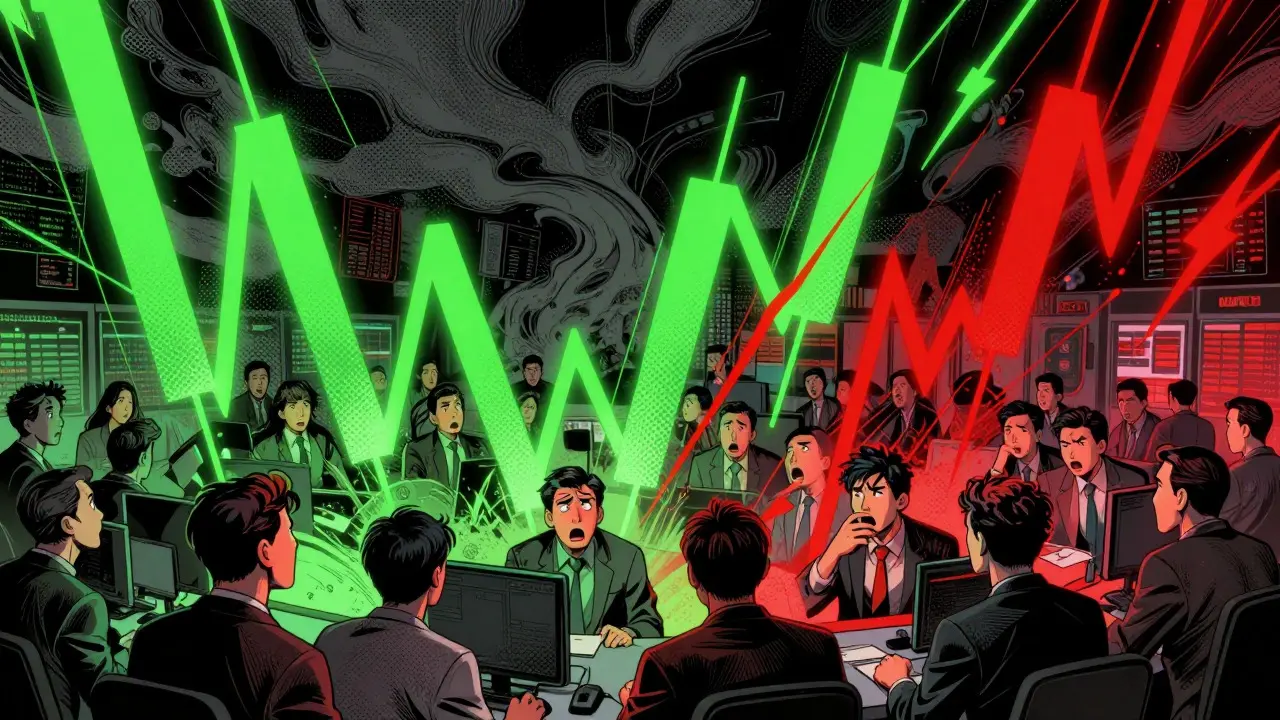
Have you ever bought a coin at the top because everyone around you was making money? Or sold your entire portfolio in a panic when prices dropped 30% overnight? If so, you are not alone. In fact, most market crashes and rallies are driven less by actual economic data and more by human emotion. While traditional finance often focuses on earnings reports and interest rates, the psychology of bull and bear markets reveals that fear and greed are the true engines of price movement. This is especially true in blockchain assets, where volatility amplifies these emotional swings.
Understanding these psychological patterns helps you stop reacting to every green or red candlestick. Instead, it allows you to anticipate how the crowd will behave next. Whether you are holding Bitcoin for the long term or trading altcoins daily, knowing the mental traps investors fall into can save you from costly mistakes. Let’s break down the mechanics behind these cycles and how they apply to your wallet.
The Emotional Cycle: From Pessimism to Euphoria
Market cycles follow a predictable emotional arc. It starts with pessimism, moves through skepticism, matures with optimism, and finally dies in euphoria. This progression explains why the best buying opportunities often appear when news is worst, and the worst selling points occur when everyone feels invincible.
- Born on Pessimism: Prices are low, and most people believe the asset class is dead. Few buyers remain, creating a floor for prices.
- Grows on Skepticism: Early adopters buy, but the majority still doubt the trend. Prices rise slowly as supply decreases.
- Matures on Optimism: Mainstream media picks up the story. Investors who missed the early gains start entering, driving prices higher.
- Dies in Euphoria: Everyone believes prices will go up forever. Speculation peaks, and new money chases highs until a correction wipes out leverage.
In cryptocurrency, this cycle compresses dramatically. What takes years in stock markets can happen in months for digital assets. Recognizing which stage you are in is crucial. If you see taxi drivers talking about crypto, you are likely in the euphoria phase. That is usually time to take profits, not add risk.
Key Cognitive Biases That Trap Investors
Your brain is wired for survival, not investing. Several cognitive biases distort your judgment during market swings. Identifying them is the first step to overcoming them.
Herd Mentality
Humans are social animals. When uncertain, we look to others for cues. In markets, this creates herd behavior. During a bull run, seeing others profit triggers the fear of missing out (FOMO). You buy not because the fundamentals are strong, but because the crowd is moving. Conversely, in a bear market, panic spreads quickly. One large sell order can trigger a chain reaction as others jump ship to avoid losses.
Loss Aversion
Psychological research shows that losing $100 hurts twice as much as gaining $100 feels good. This bias causes two common errors: holding losing positions too long hoping for a rebound, and selling winning positions too early to lock in small gains. In crypto, this often means bag-holding a project that has lost its utility while selling a winner before it reaches its full potential.
Overconfidence Bias
During bull markets, success breeds arrogance. Traders who made money on a few lucky trades believe they have special skills. They increase leverage, ignore stop-losses, and take excessive risks. When the market turns, these overconfident traders suffer the deepest losses. Remember, short-term success is often just luck, not skill.
Bull Market Psychology: The Danger of Greed
A bull market is defined by sustained price increases of 20% or more from recent lows. In this environment, optimism dominates. Investors shift from defensive strategies to aggressive growth seeking. However, this optimism can blind you to reality.
Greed and envy act as twin terrors here. As some holders see their portfolios multiply, others feel envious. This envy drives impulsive buying of high-risk altcoins or memecoins, hoping to replicate those massive gains. The allure of quick riches leads to over-leveraging. Many investors borrow against their assets or use futures contracts, assuming the upward trend will never end. When a minor correction occurs, forced liquidations cascade, turning a dip into a crash.
Fear of Missing Out (FOMO) is the fuel for this fire. It pushes investors to enter at peak prices. By the time they realize the momentum is slowing, the easy money has already been made. The key takeaway is that in a bull market, your enemy is your own desire for instant gratification.

Bear Market Psychology: The Grip of Fear
A bear market involves price declines of 20% or more from recent highs. Defined by fear, uncertainty, and selling pressure, this phase tests your conviction. Charles Schwab identifies three primary drivers: weakening economy, securities liquidation, and negative sentiment. In crypto, these often manifest as regulatory fears, exchange hacks, or macroeconomic tightening.
During a bear market, the psychological shift is from growth-seeking to capital preservation. Investors flee to safety. In traditional markets, this means utilities and consumer staples. In crypto, this usually means holding stablecoins or cashing out entirely. This flight to safety reduces liquidity, making prices even more volatile.
Negative sentiment creates a self-perpetuating cycle. Falling prices generate fear, which prompts selling, which drives prices lower. Many investors exit the market entirely, believing the asset class is broken. This is often the perfect time to accumulate quality assets at discounted prices, but only if you have the emotional discipline to ignore the noise.
| Factor | Bull Market | Bear Market |
|---|---|---|
| Dominant Emotion | Greed, Optimism, FOMO | Fear, Pessimism, Anxiety |
| Typical Action | Buy high, hold, increase leverage | Sell low, cut losses, move to cash |
| Risk Perception | Low (overestimated confidence) | High (overestimated threat) |
| Decision Basis | Social proof, hype | Panic, loss aversion |
| Best Strategy | Take partial profits, rebalance | Accumulate quality assets, stay patient |
Historical Patterns in Crypto and TradFi
History rhymes, though it rarely repeats exactly. The 2007-2008 financial crisis showed how panic selling accelerates downturns. Similarly, the 2022 crypto winter saw billions in market cap evaporate as fear gripped the sector. Yet, both were followed by significant recoveries.
Interestingly, dramatic downturns can occur within broader bull markets without technically constituting a bear market. For example, sharp corrections in late 2018 occurred during a longer-term uptrend. These events highlight that volatility is normal. If you treat every 20% drop as a catastrophe, you will miss the larger trend. Understanding that dips are part of the cycle helps maintain perspective.
Academic research in behavioral finance confirms that emotions override rational analysis in most cases. Traditional models assume investors are rational actors who maximize utility. Reality is messier. We are influenced by news headlines, social media trends, and our own past experiences. Acknowledging this irrationality is the first step toward smarter investing.

Practical Strategies to Master Your Mindset
You cannot eliminate emotions, but you can manage them. Here are actionable steps to protect your portfolio from psychological pitfalls.
- Create a Written Plan: Decide in advance what you will do when prices rise 50% or fall 30%. Write it down. When emotions run high, refer to the plan instead of reacting impulsively.
- Use Dollar-Cost Averaging (DCA): Instead of trying to time the bottom, invest fixed amounts regularly. This smooths out volatility and removes the stress of entry timing.
- Limit Social Media Consumption: News feeds are designed to trigger emotional responses. Curate your sources to focus on data and fundamentals rather than hype or doom.
- Set Stop-Losses Wisely: Use stop-loss orders to protect against catastrophic losses, but set them wide enough to account for normal volatility. Avoid tight stops that get triggered by minor wicks.
- Review Regularly, Not Daily: Checking your portfolio multiple times a day increases anxiety. Set specific times for review, such as weekly or monthly, to maintain objectivity.
Defensive strategies also play a role. During uncertain times, diversify across different asset classes. Holding a mix of blue-chip cryptocurrencies, stablecoins, and perhaps traditional assets can reduce overall portfolio volatility. This balance provides a psychological buffer, making it easier to stick to your strategy during turbulent times.
Why Behavioral Finance Matters Now
As blockchain technology matures, the gap between fundamental value and market price widens due to speculative fervor. Understanding the psychology behind these gaps is essential for long-term success. The market is not just a place where assets are exchanged; it is a reflection of collective human behavior.
By recognizing the signs of euphoria and despair, you can position yourself advantageously. Buy when others are fearful, sell when others are greedy. It sounds simple, but executing it requires discipline. The next time you feel the urge to chase a pump or panic-sell a dip, pause. Ask yourself: Is this decision based on logic, or am I following the herd? That single question can change your financial trajectory.
What defines a bull market versus a bear market?
A bull market is characterized by sustained price increases of 20% or more from recent lows, driven by optimism. A bear market involves price declines of 20% or more from recent highs, driven by fear and selling pressure.
How does loss aversion affect crypto investors?
Loss aversion causes investors to hold losing assets too long, hoping to break even, while selling winning assets too early to secure small gains. This prevents compounding returns and locks in losses.
Is FOMO a sign to buy or sell?
FOMO (Fear Of Missing Out) usually signals that you are entering near the top of a cycle. It is generally a warning sign to exercise caution rather than an opportunity to buy aggressively.
Can technical analysis overcome emotional biases?
Technical analysis provides objective data points, but interpretation is still subject to bias. Combining technical signals with a strict trading plan helps mitigate emotional interference.
What is the best strategy for surviving a bear market?
The best strategy involves capital preservation and accumulation. Hold stablecoins or cash to preserve buying power, and gradually acquire quality assets at discounted prices without trying to time the exact bottom.