
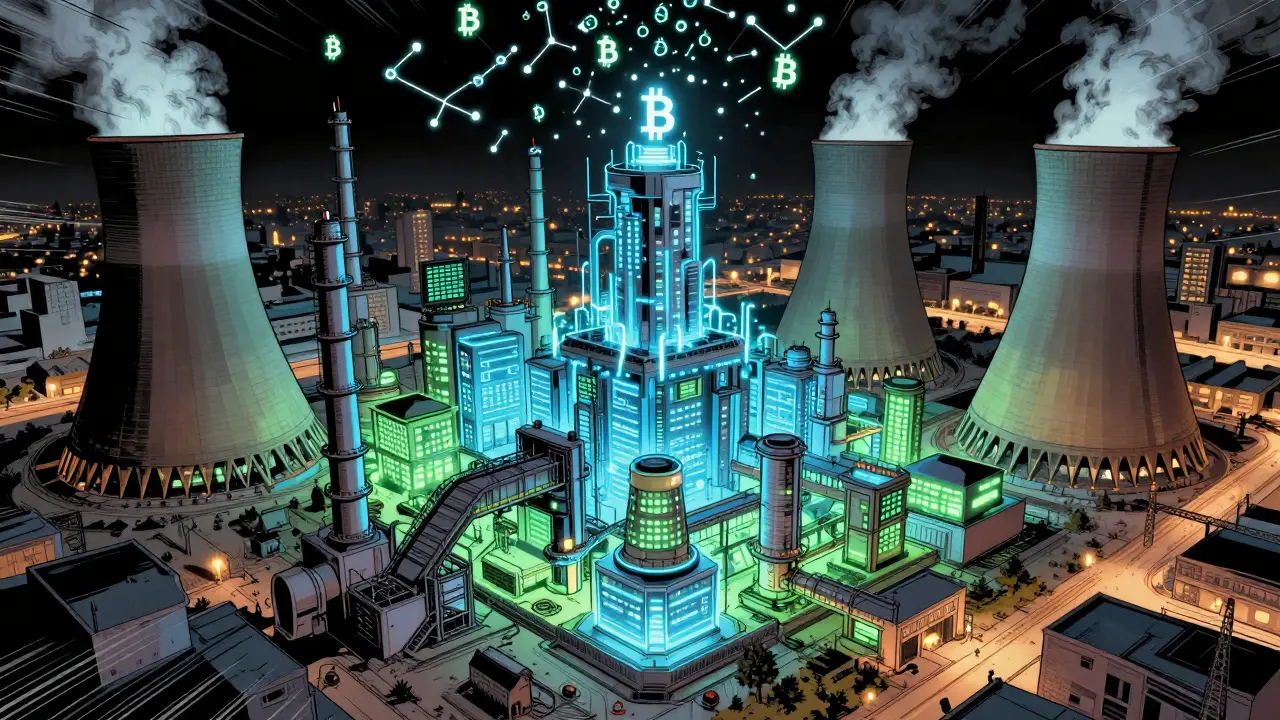
Pakistan’s 2,000 MW Electricity Allocation for Crypto Mining: What It Means and Why It Matters
Pakistan just gave 2,000 megawatts of electricity to crypto mining - and no one saw it coming
Most countries try to cut energy use for Bitcoin mining. Pakistan did the opposite. In May 2025, the government announced it would dedicate 2,000 megawatts (MW) of surplus power - enough to light up a small country - to Bitcoin mining and AI data centers. This isn’t a pilot. It’s a national strategy. And it’s already changing how the world thinks about energy waste.
Here’s the problem Pakistan solved: they have 7,000 MW of unused electricity sitting idle. Coal plants, built at great cost, run at just 15% capacity. Meanwhile, households and businesses pay some of the highest electricity rates in South Asia. The math didn’t add up. So they flipped the script: instead of shutting down plants, they’re turning them into Bitcoin factories.
How much Bitcoin can 2,000 MW actually mine?
Let’s break it down. At 2,000 MW, Pakistan’s allocation is the largest single government-backed crypto mining project ever launched. According to mining analyst Daniel Batten, this setup could produce around 17,000 Bitcoin per year. At today’s prices, that’s roughly $1.8 billion in value.
But it’s not just about Bitcoin. The same power will run AI data centers - a growing sector that needs steady, cheap electricity. Unlike residential mining rigs, these are industrial-scale operations: warehouses full of ASIC miners and server racks running 24/7. The goal? Turn idle power into digital assets and tech jobs.
Electricity cost is the key. Pakistan is offering miners 23-24 Pakistani rupees per kWh - about $0.08. That’s half the average rate in Texas and a third of what miners pay in Germany. Even compared to Kazakhstan and Russia - where mining thrives on cheap power - Pakistan’s rate is a steal. In most places, electricity is the biggest cost. In Pakistan, it’s now the biggest advantage.
Why now? And why Pakistan?
This isn’t random. Pakistan’s economy has been stuck. Inflation is high, foreign reserves are low, and billions in power infrastructure sit unused. The annual cost of keeping those coal plants running without output? 2.8 trillion Pakistani rupees - over $10 billion. That’s money burning in the dark.
Crypto mining changes that. It turns waste into revenue. The government estimates this initiative could generate $500 million annually just from mining fees and taxes. That’s not chump change. It’s enough to fund schools, hospitals, or solar upgrades.
Geography helps too. Pakistan sits between Asia, Europe, and the Middle East. Data from here can reach Dubai, Istanbul, and Delhi in under 50 milliseconds. That low latency makes it ideal for AI and blockchain services that need fast connections. It’s not just about power - it’s about being the next digital hub.

The IMF is worried. Here’s why
Not everyone is cheering. The International Monetary Fund (IMF) is pushing back. Their main concern? Subsidies. They argue that giving miners $0.08/kWh while regular consumers pay $0.15+ is unfair. They’ve asked: “How will you phase this out? What happens when Bitcoin’s price drops?”
The IMF has a point. Past subsidies in Pakistan - for fuel, fertilizer, electricity - often became permanent, drained budgets, and hurt public services. But here’s the difference: this subsidy isn’t for people. It’s for a tech export. Every dollar earned from mining goes into foreign reserves. It’s not a handout. It’s a trade.
Both sides are still talking. Pakistan says the deal is flexible. The IMF says they’re “engaging as plans develop.” No final agreement yet. But the project moved forward anyway. Phase 1 is live. The first mining farms are being built in Lahore and Karachi.
Who’s actually running this?
The Pakistan Crypto Council (PCC), formed in March 2025, is the driver. It’s not a private company. It’s a government body under the Finance Ministry, led by Special Assistant to the Prime Minister Bilal Bin Saqib. They’re working with Binance co-founder Changpeng Zhao as a strategic adviser - a huge signal that global crypto players are watching.
Local telecom giants like PTCL, Multinet, and Cybernet are already operating 22 data centers across the country. They’re the ones building the infrastructure. The University of Turbat even launched a 1MW solar-powered data center in 2023 - a hint that renewables are part of the long-term plan.
And then there’s the policy. In April 2025, Pakistan introduced its first-ever legal framework for crypto businesses. No more gray zones. Now, companies can register, pay taxes, and operate legally. That’s huge. Most countries still ban or ignore crypto. Pakistan is building a legal pipeline.
What’s the real risk?
People worry about grid overload. Can Pakistan’s power system handle 2,000 MW of constant, high-load mining? The answer is yes - if managed right. The government isn’t pulling power from homes. They’re using surplus that’s already there. The real danger is mismanagement: if miners don’t pay, if the grid isn’t monitored, if corruption creeps in.
Another risk? Volatility. If Bitcoin crashes, mining becomes unprofitable. But Pakistan isn’t betting everything on Bitcoin. They’re also betting on AI. Data centers don’t care if Bitcoin’s price drops. They still need power. And AI is growing fast - faster than crypto.
Then there’s FATF. Pakistan is still on the Financial Action Task Force’s grey list for anti-money laundering risks. They need to prove crypto isn’t being used for crime. That’s why the PCC is working with regulators to build KYC and transaction tracking into every mining operation. No anonymity. No loopholes.
What’s next? Phase 2, and beyond
Phase 1 is 2,000 MW. Phase 2? Could be 5,000 MW. The government hasn’t said yes yet, but they’ve hinted at it. If this works - if revenue flows, if jobs are created, if the IMF stays quiet - they’ll scale up.
They’re also building a national Bitcoin reserve. At the Bitcoin 2025 conference, Pakistan unveiled its first government-held Bitcoin. Not for speculation. For stability. Think of it like a gold reserve, but digital. It’s a statement: this isn’t a fad. It’s national policy.
Other countries are watching. Nigeria? Egypt? Indonesia? All have surplus power and economic pressure. If Pakistan pulls this off, it won’t be the last. It could be the blueprint.
Is this sustainable?
Sustainability isn’t just about power sources - it’s about economics. Right now, Pakistan’s model works because:
- They’re using waste energy
- They’re creating export revenue
- They’re attracting tech investment
- They’re building legal infrastructure
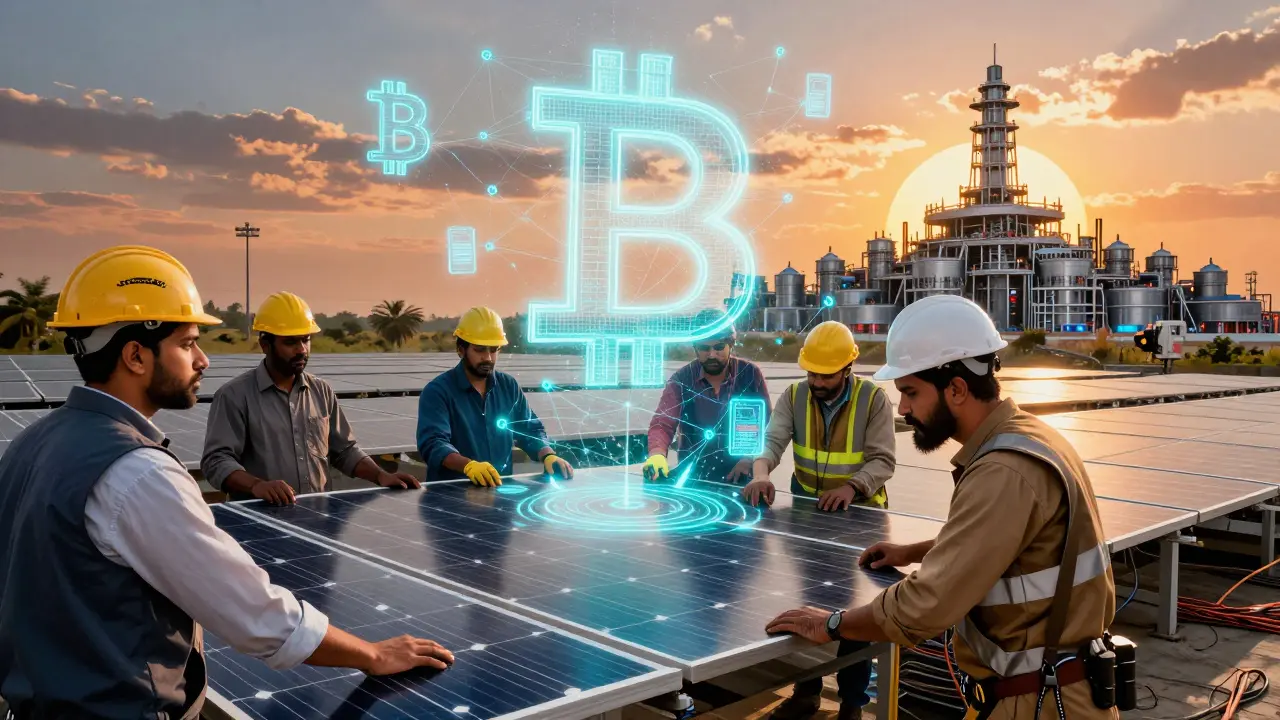
Long-term, they’ll need to shift to solar and wind. That’s already happening. The 1MW solar project in Turbat is just the start. The goal isn’t to keep coal plants running forever. It’s to use them as a bridge - until renewables can take over.
And here’s the quiet win: jobs. Thousands of engineers, technicians, and IT staff are being hired. Not in Silicon Valley. In Peshawar, Faisalabad, Quetta. This isn’t just about mining. It’s about building a tech economy from scratch.
What this means for the rest of the world
The old model of crypto mining was: find cheap power, run rigs, cash out. It was chaotic. It was dirty. It was often illegal.
Pakistan is showing a new model: government-led, regulated, integrated with national energy strategy. It’s not perfect. But it’s real. And it’s working.
If you thought crypto mining was only for Texas ranchers or Siberian warehouses, think again. The future of mining might be in Karachi. And it might be the only way some countries can escape economic stagnation.
Is Pakistan’s 2,000 MW crypto mining plan legal?
Yes. In April 2025, Pakistan launched its first official cryptocurrency policy, making mining and digital asset operations legal under regulated conditions. The Pakistan Crypto Council oversees compliance, and all operations must follow KYC and anti-money laundering rules set by the State Bank and FATF.
How much electricity does one Bitcoin miner use?
A single high-end ASIC miner uses about 3,000 watts (3 kW) continuously. To mine one Bitcoin per year, you need roughly 2,500-3,000 kWh of electricity. Pakistan’s 2,000 MW allocation can support hundreds of thousands of such miners - enough to produce up to 17,000 BTC annually.
Why is Pakistan’s electricity rate so low for miners?
It’s not a gift - it’s a business deal. Pakistan has 7,000 MW of surplus power that’s otherwise wasted. Charging miners $0.08/kWh turns idle assets into foreign currency. The government expects to earn $500 million a year from this. That money helps pay for schools, roads, and renewable energy projects.
Is the IMF blocking the project?
No. The IMF has raised concerns about subsidy fairness and long-term fiscal impact, but they haven’t blocked the plan. Both sides are still negotiating. Pakistan has moved forward with Phase 1 while continuing talks. The IMF’s role is advisory, not veto power.
Can Pakistan’s grid handle 2,000 MW of constant mining load?
Yes - because it’s using surplus capacity, not drawing from homes or businesses. The 2,000 MW was already available. The challenge isn’t capacity - it’s monitoring and managing demand to prevent grid instability. The PCC is working with power engineers to install smart meters and load-balancing systems.
Will this lead to more renewable energy in Pakistan?
Indirectly, yes. The revenue from mining is being reinvested into grid upgrades and solar projects. The Turbat solar data center is just one example. As mining grows, so does the incentive to build cleaner, more reliable power - because miners need stable electricity, not blackouts.





ok but like... who even asked for this?? 🤡 pakistan just turned their power grid into a crypto casino and everyone's acting like it's the second coming. i mean, sure, it's 'waste energy'... until the grid crashes and 50 million people are left in the dark. also, chill with the 'digital gold' nonsense.
This is a textbook case of policy failure disguised as innovation. Pakistan is not solving an energy problem-they're creating a speculative financial dependency on a volatile asset class. The IMF's concerns are not just valid-they're prophetic. Subsidizing mining at $0.08/kWh while citizens pay $0.15+ is a regressive redistribution of wealth. It's not a trade; it's a bailout for tech speculators using public infrastructure. And don't even get me started on the FATF grey list implications. This isn't progress-it's economic performative theater with ASIC miners as the props.
The structural logic here is actually quite brilliant. Pakistan isn't subsidizing mining-they're monetizing stranded assets. The 7,000 MW of idle capacity represents a sunk cost that was already being borne by taxpayers. By redirecting it toward high-value, export-oriented digital infrastructure, they're converting a liability into a foreign exchange earner. The key insight? Bitcoin mining isn't the end goal; it's the entry point to building a globally connected tech ecosystem. The AI data centers, the low-latency advantage, the legal framework-all of this was enabled by the mining initiative. This is state-led industrial policy disguised as crypto madness. And honestly? It's working.
They're not building a tech economy. They're building a debt trap. Every dollar from mining goes into reserves, sure. But who's going to pay when the price drops? The people who already pay 2x for electricity? This isn't innovation. It's desperation with a blockchain sticker on it.
so the us and eu are mad because pakistan is finally doing something smart? they banned crypto in their own countries, then cry when someone else uses it to survive. this is colonialism with a spreadsheet. the imf wants pakistan to stay poor and dependent. meanwhile, pakistan is turning trash into gold. they're not the problem. the west is.
Let me be clear: this is not merely an energy policy. It is a geopolitical realignment. Pakistan, long marginalized in global financial discourse, has identified a vector for sovereignty: digital infrastructure. By leveraging surplus power to anchor a legal, regulated, tax-compliant crypto and AI ecosystem, they are bypassing traditional financial gatekeepers. The $500 million in annual revenue isn't just income-it's a new fiscal foundation. The IMF's resistance is predictable. It is the resistance of an outdated order that sees emerging economies as consumers, not creators. Pakistan is demonstrating that the future of energy economics is not in austerity, but in creative utilization. This model, if replicated, could redefine the Global South’s place in the digital economy.
okay but like... imagine if your fridge was the only thing keeping the power on 💭✨ and now it's mining btc?? i'm not mad, i'm just... kinda impressed? also why does everyone act like crypto is evil?? it's just math. and math doesn't care about your politics 😌
i think the real win here isn't the bitcoin. it's that people in peshawar and quetta are now getting tech jobs. real ones. with salaries. not aid. not remittances. jobs. that's the quiet revolution. the grid's still a mess, sure. but now there's a reason to fix it. because miners won't tolerate blackouts. and suddenly, someone cares about stable power in a place that's been ignored for decades. that's the story no one's telling.
This is actually one of the most clever economic pivots I’ve seen in years. Instead of begging for foreign aid or taking IMF loans with painful strings attached, Pakistan said: ‘We’ve got a problem-unused power. Let’s turn it into a product.’ And not just any product-something that attracts global capital, creates skilled jobs, and builds digital sovereignty. The fact that they’re tying this to AI and legal frameworks? Genius. They’re not mining bitcoin. They’re mining opportunity.
pakistan just did what the usa should’ve done 10 years ago. we had all this coal power sitting there and we just let it rust. they turned it into a global tech hub. i’m jealous. and honestly? if this works, we’re gonna see this everywhere. africa. indonesia. even texas. the future is waste-to-wealth.
This is a very positive step for Pakistan. Many countries have unused electricity. But only a few have the vision to use it wisely. Pakistan is not just mining Bitcoin. They are building a foundation for digital jobs, new industries, and better governance. Let us support such bold ideas. With proper management, this can become a model for other developing nations.
bro the grid is gonna explode but like... i kinda want it to? imagine if pakistan actually pulls this off and the whole world has to rethink how energy works. we’ve been stuck on this ‘renewables only’ dogma for too long. sometimes you gotta use the trash you’ve got to build the future. also i just wanna see the imf’s face when this actually works 😂
Let’s be honest-this is a desperate gamble by a failing state. Pakistan has no real tech expertise, no regulatory capacity, and a history of corruption. They’re handing over critical infrastructure to anonymous mining conglomerates and calling it ‘national strategy.’ The fact that Binance is advising them should be a red flag, not a badge of honor. This isn’t innovation-it’s a last-ditch effort to avoid defaulting on debt. And if Bitcoin crashes? The entire economy will be left with a $10 billion coal plant bill and no revenue. Don’t be fooled by the buzzwords.
i just keep thinking about the people who pay $0.15/kwh while miners get $0.08. it's not fair. it's not sustainable. it's not even moral. they're using the poor to fund the rich's digital gambling. and now they want us to cheer? this isn't progress. it's exploitation with a blockchain filter.
so wait, the same government that can't fix load-shedding for 100 million people is now running a 2000mw crypto empire? and you think they won't just steal the profits? please. the only thing being mined here is trust. and it's running on empty.
i mean... if you're gonna turn your country into a crypto server farm, at least make it look cool 🤖⚡️ and i'm not even mad. i'm just here for the aesthetic. pakistan's new vibe: industrial dystopia meets startup chic. also, the fact that they're using coal to mine bitcoin is peak irony. i love it.
The structural vulnerability here is profound. You're not just deploying ASICs-you're creating a single point of failure for national energy security. The moment global miners default on payments, or the grid experiences a cascading failure due to unmanaged load, the entire system collapses. And who bears the cost? The taxpayer. The state has created a high-leverage, low-resilience architecture disguised as economic strategy. The $500 million in projected revenue is speculative. The $10 billion in stranded asset costs are real. This isn't a model-it's a time bomb with a whitepaper.
so the usa and europe are all like 'oh no the imf is scared!' but they're the ones who spent 20 years telling developing countries to shut down coal plants. now pakistan uses their own waste to build a digital economy and suddenly it's 'unfair'? classic. the west wants the world to stay poor so they can sell them solar panels at 5x markup. pakistan's not stealing power-they're stealing back dignity.
This is the most ridiculous thing I've seen all year. You're telling me that a country that can't even deliver consistent electricity to its citizens is now running a 2,000 MW Bitcoin mine and calling it a solution? The only thing being mined here is public trust. And the IMF is right to be concerned. This isn't innovation-it's fiscal madness wrapped in blockchain jargon. You don't solve poverty by turning your grid into a casino
this is actually kinda beautiful 😊 like... imagine if your country had all this wasted power and instead of just letting it rot, you turned it into something that actually brings in cash and jobs. yeah the imf is nervous. but what if this works? what if pakistan becomes the singapore of crypto? i’m rooting for them 🤝💪