

iCE3 Crypto Exchange Review: Is Your Money Safe?
Imagine logging into your account only to find that your funds are frozen and the exchange has no idea where your money is. That is exactly the nightmare users of iCE3 are currently facing. While the platform promised to be a gateway for traders in South Africa and Nigeria, it has instead become a cautionary tale about the dangers of trusting your assets to a platform with poor oversight.The Red Flag: The Great Balance Discrepancy
If you are looking for a sign to stay away from a platform, this is it. iCE3 shocked its users by announcing a total suspension of Bitcoin (BTC) and Litecoin (LTC) services. Why? Because they discovered "discrepancies" in the balances they held. In plain English: the money they told users they had wasn't actually there. This happened because iCE3 outsourced its asset management to partners like Merkeleon.com and its subsidiary Coinspaid.com. When iCE3 tried to reconcile their books, the numbers didn't add up. Instead of a quick fix, the exchange halted all deposits and withdrawals. For the average user, this means their money is stuck in a digital void with no clear date for when (or if) it will return.Security Features: Surface Level vs. Reality
On paper, iCE3 looked like it had the basics covered. They touted a two-factor authentication (2FA) system and manual checks to flag suspicious activity. But there is a massive difference between having a login password and having a secure way to store billions of dollars in digital assets. Most top-tier exchanges use Cold Storage-keeping the vast majority of funds offline in hardware wallets-to prevent hacks. iCE3, however, seemed to ignore this industry gold standard. By relying on partner platforms for custody, they created a single point of failure. If the partner fails or steals the funds, the exchange has nothing to give back to the users. Let's look at how iCE3 stacks up against the standards that actually keep your money safe:| Security Measure | Industry Standard (Best Practice) | iCE3 Implementation |
|---|---|---|
| Asset Custody | 95-98% in Cold Storage | Third-party partner reliance |
| Wallet Architecture | Multi-signature (Multi-sig) wallets | Unclear / Partner-managed |
| Threat Detection | AI-powered real-time monitoring | Manual staff reviews |
| Transparency | Regular Proof of Reserves (PoR) | None / Sudden suspension notice |

The Danger of Manual Monitoring
One of the most alarming parts of iCE3's security model was its reliance on "manual checks and balances" monitored by internal staff. In the fast-paced world of crypto, manual review is like trying to stop a flood with a handheld sponge. Modern exchanges use sophisticated AI-Powered Threat Detection and automated IP blocking to stop fraud before it happens. Because iCE3 relied on humans to flag suspicious transactions, they were blind to the massive balance gaps occurring in the background. By the time the staff noticed the discrepancies with Merkeleon.com, the damage was already done. This is a textbook example of why iCE3 crypto exchange review results are so overwhelmingly negative: the platform failed at the most basic job of an exchange-keeping the money safe.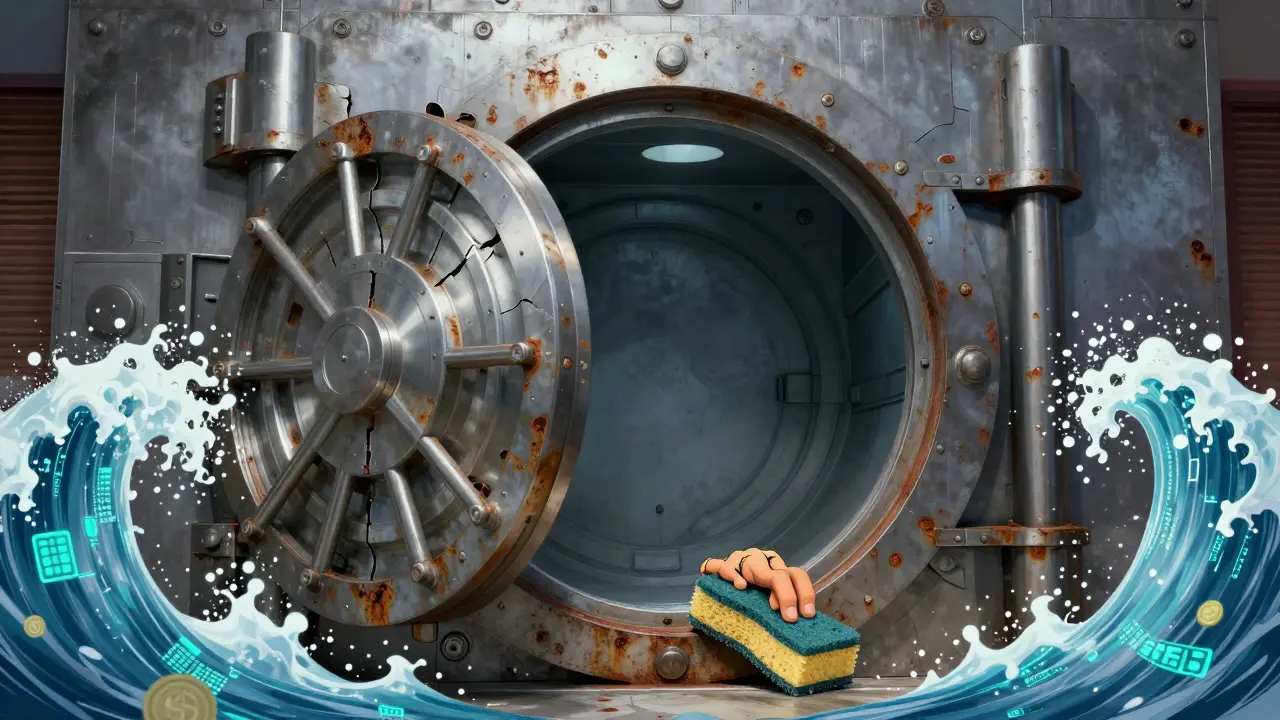
Regional Appeal vs. Operational Failure
To be fair, iCE3 solved a real problem for people in South Africa and Nigeria. Getting into crypto in Africa can be a headache due to strict banking rules. iCE3 made it easy with credit card and wire transfer options. This accessibility was their biggest draw, but it also lured in novice investors who might not have known how to check for a platform's regulatory licensing. Legitimate exchanges typically hold licenses from authorities like the U.S. SEC or follow EU MiCA regulations. iCE3 lacked this transparency. When you combine a lack of regulation with a reliance on third-party liquidity providers, you have a recipe for disaster. The very features that made them "accessible" were overshadowed by a structural weakness that eventually collapsed.Lessons for the Future: How to Avoid Another iCE3
If you are looking for a new exchange, the iCE3 disaster provides a few clear rules of thumb. First, never trust an exchange that doesn't provide a "Proof of Reserves." You need to know that the exchange actually holds the assets they claim to have on your behalf. Second, be wary of platforms that over-promise "easy" deposits in regions with high restrictions without explaining their security architecture. If they can't tell you how they use cold storage or multi-sig wallets, they are likely cutting corners. Finally, remember the golden rule of crypto: "Not your keys, not your coins." Using an exchange is convenient, but moving your assets to a hardware wallet as soon as possible is the only way to ensure you aren't left waiting for a "full investigation and reconciliation" that may never end.Can I still withdraw my funds from iCE3?
Currently, all Bitcoin (BTC) and Litecoin (LTC) withdrawals are suspended. The exchange has halted these services pending an investigation into balance discrepancies with their partners. There is no official timeline for when withdrawals will resume.
What caused the iCE3 balance discrepancies?
The discrepancies occurred between iCE3 and its asset management partners, Merkeleon.com and Coinspaid.com. iCE3 reported that the balances held on the platform did not match the actual assets available, leading to a total freeze of specific coin services.
Was iCE3 hacked?
While not explicitly labeled as a "hack" in their announcement, the results are the same. The loss of funds due to partner discrepancies suggests a failure in custody and reconciliation, which is often as damaging as a direct cyberattack.
Is iCE3 regulated in South Africa or Nigeria?
There is very little public evidence of iCE3 holding formal regulatory licenses from major financial authorities. Their lack of transparency regarding compliance is one of the primary reasons they are considered high-risk.
What should I do if my money is stuck on iCE3?
You should document all your account balances, transaction IDs, and communications with the platform. While the exchange claims to be working with legal and auditing teams, you may need this evidence if legal proceedings or formal recovery claims become necessary.






honestly this is just a classic exit scam vibe. seen it a million times with these "regional" platforms that promise easy onramps but have zero actual security. most people dont realize that if a site has no proof of reserves, they are basically just playing with a spreadsheet of numbers that doesnt exist in reality. you gotta use a cold wallet or youre just gambling on the honesty of some random dev in a different timezone. its sad but that's the wild west of crypto for ya.
Ridiculous!!! Pure negligence!!!
Imagine actually trusting a platform that uses "manual checks" in 2024... like, really? 🙄 Only a complete amateur would fall for this. It's honestly embarrassing that people still get tricked by such obvious red flags. 💅
It's really heartbreaking to see people lose their hard-earned savings like this. 😔 I hope those affected can find a way to recover their funds through legal means! Stay safe everyone! ✨
I completely agree with the points made here and I think it is very important for the community to support one another by sharing these kinds of warnings so that other people who might be new to the space can avoid making the same mistakes that were unfortunately made by the users of this platform.
The mention of Merkeleon and Coinspaid is the key here. These aren't just random partners; they are notorious for having opaque operational structures. Anyone who spent five minutes researching the liquidity providers for iCE3 would have seen the writing on the wall months ago.
Wake up people! This is just a front for deeper money laundering operations. The "balance discrepancy" is a cover story for the funds being siphoned into offshore shadow accounts. It's a coordinated hit to destabilize regional adoption. Look into the shell companies behind the custody partners and you'll find the real puppet masters. Absolute joke!
Focus on the lesson. Always prioritize self-custody. Use a Ledger or Trezor.
I would encourage all affected parties to organize their documentation carefully. While the situation is dire, a collective legal approach may yield better results than individual complaints.
Total nightmare. I've seen so many people in my groups get lured in by the "easy deposit" thing and then just get wrecked. It's the oldest trick in the book to target regions with high barriers to entry.
Omg the drama of a "manual check" is just sending me! Like, imagine a guy in an office just staring at a screen and saying "yep, looks good" while millions of dollars just vanish! I can't even!! 😂
THIS IS ABSOLUTELY INSANE!!! How can they just freeze BTC and LTC and say they don't know where the money is?? Its a total robbery in broad daylight!! i cant believe people still trust these scammy sites!!
It makes me wonder about the nature of trust in a decentralized world where we still rely on centralized intermediaries to access that decentralization. We are essentially paying for convenience with our security, and when that convenience is marketed as a "bridge" for underserved populations, it feels almost predatory to exploit that gap in knowledge. It's a heavy reminder that true financial sovereignty only comes when you actually hold the keys to your own kingdom, otherwise you're just a tenant in someone else's unstable building.
hope everyone can get their money back it's so sad when people lose everything
My heart just breaks for the people who trusted this platform with their life savings! It's a tragedy of epic proportions that a lack of a few security protocols could lead to such devastating loss for so many families!
Just keep your head up. Learn from this and move on to safer spots.
I've seen similar things happen in other markets too. It's a pattern.