
How Blockchain Is Rewriting the Rules of IP Protection in 2026
Imagine spending months designing a unique logo, only to see it plastered on counterfeit goods across three continents within weeks. You know you created it, but proving that fact in court is expensive, slow, and often frustrating. For decades, this has been the harsh reality of intellectual property (IP) management. But as we move through 2026, the landscape is shifting beneath our feet. Blockchain technology is no longer just about cryptocurrency; it is becoming the backbone of a new, decentralized system for protecting ideas, brands, and creative works.
The old way of handling IP relied on centralized databases run by national governments. These systems are siloed, paper-heavy, and painfully slow. If you wanted to protect a trademark in five different countries, you had to file five separate applications, hire five different lawyers, and wait months or even years for approval. Blockchain changes the game by creating an immutable, global ledger that anyone can verify but no one can alter. It turns IP protection from a bureaucratic hurdle into a transparent, automated process.
Key Takeaways
- Immutable Proof: Blockchain creates tamper-proof timestamps that serve as undeniable evidence of creation date and ownership.
- Automated Licensing: Smart contracts execute royalty payments instantly when content is used, removing middlemen and delays.
- Global Accessibility: Decentralized registries allow creators to protect assets across borders without navigating complex local laws.
- Tokenization Trends: Intellectual property is increasingly being converted into tradeable digital tokens, opening new revenue streams.
- Regulatory Shift: Organizations like WIPO are developing standards to integrate blockchain records with traditional legal frameworks.
The Problem with Traditional IP Systems
To understand why blockchain matters, you have to look at what’s broken in the current system. Traditional IP protection is built on trust in centralized authorities. You submit your patent application to the USPTO, your trademark to the EUIPO, or your copyright to the Library of Congress. These entities maintain databases, but they don’t talk to each other well. A record in one country is invisible in another unless you pay for specific international treaties like the Madrid Protocol or PCT.
This fragmentation creates gaps. Counterfeiters exploit these gaps by registering similar trademarks in jurisdictions with lax enforcement. Meanwhile, independent artists and small inventors struggle with the cost. Filing a single utility patent in the US can cost thousands of dollars in attorney fees alone. Add in maintenance fees, search costs, and potential litigation, and it becomes clear why many innovators simply don’t bother protecting their work until it’s too late.
Then there’s the issue of proof. In a digital world, copying is effortless. Proving who made something first usually requires digging through emails, dated drafts, or witness testimony. It’s messy. Courts have to weigh credibility, which leads to unpredictable outcomes. The core problem isn’t just cost; it’s the lack of a single, universally accepted source of truth for ownership.
How Blockchain Creates Immutable Ownership Records
At its heart, Blockchain is a distributed ledger technology that records transactions across a network of computers in a way that makes them difficult to alter or hack. When applied to intellectual property, this feature becomes a powerful tool for establishing priority. Here’s how it works: when you create a piece of work-whether it’s code, a design, or a musical composition-you can generate a cryptographic hash of that file and store it on a blockchain.
This hash acts like a digital fingerprint. It doesn’t store the actual file (which might be large), but it proves that the file existed at that exact moment in time. Because blockchain entries are timestamped and linked together cryptographically, you cannot go back and change the record. If someone else claims they created the same work earlier, the blockchain provides irrefutable evidence of who was first.
For example, consider a graphic designer in Wellington, New Zealand. She finishes a logo and uploads the hash to a public blockchain like Ethereum or a specialized IP chain. The transaction is confirmed, and she receives a receipt with a precise timestamp. Years later, if a competitor tries to register a similar logo, she can present this blockchain record as primary evidence of prior art. This eliminates the need for costly notarizations or third-party escrow services.
This method applies to all types of IP:
- Copyrights: Artists can timestamp photos, videos, and text instantly.
- Patents: Inventors can log prototype designs and lab notes to establish invention dates before formal filing.
- Trademarks: Brands can register logos and slogans to prevent squatting.
Smart Contracts: Automating Licensing and Royalties
Proving ownership is only half the battle. The other half is monetizing your IP without getting bogged down in administrative headaches. This is where Smart Contracts are self-executing contracts with the terms of the agreement directly written into code. Traditionally, licensing deals involve negotiating terms, drafting legal documents, and waiting for payment processing. It’s slow, and creators often miss out on royalties because tracking usage is difficult.
Smart contracts automate this entire process. Imagine a photographer who wants to license her images for commercial use. Instead of sending invoices and chasing payments, she sets up a smart contract on a blockchain platform. The contract specifies the price per use, the duration of the license, and the permitted territories. When a company wants to use the image, they pay the fee in cryptocurrency or stablecoin, and the contract automatically grants access to the high-resolution file.
The beauty of this system is transparency and immediacy. Every transaction is recorded on the ledger. If the image is used again, the contract triggers another payment. There are no intermediaries taking a cut, and no delayed bank transfers. For music streaming, this could mean musicians receive fractions of cents instantly every time their song plays, rather than waiting months for consolidated royalty statements from collection societies.
This automation reduces friction significantly. Small creators who previously couldn’t afford legal teams to manage licenses can now do it themselves. It also reduces disputes because the terms are coded and executed objectively. If the conditions aren’t met, the payment doesn’t happen. If they are, the rights transfer immediately.
Tokenization of Intellectual Property Assets
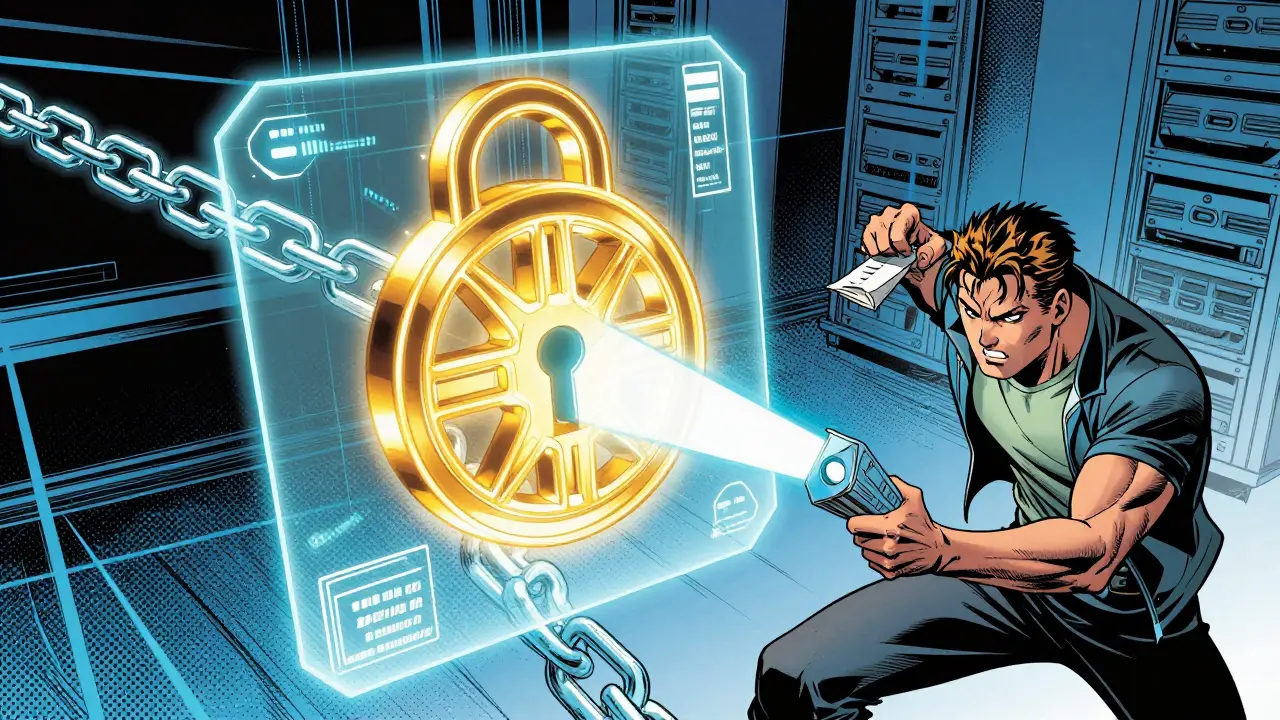
A emerging trend in 2026 is the Tokenization of IP, which involves converting rights to intellectual property into digital tokens on a blockchain. This concept, part of the broader Real-World Asset (RWA) movement, allows IP to be fractionalized and traded more easily. Think of it like buying shares in a stock, but instead of equity in a company, you’re buying a share of the future royalties from a patent, a song, or a brand.
Why does this matter? Most IP assets are illiquid. You can’t easily sell half of a patent. Tokenization changes that. An inventor with a groundbreaking medical device patent might not have the capital to manufacture it. By tokenizing the patent rights, they can raise funds from investors worldwide who buy tokens representing a percentage of future licensing revenue. This democratizes investment in innovation and provides liquidity to creators who otherwise would be stuck with dormant assets.
We are already seeing platforms emerge that facilitate this. Artists tokenize album masters, allowing fans to invest in their success. Pharmaceutical companies tokenize drug patents to share development risks. This creates a secondary market for IP, where value is determined by supply and demand rather than opaque appraisals. It forces greater transparency in valuation and opens up new avenues for wealth creation beyond traditional corporate structures.
Combating Counterfeiting and Fraud
Counterfeiting costs the global economy hundreds of billions of dollars annually. Luxury goods, pharmaceuticals, and electronics are particularly vulnerable. Traditional anti-counterfeiting measures, like holograms or serial numbers, can be forged. Blockchain offers a more robust solution through supply chain integration.
Brands can assign a unique digital identity to each physical product. When a customer buys a handbag, they scan a QR code that links to a blockchain record showing the bag’s journey from factory to store. Since the record is immutable, counterfeiters cannot replicate the history. If a fake bag enters the market, its digital twin won’t exist on the ledger, or the data will mismatch.
This benefits consumers too. They gain confidence that their purchase is authentic. For brands, it protects reputation and revenue. Major fashion houses and tech companies are piloting these systems. In 2026, we expect to see wider adoption as consumer awareness grows. People are increasingly demanding proof of authenticity, especially for high-value items. Blockchain provides that proof in a way that is accessible via a smartphone scan.
Challenges and Legal Uncertainties
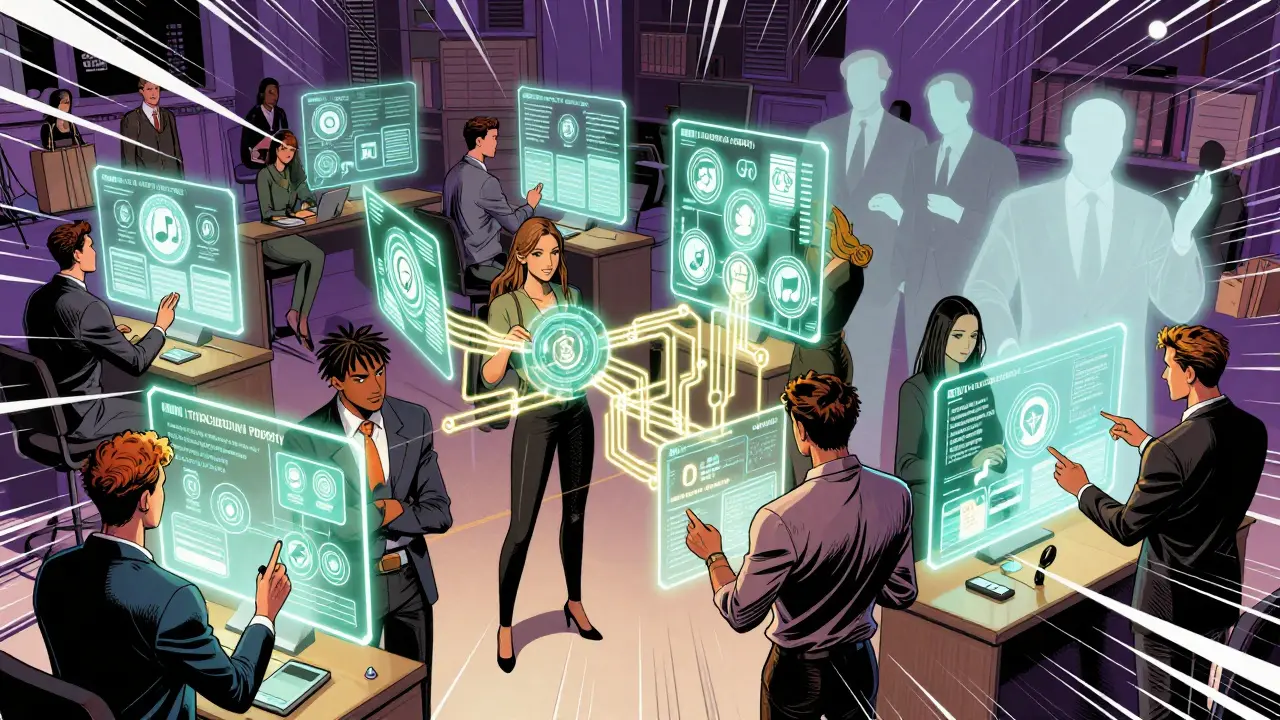
Despite the promise, blockchain IP protection isn’t a magic bullet. Several hurdles remain. The biggest is legal recognition. While a blockchain record is strong evidence, courts still operate under national laws. Does a smart contract hold up in a dispute in France? What happens if the private key to a wallet is lost? These questions don’t have uniform answers yet.
Interoperability is another issue. There are dozens of blockchain platforms, each with its own standards. A record on one chain may not be easily verifiable on another. This fragmentation mirrors the very problem blockchain aims to solve. Industry groups are working on cross-chain protocols, but widespread standardization is still evolving.
Integration with existing systems is costly. Large enterprises have legacy IP databases that are hard-coded into their operations. Migrating to a blockchain-based system requires significant technical expertise and investment. Smaller players may find the learning curve steep. Additionally, the environmental impact of some blockchains remains a concern, though many IP-focused chains use energy-efficient consensus mechanisms like Proof-of-Stake.
Finally, there’s the human element. Technology can prove ownership, but it can’t stop someone from stealing an idea before it’s recorded. Education is crucial. Creators need to understand best practices for securing keys and timing their registrations. Without proper training, the tools are useless.
The Role of WIPO and Global Standards
Recognizing these challenges, the World Intellectual Property Organization (WIPO) has stepped up its efforts. Through its Blockchain Task Force, WIPO is exploring how to integrate blockchain records with international IP treaties. The goal is to create a framework where blockchain evidence is accepted globally, reducing jurisdictional conflicts.
In 2026, we are seeing early signs of this shift. Some national offices are experimenting with accepting blockchain hashes as preliminary filings. This doesn’t replace the formal application process, but it streamlines the initial proof of concept phase. As these standards mature, we can expect a hybrid model: blockchain for speed and verification, traditional law for enforcement and dispute resolution.
This collaboration between tech innovators and regulatory bodies is essential. It ensures that blockchain serves the public interest rather than becoming a wild west of unregulated claims. For businesses, keeping an eye on WIPO guidelines will be critical for compliance and strategy.
| Feature | Traditional System | Blockchain System |
|---|---|---|
| Registration Speed | Months to years | Minutes to hours |
| Cost | High (legal fees, filing fees) | Low (transaction fees only) |
| Geographic Scope | National/Regional | Global |
| Licensing Process | Manual, slow, prone to error | Automated via smart contracts |
| Proof of Ownership | Paper-based, centralized | Digital, immutable, decentralized |
| Transparency | Limited, opaque | High, auditable by anyone |
Future Outlook: What Comes Next?
As we look ahead from 2026, the trajectory is clear. Blockchain will become foundational infrastructure for IP management. We will see deeper integration with Artificial Intelligence, where AI agents monitor blockchain ledgers for infringement patterns and automatically trigger takedown requests. This proactive approach will reduce the burden on creators.
We will also see the rise of IP marketplaces built entirely on-chain. Creators will list their assets, set terms, and transact peer-to-peer. The barrier to entry will drop further, empowering individuals and small teams to compete with large corporations. The question is no longer whether blockchain will disrupt IP, but how quickly organizations can adapt to survive.
For now, the advice is simple: start small. Use blockchain to timestamp your most valuable creations. Experiment with smart contracts for simple licenses. Stay informed about regulatory developments. The future of IP is digital, decentralized, and yours to shape.
Is blockchain evidence admissible in court?
Yes, increasingly so. While laws vary by country, many courts accept blockchain records as valid evidence of existence and timing due to their immutability. However, it often needs to be paired with traditional documentation to fully establish legal ownership, especially in complex disputes. WIPO is working to standardize this acceptance globally.
Can I lose my IP rights if I lose my private key?
You don’t lose the underlying IP right itself, but you may lose the ability to prove ownership via that specific blockchain record or manage associated tokens. It’s crucial to back up your private keys securely. Losing access to the digital proof doesn’t erase your legal claim, but it makes enforcing it much harder.
What is the difference between copyrighting on blockchain vs. traditional registration?
Traditional registration provides a government-backed certificate that is widely recognized in legal proceedings. Blockchain provides a cryptographic proof of existence and timing. In 2026, many experts recommend using both: blockchain for immediate, low-cost proof and traditional registration for stronger legal enforceability in certain jurisdictions.
How do smart contracts handle royalty disputes?
Smart contracts execute based on predefined code. If the terms are clear (e.g., "pay 5% per download"), there is little room for dispute. However, if the definition of "download" or "usage" is ambiguous, disputes can arise. Clear coding and legal fallback clauses are essential to handle edge cases that the code doesn’t cover.
Is blockchain IP protection environmentally friendly?
It depends on the blockchain used. Older networks like Bitcoin use energy-intensive Proof-of-Work. However, most modern IP-focused blockchains use Proof-of-Stake or other efficient consensus mechanisms, which consume a fraction of the energy. Always check the sustainability credentials of the platform you choose.