FEAR Token Airdrop: Complete Guide to the 2021 Distribution and Current Status
Remember when getting free crypto meant just tweeting a hashtag? If you were active in the FEAR token community around 2021, you might have participated in one of those classic distributions. But what actually happened with that airdrop, and where does the project stand today? This isn't just a history lesson; it's a look at how simple social media giveaways evolved into the complex reward systems we see now.
The Original FEAR Token Airdrop Mechanics
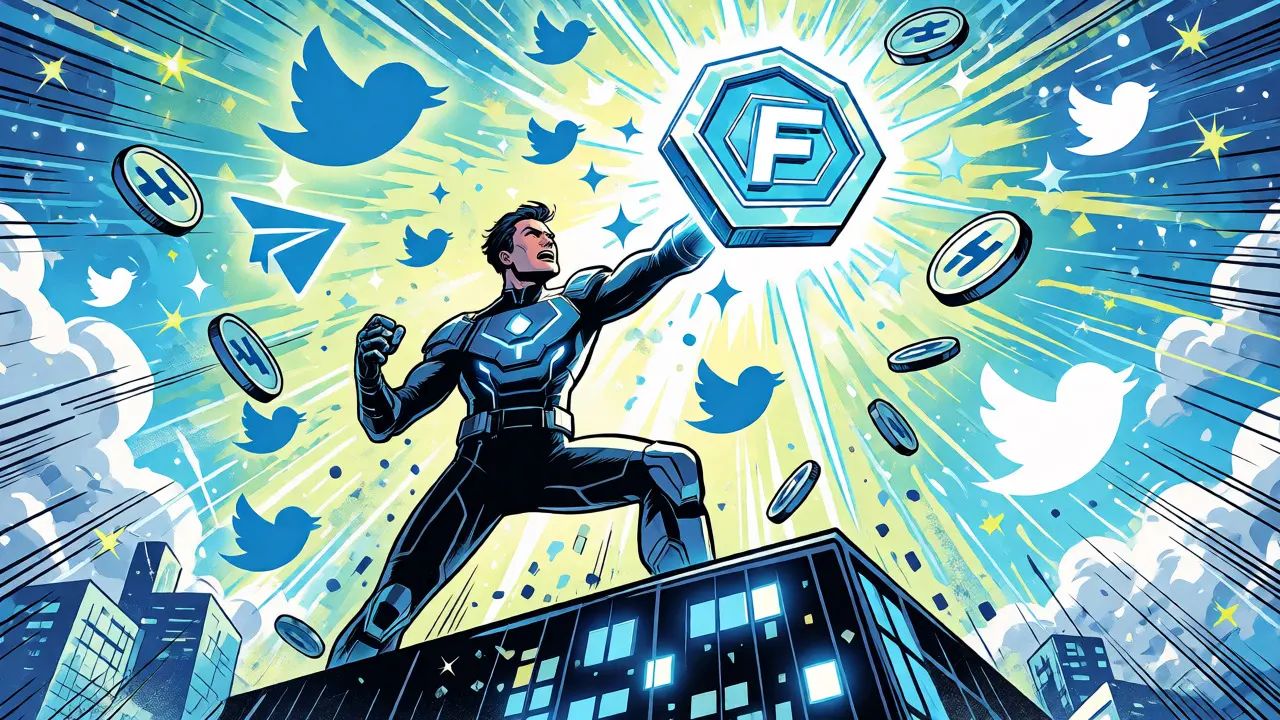
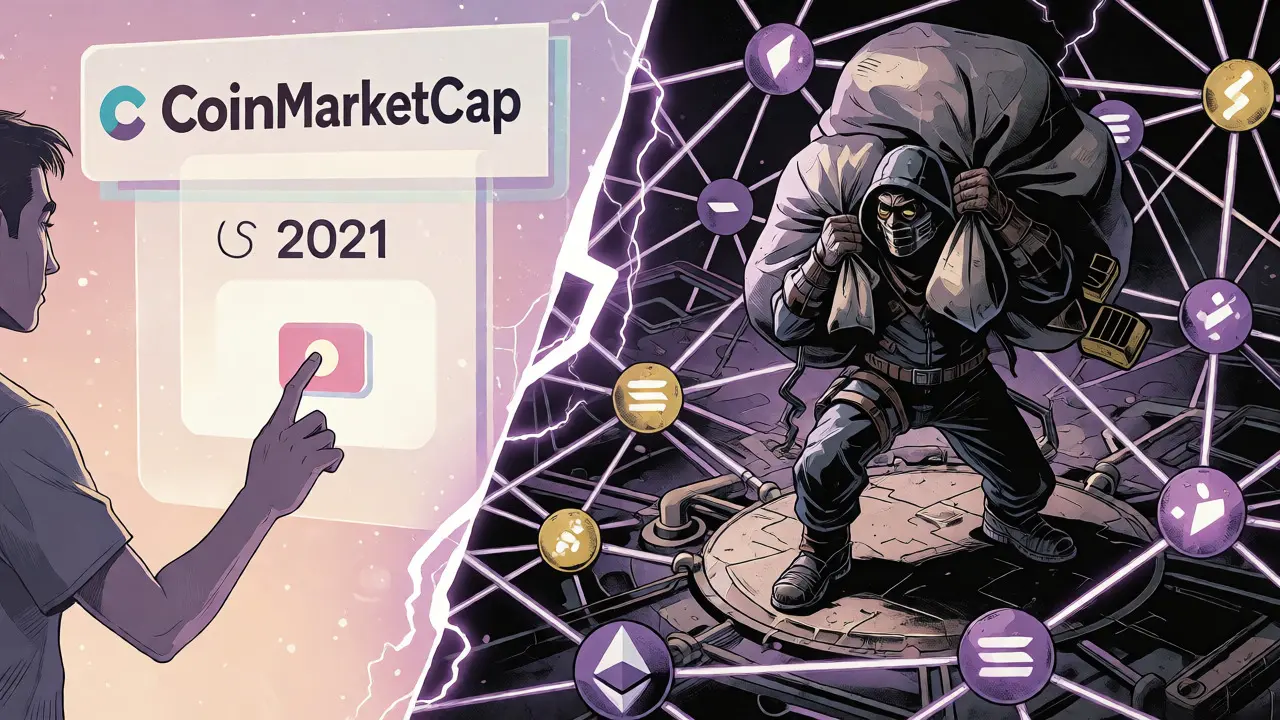
The FEAR token airdrop wasn't some obscure underground event. It was a structured campaign partnered with CoinMarketCap, the giant crypto data aggregator. The goal was straightforward: spread awareness for a gaming-focused cryptocurrency during the massive 2021 bull run. Unlike today's projects that require you to bridge assets across five different chains, FEAR kept it simple. You needed an active Twitter account, a Telegram presence, and a CoinMarketCap profile. That's it.
The distribution happened in two main waves. First, they handed out 2,000 "Play2Earn NFT Airdrop tickets," each worth 25 FEAR tokens. Then, they expanded the pool, distributing 20,000 $FEAR tokens among over 500 winners. This approach leveraged CoinMarketCap's user base of over 100 million monthly users. By clicking "Join This Airdrop" on their platform, users could claim their share without ever touching a blockchain wallet directly. It was low-friction, high-volume distribution designed for maximum visibility rather than deep protocol engagement.
Why FEAR Chose the Social Media Model
In 2021, the Play2Earn sector was exploding. Projects like Axie Infinity were making headlines, and new entrants needed eyeballs fast. FEAR's team understood that technical barriers stopped many potential users from trying new tokens. By tying the airdrop to social actions-following, retweeting, joining groups-they prioritized community size over immediate utility usage. This strategy worked for brand awareness but didn't necessarily create loyal holders who used the token within the ecosystem.
Compare this to modern airdrops. Today, if you want rewards from a project like EigenLayer or LayerZero, you need to prove you're actually using the network. You bridge funds, stake tokens, and interact with smart contracts. FEAR's model was a snapshot of its time: optimistic, simple, and focused on rapid adoption through virality rather than sustained economic activity.
Current Price Analysis and Market Position
So, what is FEAR worth now? As of late 2025, the token trades in a tight range between $0.0066 and $0.0084. Forecasts suggest a modest ceiling of around $0.0093, with downside risks dropping it to $0.0037. This stability-or stagnation, depending on your view-reflects the token's status as a legacy asset in a rapidly changing market. It hasn't seen the explosive growth of newer Layer 2 protocols or DeFi blue chips.
| Metric | 2025 Estimate | 2028 Projection | Notes |
|---|---|---|---|
| Average Price | $0.0066 - $0.0084 | N/A | Low volatility expected |
| Potential High | $0.0093 | $0.0112 | Modest upside (~16% ROI) |
| Potential Low | $0.0037 | $0.0078 | Risk of further decline |
| Market Sentiment | Neutral/Stable | Uncertain | Limited news flow |
These numbers tell a story of survival rather than dominance. While newer gaming tokens struggle to find product-market fit, FEAR maintains a small but persistent footprint. However, the lack of major development updates suggests the project may be in a dormant state, relying on past momentum rather than new innovation.
How Airdrop Strategies Have Changed Since 2021
If you're looking back at the FEAR airdrop, notice how easy it was. No gas fees for claiming, no complex staking requirements, no multi-chain bridges. Just social proof. Fast forward to 2025, and the landscape is unrecognizable. Modern projects use sophisticated criteria to filter out "airdrop farmers"-users who claim tokens and immediately sell them.
- Soulbound Tokens: Many projects now issue non-transferable tokens to verify unique human participation.
- Activity Snapshots: Rewards are based on historical transaction volume, not just holding a balance.
- KYC Requirements: Regulatory pressure means many airdrops now require identity verification, unlike FEAR's anonymous-friendly approach.
- Multi-Network Proof: Users must show activity across ecosystems like Ethereum, Solana, and Arbitrum to qualify.
This shift protects project treasuries but raises the barrier to entry. The casual crypto user who once grabbed free tokens by tweeting now needs to be an active DeFi participant to earn significant rewards. FEAR represents the end of an era where marketing budget could buy loyalty through simple giveaways.

Is FEAR Still Relevant in 2026?
Here's the hard truth: FEAR has limited visibility compared to giants like The Sandbox or Decentraland. Search results for recent news are sparse. The project doesn't appear in major 2025 airdrop compilations, suggesting it's not actively distributing new tokens. For investors, this means liquidity might be lower, and exit opportunities less frequent than for top-tier assets.
However, relevance doesn't always mean popularity. If you hold FEAR from the original airdrop, you're part of a niche community. The token's low price point makes it accessible for speculative bets, but don't expect it to drive the next big narrative in the gaming sector. The market has moved toward sustainable economies and proven gameplay loops, areas where FEAR hasn't made recent headlines.
Key Takeaways for Crypto Participants
Looking at the FEAR case study offers valuable lessons for anyone navigating the current crypto space. First, simplicity attracts crowds but doesn't guarantee retention. Second, partnerships with platforms like CoinMarketCap provide credibility and reach, a tactic still useful today. Third, early adoption carries risk; the hype cycle moves fast, and yesterday's hot token can become tomorrow's forgotten asset.
If you're hunting for airdrops now, prioritize projects with clear utility and transparent tokenomics. Don't just chase social media buzz. Look for teams publishing regular code updates and engaging with developers, not just marketers. The FEAR airdrop was a success in its time, but the industry has matured beyond those simple mechanics.
When did the FEAR token airdrop take place?
The primary FEAR token airdrop concluded on September 24, 2021. It was conducted in partnership with CoinMarketCap and involved multiple rounds of distribution targeting social media participants.
How much FEAR did users receive in the airdrop?
Participants could receive 25 FEAR tokens via NFT tickets, while larger allocations of 20,000 $FEAR tokens were distributed among over 500 winners in subsequent rounds.
What are the current price predictions for FEAR?
For 2025, prices are estimated between $0.0066 and $0.0084. Projections through 2028 suggest a potential high of $0.0112, indicating modest growth potential compared to broader market trends.
Why did FEAR choose CoinMarketCap for its airdrop?
Partnering with CoinMarketCap allowed FEAR to leverage a user base of over 100 million monthly active users, ensuring widespread visibility and simplifying the claim process for non-technical users.
Is FEAR still an active project?
Development activity appears limited in recent years. The project lacks significant news coverage or new airdrop campaigns in 2025, suggesting it may be in a maintenance or dormant phase compared to more active competitors.