
Crypto Asset Forfeiture in Nepal: Legal Risks and Penalties Explained
Imagine you are sitting in Kathmandu, checking your phone, and realizing that the digital assets you bought online might not just be worthless-they could be confiscated by the state. This is the stark reality for anyone engaging with cryptocurrency in Nepal today. The country maintains one of the strictest bans on digital assets globally, treating possession and trading not as a civil matter, but as a criminal offense.
If you are looking at the legal landscape from outside, it seems extreme. But for residents or travelers holding Bitcoin, Ethereum, or other tokens, the consequences are real. The core issue isn't just about losing money; it’s about facing potential imprisonment and having your funds seized under anti-money laundering statutes. Understanding how this works is critical if you have any exposure to the Nepalese jurisdiction.
The Legal Foundation: Why Crypto Is Illegal in Nepal
To understand why asset forfeiture happens, you first need to understand why the activity itself is banned. In Nepal, there is no gray area. The government does not regulate cryptocurrency; it prohibits it entirely. This prohibition is rooted in the Muluki Criminal Code Act 2017, which defines cryptocurrency as any electronic code or token with commercial significance.
Section 262(A) of this act is the primary weapon used against violators. It classifies mining, trading, storage, and even simple possession of cryptocurrencies as illegal acts. The rationale provided by authorities is straightforward: these assets are not recognized as legal tender, they lack government oversight, and they pose a threat to the stability of the Nepalese Rupee (NPR).
The Nepal Rastra Bank (NRB), the country's central bank, enforces this stance rigorously. They view cryptocurrencies as tools for money laundering, tax evasion, and financial scams. Because the NRB cannot track or control these transactions, they deem them a risk to national security. This ideological position transforms every crypto transaction into a potential crime against the state’s financial sovereignty.
How Enforcement Works: From Blocking to Arrests
You might wonder how the government catches people if crypto is decentralized. The answer lies in infrastructure control. The Nepal Telecommunication Authority (NTA) blocked access to major cryptocurrency exchanges and mining-related websites back in 2021. This means you cannot simply open Binance or Coinbase on a local ISP connection. You have to use workarounds like VPNs, which themselves can raise red flags with internet service providers.
Enforcement has moved beyond just blocking sites. Police units specializing in cybercrime actively monitor social media and peer-to-peer trading groups. If you advertise your wallet address or engage in fiat-to-crypto swaps via mobile banking apps, you leave a trail. Nepalese banks are required to comply with strict anti-money laundering (AML) directives. If they detect unusual patterns linked to known crypto entities, they freeze accounts and report to authorities.
This creates a funnel. Once an account is frozen or a person is identified, the case moves from a regulatory warning to a criminal investigation. There is no "compliance phase" where you can register your holdings. You are either compliant (by having zero holdings) or non-compliant (a criminal suspect).
Asset Forfeiture Mechanisms in Criminal Cases
Here is where things get serious for your assets. Nepal does not have a specific "crypto forfeiture law." Instead, it applies general criminal asset forfeiture procedures found in its anti-money laundering framework. When someone is charged under the Muluki Criminal Code for crypto violations, the assets involved are considered proceeds of crime.
In practice, this means:
- Seizure at Source: If police identify a physical device containing private keys (like a laptop or hardware wallet), they can seize it as evidence.
- Bank Freezes: Any Nepalese Rupees deposited into a bank account from a suspected crypto sale can be frozen indefinitely during the investigation.
- Confiscation of Digital Assets: While technically difficult due to encryption, authorities may compel suspects to reveal passwords. Refusal can lead to additional charges for obstructing justice.
There is no mechanism for "voluntary surrender" to avoid penalties. Unlike some countries where you can pay a fine to regularize past activities, Nepal offers no such path. The only way to keep your assets is to never bring them under the radar of Nepalese law enforcement.

Penalties Beyond Financial Loss
Losing your money is bad, but the personal risks are higher. Violations of Section 262(A) carry severe penalties. Depending on the scale of the operation, individuals face:
- Fines: Monetary penalties that can exceed the value of the crypto held.
- Imprisonment: Jail terms ranging from months to years, depending on whether the violation is deemed minor (personal use) or major (trading/mining).
- Criminal Record: A conviction stays with you, affecting future employment, travel visas, and banking relationships.
These penalties are applied consistently. There have been cases where young students were arrested for mining Bitcoin in their dorm rooms. The message from the judiciary is clear: ignorance of the law is not a defense, and technological complexity does not exempt you from prosecution.
Comparison with Neighboring Countries
| Country | Status | Asset Forfeiture Risk | Legal Basis |
|---|---|---|---|
| Nepal | Banned | High (Criminal Seizure) | Muluki Criminal Code 2017 |
| India | Restricted/Taxed | Medium (Tax Evasion Claims) | Finance Bill 2022 |
| Bangladesh | Banned | High (Central Bank Directives) | Banking Companies Act |
| Sri Lanka | Unregulated/Legal | Low (Civil Disputes) | No Specific Ban |
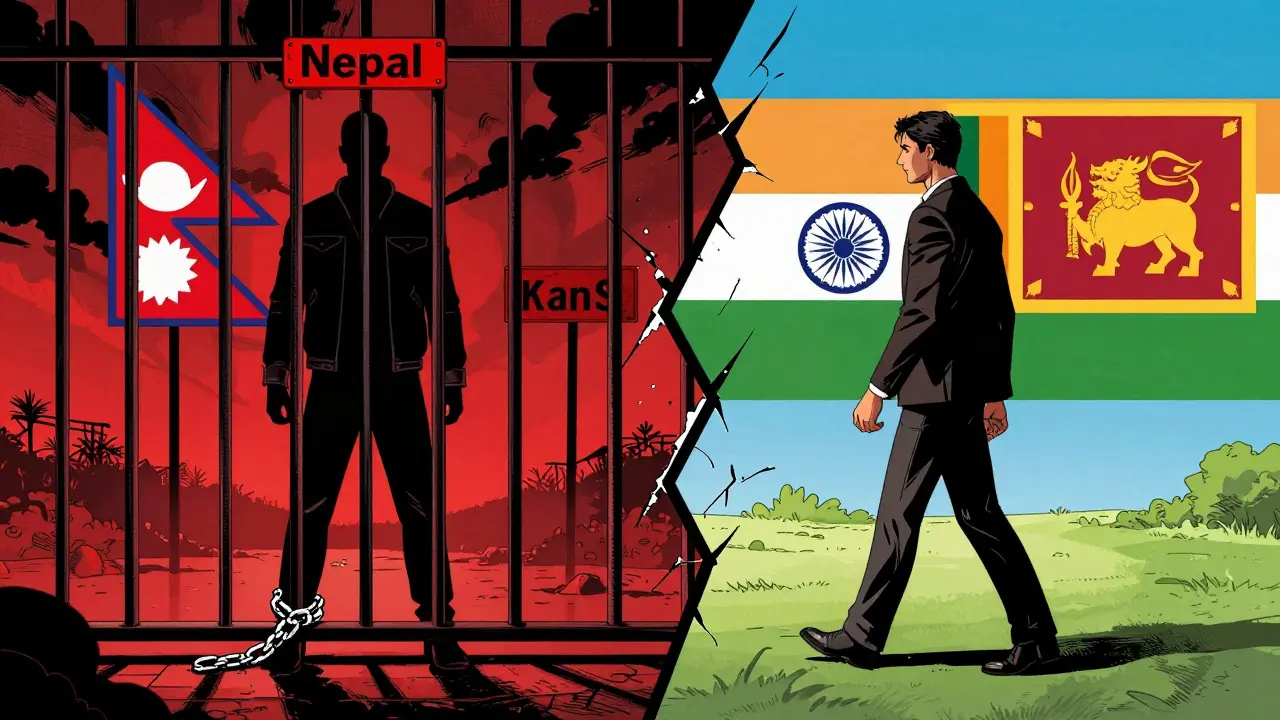
As the table shows, Nepal stands out for its absolute prohibition. India, for instance, allows trading but imposes heavy taxes. Bangladesh also bans crypto, but Nepal’s enforcement is notably aggressive regarding individual possession. This comparison highlights that relocating operations-even just moving your physical presence-can drastically change your legal risk profile.
Practical Advice for Residents and Travelers
If you live in Nepal, the advice is blunt: do not hold cryptocurrency. Use offshore wallets accessible only via secure, encrypted connections that do not route through local ISPs. However, be aware that accessing these services can still be risky if metadata is intercepted.
For travelers visiting Nepal, ensure you do not conduct any crypto transactions while connected to local networks. Do not discuss crypto investments openly in public spaces. Remember that your digital footprint can be traced back to your physical location through IP addresses and device identifiers.
Businesses should consider blockchain technology for non-monetary uses, such as supply chain tracking or healthcare data management. These applications often fall outside the definition of "virtual currency" and may be permissible. Always consult with local legal experts before deploying any blockchain solution in Nepal.
The Future Outlook: Will the Ban Lift?
Despite global trends toward regulation, Nepal shows no signs of softening its stance. As of 2025, only 12% of emerging markets maintain outright bans, down from 19% in 2023. Nepal remains firmly in this minority group. The government argues that until they have robust monitoring tools and a stable financial system, they will not allow uncontrolled digital assets.
Political discussions occasionally touch on creating a regulatory sandbox, but these remain theoretical. No legislation has been introduced to legalize or regulate crypto trading. Until then, the status quo persists: total prohibition, active enforcement, and harsh penalties for violators.
Can I legally own Bitcoin in Nepal?
No. Owning Bitcoin is illegal under Section 262(A) of the Muluki Criminal Code Act 2017. Possession alone can lead to criminal charges, fines, and imprisonment.
What happens if my crypto is seized?
If authorities seize your devices or freeze your bank accounts related to crypto, you have no legal recourse to recover them easily. The assets are treated as proceeds of crime and may be permanently confiscated.
Is using a VPN to trade crypto safe in Nepal?
Using a VPN reduces the risk of immediate detection by ISPs, but it does not make the activity legal. If caught, you face the same penalties. Additionally, using unauthorized telecom services can carry its own legal risks.
Does Nepal recognize blockchain technology?
Nepal distinguishes between cryptocurrency (banned) and blockchain technology (potentially allowed). Applications like supply chain management or medical records may be permissible if they do not involve virtual currencies.
Will Nepal ever legalize cryptocurrency?
There is no current indication that Nepal will lift its ban. The government cites concerns over monetary control, money laundering, and financial stability as reasons to maintain the prohibition.