Crypto Exchange Compliance: What You Need to Know in 2025
When you use a crypto exchange, you're trusting it with your money—and that trust only works if the exchange follows the law. crypto exchange compliance, the set of legal and operational rules that crypto platforms must follow to operate legally. Also known as crypto regulatory adherence, it’s what separates legitimate platforms from risky or abandoned ones like Let'sBit. In 2025, compliance isn’t optional. It’s the line between keeping your crypto safe and losing it forever.
Two big pieces of compliance are KYC, Know Your Customer, the process exchanges use to verify your identity and AML, Anti-Money Laundering, rules designed to stop criminals from using crypto to hide illegal money. If an exchange doesn’t do KYC, it’s probably not legal—and if it doesn’t follow AML, it’s a target for regulators. The U.S. GENIUS Act, the first federal crypto regulation passed in 2025, made this even clearer: stablecoins must hold real reserves, no interest payments allowed, and exchanges must report transactions. This isn’t about slowing things down—it’s about making sure when you trade Bitcoin or Ethereum, your exchange isn’t a front for fraud.
Compliance also affects what you can do. In countries like Cambodia, banks block crypto transactions entirely, forcing users into unregulated platforms with no protection. In Pakistan, holding crypto is now legal under the Virtual Assets Bill, but trading is still restricted. That’s not confusion—that’s compliance in action. Even decentralized exchanges like Biswap v2 or PancakeSwap V3, while not holding your keys, still need to follow rules if they want to stay online. If they don’t, they vanish—like Let'sBit did.
And compliance isn’t just about government rules. It’s about what protects you. Non-custodial wallets let you control your own crypto, but even those need to work within the legal landscape. If an exchange claims it doesn’t need KYC, it’s not more freedom—it’s more risk. Real compliance means your funds aren’t sitting on a platform that could shut down tomorrow without warning. It means the platform you use has a real team, real audits, and real accountability.
What you’ll find below are real stories about what happens when compliance fails, what’s working in 2025, and how to spot the platforms that actually follow the rules—not just claim to. From the U.S. to Pakistan, from stablecoin rules to abandoned exchanges, this collection shows you what matters when your money is on the line.
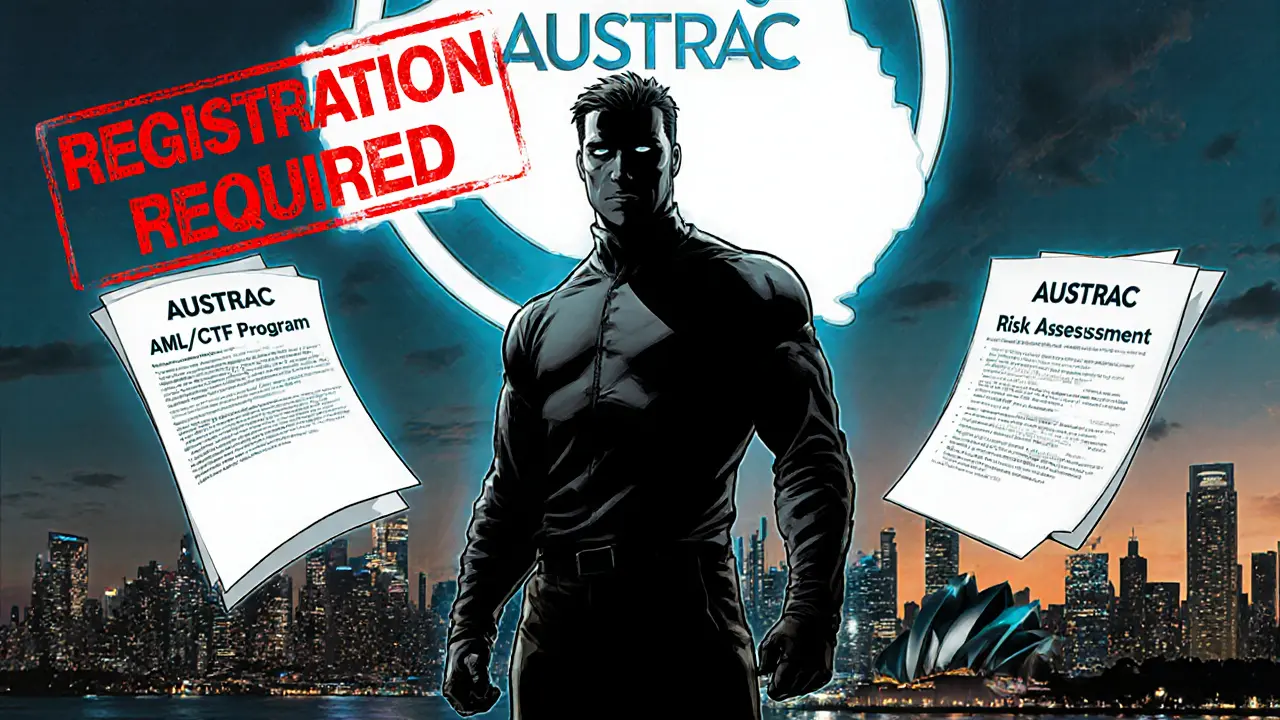
AUSTRAC registration is mandatory for all crypto exchanges trading fiat and crypto in Australia. Learn the 2025 requirements, upcoming 2026 changes, and how to avoid fines or criminal charges.
READ MORE