

How Blockchain Tokenizes Property Ownership: Fractional Real Estate Made Simple
Imagine owning a piece of a skyscraper in downtown Chicago or a apartment complex in Berlin - not with thousands of dollars, but with $100. That’s what blockchain tokenization does to property ownership. It turns physical real estate into digital tokens, each representing a share of the asset. No more needing a million dollars to invest in commercial property. No more waiting 60 days just to close a deal. This isn’t science fiction. It’s happening now, and it’s changing who gets to own real estate - and how.
What Exactly Is Property Tokenization?
Tokenization means breaking down a property - say, a 10-unit apartment building worth $2 million - into 2,000 digital tokens. Each token equals $1,000 of ownership. These tokens live on a blockchain, like Ethereum or Polygon, where every transaction is recorded permanently and transparently. Unlike traditional deeds, which sit in dusty county offices, these tokens can be bought, sold, or transferred in minutes, 24/7, from anywhere in the world.
The legal rights behind each token are tied to real-world ownership. That means if you own 10 tokens, you legally own 0.5% of that building. You get 0.5% of the rent. You get 0.5% of the profit if it’s sold. And yes, you’re protected by law - if the system is built right.
This isn’t just about making investing easier. It’s about making it fair. Before tokenization, only big investors - hedge funds, pension funds, wealthy families - could afford to buy commercial properties. Now, a teacher in Wellington, a nurse in Toronto, or a student in Manila can invest small amounts and still earn returns from real estate they’d never touch otherwise.
How It Works: The Step-by-Step Process
Tokenizing a property isn’t as simple as uploading a photo to a website. It’s a careful, regulated process with six key steps.
- Asset Valuation: A professional appraiser looks at the property using standards like ASTM E2018-15. They check location (using Walk Score), rental income over the last three years, repair needs, and market trends. A $1.5 million building in Auckland won’t be valued the same as one in Vienna.
- Legal Due Diligence: Lawyers confirm the owner has clear title. They check for liens, zoning rules, leases, and any legal disputes. If the property has tenants, their contracts must be reviewed. No hidden surprises.
- Token Design: The property is divided into tokens. Most use ERC-1400 or ERC-3643 (T-REX) standards on Ethereum. These aren’t just digital coins - they’re smart contracts with built-in rules. For example, they can block sales to unverified buyers or require KYC checks.
- Smart Contract Development: This is the code that runs the system. It handles transfers, dividend payments, voting rights, and compliance. If rent comes in, the contract automatically splits it among token holders. No middlemen.
- Platform Integration: The tokens are listed on a regulated platform like Securitize, Tokensoft, or RealT. These platforms handle investor onboarding, trading, and reporting. They’re the bridge between blockchain and real-world law.
- Investor Onboarding: Buyers verify their identity (KYC), link a wallet, and buy tokens. Minimums can be as low as $100. Once purchased, tokens appear in their digital wallet - like crypto, but backed by bricks and mortar.
The whole process takes 8 to 12 weeks for a standard commercial property. It’s not fast, but it’s far faster than traditional real estate deals - and way more transparent.
Why Tokenization Beats Traditional Real Estate
Traditional real estate investing has three big problems: high entry costs, low liquidity, and slow transactions.
Tokenization fixes all three.
- Lower entry cost: Instead of needing $50,000 to $100,000 to join a REIT or buy a property, you can start with $100. That opens the door to 92% of people who previously couldn’t participate, according to Chainalysis.
- 24/7 trading: You can sell your tokens anytime. No waiting for a buyer, no open houses, no agent commissions. Platforms let you trade tokens like stocks - even on weekends.
- Lower fees: Traditional sales cost 5-6% in commissions, legal fees, and taxes. Tokenized sales cost 1-2%, according to Deloitte. That’s thousands saved on every deal.
- Transparency: Every transaction is on the blockchain. You can see who owns what, when rent was paid, and how profits were distributed. No more hidden fees or shady paperwork.
For property owners, it’s also a win. Instead of sitting on an underused asset, they can raise capital quickly by selling fractions of it. No need to take out a bank loan. No need to find a single buyer. Just tokenize and sell.
Where It’s Working - And Where It’s Not
Not all properties are equal when it comes to tokenization.
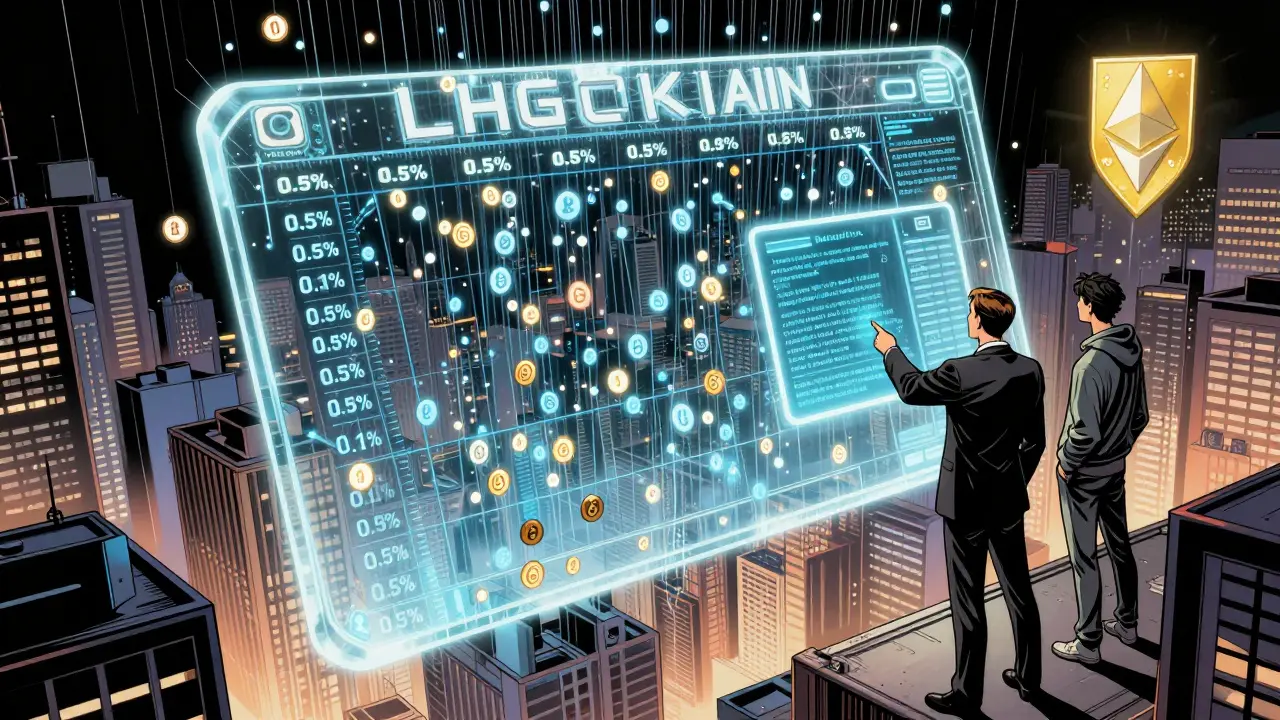
Commercial real estate - especially multi-family apartments and office buildings - is the sweet spot. Why? Because they generate steady income. Rent rolls come in monthly. That makes them predictable for investors. In fact, 38.2% of tokenized properties are multi-family residential, and 29.7% are office spaces, according to EY’s 2024 analysis.
Single-family homes? Not so much. Only 14.3% of tokenized properties are single-family. Why? Because they’re harder to manage at scale. One tenant moves out, rent drops. Repairs are unpredictable. No steady cash flow = less investor interest.
Geographically, Europe leads. Thanks to MiCA - the EU’s strict but clear crypto asset law - 42.3% of all tokenized real estate projects are based there. Luxembourg is a hotspot because its Blockchain Law IV gives clear legal status to these tokens. North America follows at 35.7%, but only 17 out of 50 U.S. states have specific laws for tokenized property. That creates confusion. Asia-Pacific is catching up fast, with Singapore as the main hub.
And who’s buying? Not just tech bros. Pension funds and family offices are in. Of the top 100 global pension funds, 63 have put between 0.5% and 2% of their money into tokenized real estate, according to the Thinking Ahead Institute. That’s not a fad. That’s institutional adoption.
The Risks: Regulation, Security, and Scams
It’s not all smooth sailing.
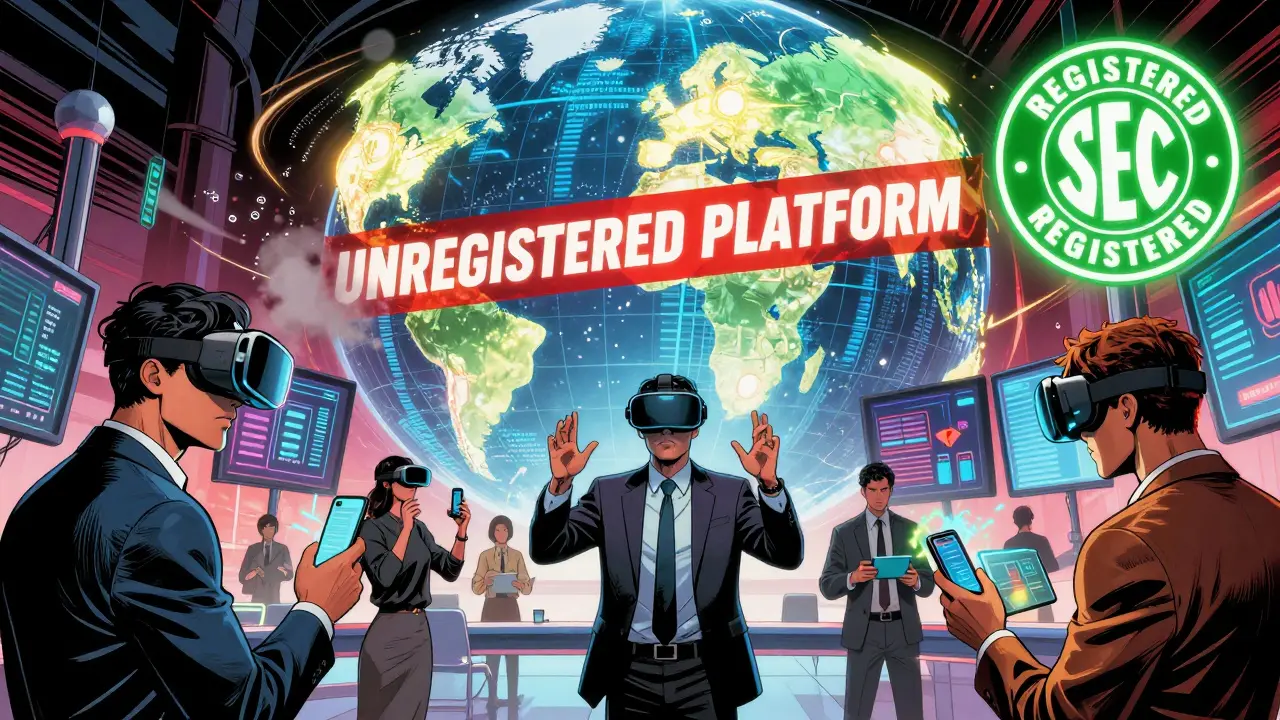
The biggest risk? Regulation. In the U.S., the SEC has cracked down on unregistered token offerings. In 2023, they shut down a project by Blockchain Capital because the tokens were sold as investments without proper licensing. That’s a red flag: if a platform says you can “earn passive income” from real estate tokens, but doesn’t register with the SEC or equivalent bodies, it’s likely illegal.
Another risk: smart contract bugs. Chainalysis found that 12.7% of early tokenization platforms had critical security flaws. A glitch could freeze funds, misroute payments, or let hackers drain wallets. That’s why platforms like Securitize use audited code and follow ISO/IEC 23894:2023 standards. Don’t invest on platforms that don’t publish their security audits.
Then there’s liquidity. Just because tokens can be traded doesn’t mean they will be. If no one’s buying, your $500 in tokens could sit idle for months. Some platforms use automated market makers (like Unifty) to keep prices stable, but not all do.
And finally - jurisdiction shopping. Some projects set up in places with weak rules to avoid oversight. That’s dangerous. If the platform disappears, your tokens might be worthless. Stick to platforms regulated under MiCA, or those registered with the SEC or ASIC.
What’s Next? The Road to .6 Trillion
The market is growing fast. In 2021, tokenized real estate was worth $1.2 billion. By 2023, it hit $10.1 billion. Deloitte predicts it’ll hit $1.6 trillion by 2030 - that’s 12% of global real estate investment.
What’s driving this? Institutional money. Kin Capital’s $100 million real estate debt fund on the Chintai blockchain, launching in Q1 2025, is a game-changer. It’s the first institutional-grade product of its kind, offering debt-backed tokens with $50,000 minimums for qualified investors. That’s not retail. That’s Wall Street coming in.
Technology is getting better too. AWS launched its Real Estate Tokenization Accelerator in 2024. It cuts setup time by 35-40%. That means more projects, faster, with fewer errors.
And the trend is clear: 78% of real estate investors surveyed by PwC plan to put 5-15% of their alternative investments into tokenized assets by 2027. That’s not speculation. That’s strategy.
But here’s the catch: without global regulatory harmony, adoption could stall. Katten’s legal team warns that if countries keep making their own rules, tokenized real estate might never reach its full potential. Right now, only the EU has a clear, unified system. The rest are playing catch-up.
Should You Get Involved?
If you’re a retail investor with $100 to spare and want exposure to real estate without buying a house - yes. Start small. Use regulated platforms like RealT, Securitize, or Brickblock. Read their whitepapers. Check if they’re compliant with MiCA or SEC rules. Never invest more than you can afford to lose.
If you’re a property owner with a commercial asset - consider tokenization. It’s a fast, low-cost way to raise capital without debt. But hire a lawyer who understands blockchain. Don’t trust a developer who says, “Just put it on Ethereum.”
Either way, don’t ignore this. Blockchain tokenization isn’t replacing traditional real estate. But it’s creating a new layer - one that’s faster, fairer, and open to everyone.
The future of property ownership isn’t just in deeds and titles anymore. It’s in code, in wallets, and in tokens - and it’s already here.


Okay but imagine being a nurse in Manila and actually seeing rent from a Chicago building show up in your wallet every month. No middlemen. No landlord yelling about late payments. Just code doing the work. I cried the first time mine hit my wallet.
This isn’t investing. This is justice.
Love this. I’ve been putting $50 a month into tokenized apartments for a year now. My portfolio’s up 18%. Not rich, but I’m finally building something that doesn’t vanish when the stock market sneezes.
Keep going, Roshmi. You’re not alone.
How quaint. You’re all celebrating fractional ownership like it’s a revolution. Meanwhile, the actual owners - the ones who bought the buildings with real capital - are being diluted by retail gamblers who think blockchain = free money.
And let’s not pretend these tokens have any legal teeth outside of a few compliant jurisdictions. It’s a regulatory loophole dressed up as progress.
lol i just bought 2 tokens of a building in atlanta yesterday. its like buying stock but its actual bricks. and i got a email that rent was paid and i got $1.20. its real.
no cap. this is the future. i dont care what the elitists say. i got 1.20 in my wallet and i’m happy.
It’s fascinating how we’ve outsourced trust to algorithms. We used to rely on lawyers, notaries, and paper deeds. Now we trust a line of code written by a 22-year-old in Estonia who’s never seen a property in person.
Is this liberation? Or just a new kind of alienation? We’re no longer owning land - we’re owning a digital receipt for a promise.
And yet… I still check my wallet every month. There’s something deeply human about watching that $0.87 appear.
so i read this whole thing. i dont know much about crypto but i get it. you split a building into tiny pieces and people can buy a piece. like a pizza but for houses.
i think its cool. my cousin in india is doing it. she says her grandma is happy now because she gets a little money every month.
that’s nice.
OMG I JUST REALIZED - if you own 0.001% of a building, does that mean you’re technically a landlord? Like… do you get to send a text like ‘hey the AC is broken’? Or is that just… not a thing?
Also I’m 90% sure this is a Ponzi scheme disguised as ‘financial inclusion’. The SEC is gonna come for us all. I’m already selling my tokens. 💀
This is a positive development for financial inclusion. The process described is well-structured and aligns with global standards. However, retail investors must exercise due diligence and ensure compliance with local financial regulations before participation.
Tokenization has potential, but it is not without responsibility.
They say ‘democratizing ownership’ but who really controls the smart contracts? The devs. The platforms. The lawyers who wrote the fine print.
And don’t get me started on the fact that 80% of these ‘regulated’ platforms are hosted on AWS servers in Virginia. So your ‘decentralized’ ownership is still sitting on a server owned by Jeff Bezos.
They’re just swapping one elite for another. And now they’re selling you FOMO as freedom.
My uncle bought tokens in a building in Austin. He got $3.47 in rent last month. He said it felt like winning a scratch-off ticket.
But he also said he’s never felt more connected to a city he’s never visited.
That’s weird. But kind of beautiful.
You people are delusional. Tokenization is just crypto’s latest scam to get suckers to buy into something that can’t be physically held. You think you own a piece of a building? You own a string of code that can be frozen, audited, or deleted by a regulator with a pen.
And the fact that you’re proud of getting $1.20? That’s not empowerment. That’s poverty with a blockchain sticker on it.
Let’s be honest: this is just Wall Street’s attempt to repackage REITs with a blockchain logo and charge 2% instead of 6%. The underlying asset is still a building. The risk profile hasn’t changed. The only difference is you now need a MetaMask wallet instead of a brokerage account.
And yet somehow, this is framed as ‘revolutionary’? Please.
YEAH BUT WHAT ABOUT THE TENANTS?? 😭
Who’s gonna fix their leaky faucets? Who’s gonna respond when they’re cold in December? Are we gonna have a DAO vote on whether to replace the boiler? 😭
Also I saw a TikTok where someone said their tokenized apartment had a rat problem and the platform said ‘it’s not in the smart contract’ 😭
THIS IS A TRAP.
Tokenized real estate is a paradigm shift in asset liquidity and fractional capital allocation. The underlying infrastructure leverages permissioned blockchains with embedded compliance layers - ERC-1400 and T-REX - enabling institutional-grade security while maintaining retail accessibility.
What’s being ignored is the systemic friction between jurisdictional regulatory frameworks and the borderless nature of blockchain settlement. Until global harmonization occurs, this remains a fragmented, high-friction experiment.
This is so beautiful. 🌍❤️
Someone in India can own a piece of a building in Berlin. A student in Nairobi gets rent from a Chicago apartment. A single mom in Detroit earns from a Toronto complex.
It’s not just money. It’s connection. It’s dignity. It’s the world finally starting to share the pie.
Thank you for writing this. I’m sharing it with my book club. We’re all investing now. 💛
Let’s not pretend this is about fairness. It’s about the U.S. elite offloading their bad assets onto the global poor who don’t know better. You think a nurse in Manila cares about ERC-3643? No. She just wants to pay her bills. And now she’s gambling on code written by people who live in Silicon Valley.
This isn’t progress. It’s exploitation with a white paper.