Decentralized vs Centralized NFT Marketplaces: Which Fits Your Strategy?
You bought an NFT on a big platform, felt secure, and then wondered: who actually controls this? It’s a question that keeps popping up as the digital asset space matures. You’re not just buying a JPEG; you’re choosing a system of trust. Do you want the smooth, familiar experience of a web2-style shop, or do you want the raw, permissionless power of blockchain-native trading? The difference between centralized and decentralized NFT marketplaces isn’t just technical jargon-it dictates your fees, your privacy, and how much control you truly have over your assets.
The Core Difference: Who Holds the Keys?
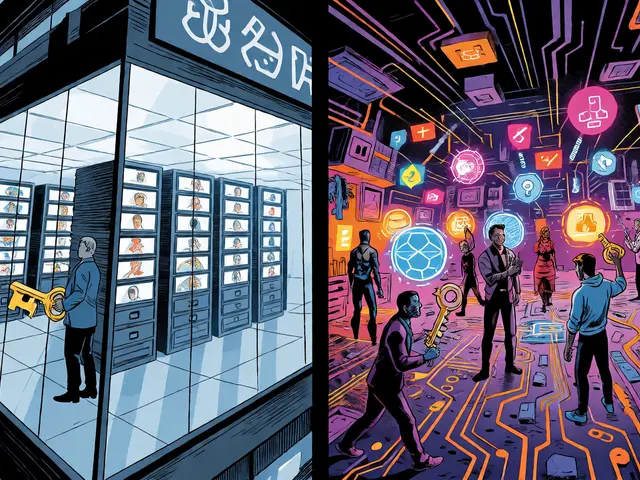
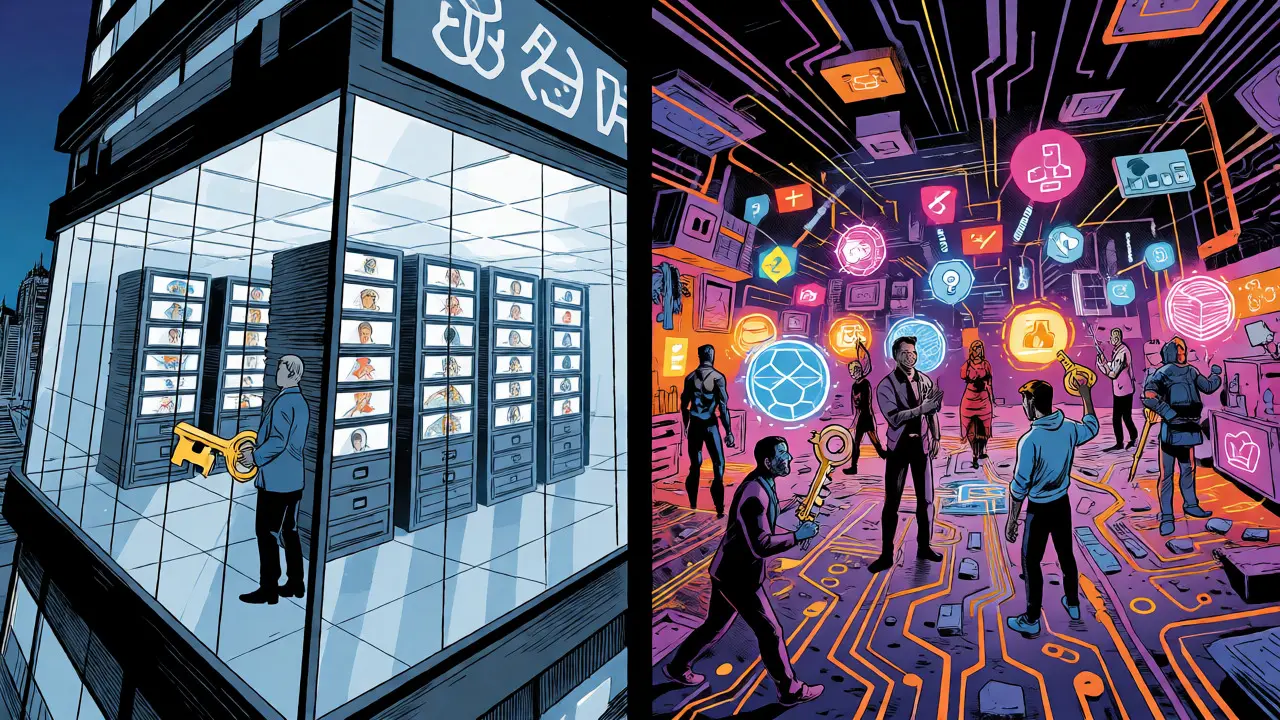
Think of a centralized marketplace like a traditional bank or a mall. There’s a manager, security guards, and clear rules posted on the wall. Platforms like OpenSea (in its current hybrid form) or Coinbase NFT operate on servers owned by one company. They match buyers with sellers, hold your data, and can freeze your account if they spot something suspicious-or if their mood changes. Everything happens off-chain first, then gets settled on the blockchain. It’s fast, it’s easy, and it feels like Amazon for crypto.
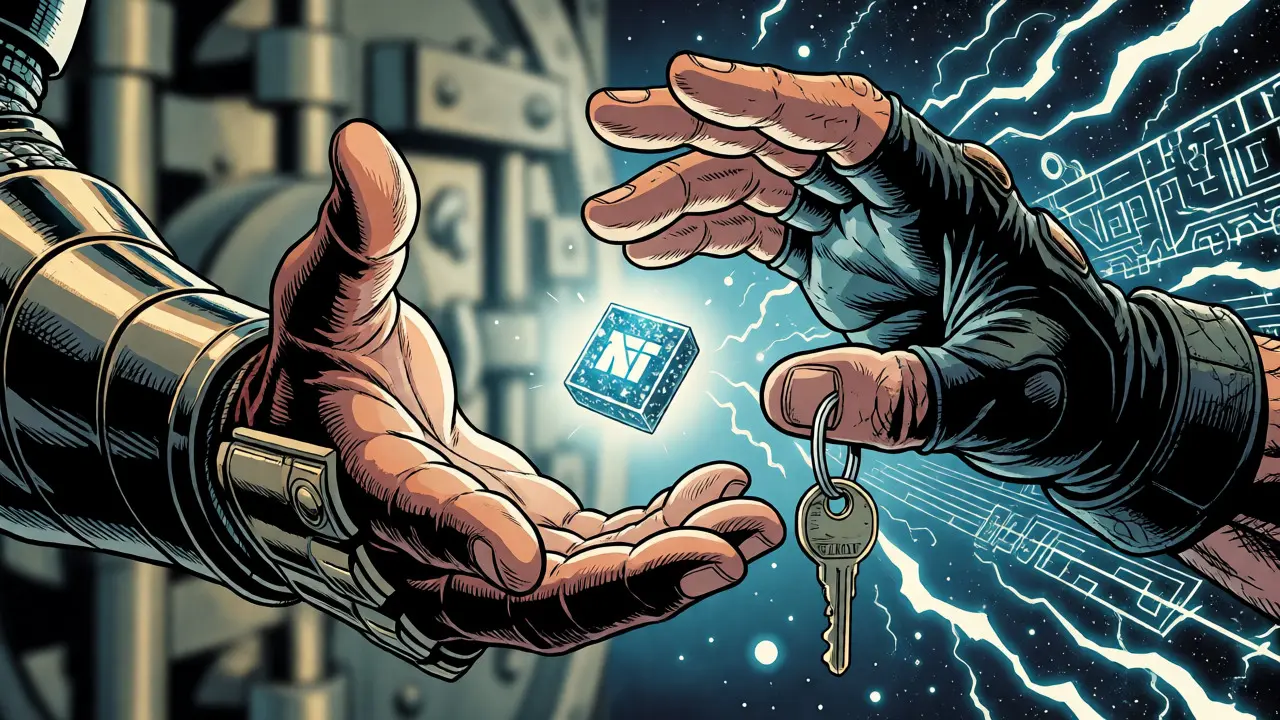
A decentralized marketplace flips the script. Here, there’s no middleman holding your money or your art. The trading logic lives in smart contracts deployed directly on the blockchain. When you trade, you interact directly with these contracts using your own wallet. No company can block your trade because they don’t like your avatar. However, this freedom comes with friction. If you make a mistake, there’s no customer support line to call. You are the bank, the security team, and the IT department all rolled into one.
User Experience: Convenience vs. Control
Let’s be honest: most people hate complexity. Centralized platforms win on user experience hands down. You sign up with an email, maybe link a credit card, and start browsing. The interface is polished, search filters work well, and transaction confirmations feel instant because the platform handles the heavy lifting before touching the blockchain. This is why OpenSea recorded $22.73 billion in sales despite the rise of competitors-people prefer ease.
| Feature | Centralized (e.g., OpenSea) | Decentralized (e.g., LooksRare) |
|---|---|---|
| Custody | Platform often holds assets or keys temporarily | User retains full custody via private key |
| Fees | Higher (0.1% - 2.5%) + Gas | Lower protocol fees + Gas |
| Support | Dedicated customer service teams | Community forums, Discord, self-help |
| Onboarding | Email/Password, Fiat integration | Wallet connection required immediately |
| Risk | Censorship, Account bans | Smart contract bugs, User error |
Decentralized platforms demand more from you. You need to understand what a private key is, how to manage gas fees, and why transactions might sit pending during network congestion. For beginners, this barrier is real. But for power users, this transparency is liberating. You see exactly where every fee goes and verify every transaction on the explorer. There’s no black box hiding how your money moves.
The Hidden Trap: Metadata Centralization
Here’s a dirty secret many newcomers miss: even "decentralized" NFTs often rely on centralized storage. An NFT token on the blockchain is basically a pointer-a URL pointing to the image file. If that URL points to a server run by a single company (like AWS), and that company deletes the file or goes bankrupt, your NFT becomes a broken link. This is known as metadata centralization.
Truly decentralized marketplaces push for solutions like IPFS (InterPlanetary File System) or Arweave, which store data across a distributed network. This ensures your art survives even if individual servers fail. However, not all platforms enforce this. Some still use centralized CDNs for speed and cost savings. Before you buy, check where the metadata lives. If it’s `ipfs://`, you’re safer than if it’s `https://aws.com/...`. This distinction matters more than whether the trading platform itself is decentralized.
Economics: Where Does the Money Go?
Follow the money. In a centralized model, fees go to the corporation. They pay for servers, marketing, salaries, and profit margins. While Coinbase charges around 0.2% for standard trades, NFT marketplaces often take a cut of secondary sales, sometimes up to 2.5%. This revenue stays within the company walls.
Decentralized platforms try to redistribute this value. Fees might go to liquidity providers who enable trading, or they might be burned to reduce supply. Some platforms reward active traders with governance tokens. This aligns incentives: if the platform succeeds, the community benefits directly. But beware-tokenomics can be complex. A high APY (Annual Percentage Yield) on staking rewards doesn’t always mean long-term sustainability. Always look at the total supply inflation rate before jumping in for yield farming.
Security Risks: Different Threats, Same Stakes
Security isn’t binary; it’s about risk distribution. Centralized platforms face concentrated risks. One hack on their database exposes millions of users’ personal data. Regulatory crackdowns can freeze withdrawals overnight. Remember when certain exchanges halted fiat withdrawals due to compliance issues? That’s the downside of having a single point of failure.
Decentralized platforms spread risk across nodes but introduce smart contract vulnerabilities. If the code has a bug, hackers can drain funds instantly. Unlike banks, there’s no insurance fund to bail you out. You must audit the contract yourself or trust third-party auditors like CertiK. Also, phishing attacks are rampant in DeFi. Because you sign every transaction manually, scammers trick you into approving malicious contracts. One click, and your wallet is drained. Vigilance is your primary defense.
Which Should You Choose?
If you’re new to crypto, value convenience, and want to dip your toes in without managing private keys daily, stick with centralized options. They offer fiat on-ramps, meaning you can buy with a credit card without converting crypto first. The learning curve is shallow, and if something breaks, someone will fix it.
If you’re a developer, a privacy advocate, or someone who believes in "not your keys, not your coins," go decentralized. You’ll pay higher upfront effort for greater autonomy. You avoid censorship, keep your financial history private, and participate directly in the ecosystem’s growth. Hybrid models are emerging too, where platforms offer a centralized front-end with decentralized settlement. These aim to bridge the gap, offering the best of both worlds.
Frequently Asked Questions
Can I move my NFT from a centralized to a decentralized marketplace?
Yes, provided you have custody of your private key. If the NFT is stored in your connected wallet (like MetaMask), you can list it on any marketplace that supports the same blockchain. If the platform custodies the asset, you must withdraw it to your own wallet first.
Are decentralized marketplaces cheaper?
Generally, yes, regarding platform fees. Decentralized protocols often charge lower percentage fees since they lack corporate overhead. However, you still pay network gas fees, which can spike during congestion, potentially offsetting savings on small transactions.
What happens if a decentralized marketplace shuts down?
Your NFT remains on the blockchain. Since the asset exists independently of the UI, you can access it via other wallets or explorers. However, if the specific smart contract used for listing/trading is deprecated, you may need to relist it on a different platform.
Do I need KYC for decentralized marketplaces?
Typically, no. Most decentralized platforms allow anonymous trading using just a wallet address. However, if you use a fiat on-ramp integrated into the platform, that specific service provider may require identity verification.
Is IPFS storage guaranteed forever?
Not automatically. IPFS relies on nodes pinning your data. If no one pins your content, it can disappear. Services like Pinata or Filecoin provide paid guarantees for persistence. Always check if the project pays for permanent pinning.
Next Steps for Traders
Start small. Try selling a low-value NFT on a decentralized platform to test the workflow. Connect your wallet, approve the transaction, and watch the gas fees. If the process feels intuitive, expand your portfolio there. If it feels clunky, return to centralized hubs until UX improves. Keep an eye on hybrid platforms that integrate Layer 2 scaling solutions like Polygon or Arbitrum, which reduce costs while maintaining decentralization principles.