
Crypto Mining-Friendly Countries Ranking 2025: Top Destinations for Legal, Low-Cost Mining
By 2025, crypto mining isn’t just about having powerful hardware-it’s about choosing the right country. The game has changed since China’s 2021 ban. Today, miners don’t just look for cheap electricity; they need legal clarity, stable banking, and government support. If you’re running a mining operation-or thinking about starting one-your location can mean the difference between profit and shutdown.
United States Leads with Institutional Clarity
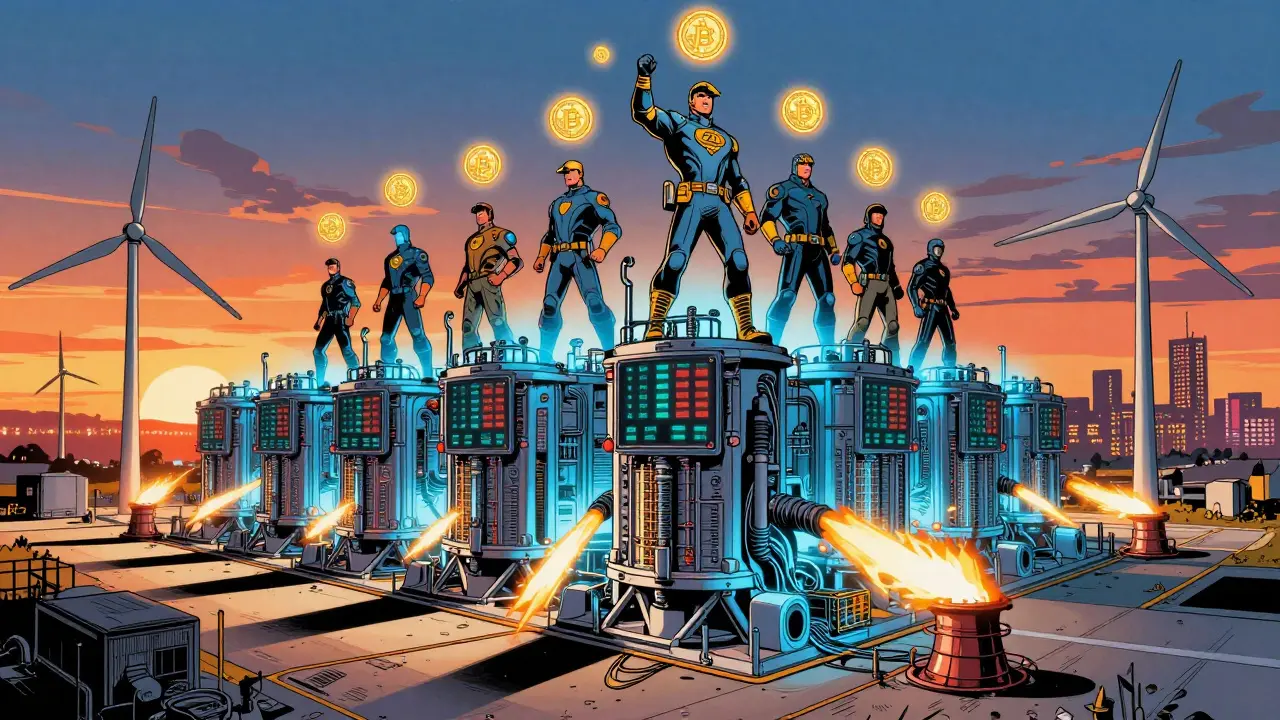
The U.S. is the top destination for crypto mining in 2025, not because it’s the cheapest, but because it’s the safest. Large operators, hedge funds, and public companies now run mining farms in Texas, Georgia, and Pennsylvania. Why? Because the rules are clear. The SEC doesn’t ban mining. The IRS treats it as property, not income-so you pay capital gains only when you sell. Texas offers deregulated power grids where miners can negotiate rates directly with providers, sometimes even getting paid to use excess energy during grid stress.
Major firms like Marathon Digital and Riot Platforms have built data centers powered by wind and natural gas. In 2024, the U.S. accounted for over 35% of the global Bitcoin hash rate. That’s not luck-it’s policy. Banks like JPMorgan and Wells Fargo now offer crypto-friendly accounts to mining companies. No more hiding funds in offshore accounts. This is institutional-grade mining.
Kazakhstan: The Hidden Powerhouse
Kazakhstan jumped from obscurity to the world’s third-largest Bitcoin mining nation in just three years. How? The government didn’t just tolerate mining-they incentivized it. The Astana International Financial Centre offers zero corporate tax for crypto businesses until 2066. Personal crypto gains? No capital gains tax. Electricity? Cheap, thanks to coal and growing renewables.
Over 6% of the global Bitcoin network runs on Kazakh servers. The country even built special mining zones with guaranteed power supply and tax holidays. Unlike China, where operations are underground, Kazakhstan’s mining is open, registered, and monitored. It’s not perfect-power outages still happen-but for operators who want legal scale without Western bureaucracy, it’s a top pick.
El Salvador: The Bold Experiment
El Salvador made headlines in 2021 by making Bitcoin legal tender. In 2025, it’s still the only country that does. But here’s the catch: mining isn’t just allowed-it’s encouraged. No capital gains tax on crypto profits. The government even built a geothermal-powered mining park near the Conchagua volcano, using heat from the earth to run rigs. They’ve even launched a Bitcoin-backed bond to fund more mining infrastructure.
It’s risky. The economy is small. The banking system is fragile. But if you’re a solo miner or a small team looking for zero taxes and a government that actively promotes crypto, El Salvador is unmatched. Just don’t expect fiber internet in rural areas. Power? Reliable. Connectivity? Not so much.
Switzerland: The Regulatory Gold Standard
If you care about legal certainty, Switzerland is the gold standard. The Swiss Financial Market Supervisory Authority (FINMA) has spent a decade building clear rules for crypto. Mining isn’t regulated as a financial activity-it’s treated as industrial use. That means no licensing headaches. Banks like UBS and Credit Suisse now offer accounts to crypto firms. Zurich and Zug (nicknamed “Crypto Valley”) host dozens of mining operations, from small farms to enterprise-scale setups.
Energy isn’t the cheapest in Europe, but it’s 90% renewable. Swiss miners use hydro and nuclear power, making their operations carbon-neutral. For institutional investors, this is the cleanest, most stable environment on the planet. If you want to attract venture capital or go public, Switzerland is your launchpad.
Georgia: Low Taxes, Low Costs
Georgia doesn’t have the scale of the U.S. or Kazakhstan, but it has something rarer: simplicity. No income tax on crypto mining profits. No VAT on hardware imports. No reporting requirements for personal holdings. Electricity costs as low as $0.03 per kWh in some regions. The government doesn’t just allow mining-they actively recruit miners with visa programs and tech incubators.
Most operations are small to mid-sized, run by individuals or European teams looking to escape high taxes at home. The country’s stable political environment and low corruption index make it a quiet favorite. You won’t find Bitcoin ETFs here, but you’ll find clean, legal, tax-free mining that’s easy to set up in under 30 days.
Hong Kong: The Institutional Gateway
Hong Kong’s crypto scene exploded in 2024 after the Securities and Futures Commission launched a licensing regime for virtual asset service providers. That sounds strict-but it’s actually a win for miners. Why? Because now banks are willing to work with them. HSBC, Standard Chartered, and even Goldman Sachs’ Asia arm now offer crypto-friendly banking.
Hong Kong has no capital gains tax on crypto. Bitcoin and Ethereum ETFs trade openly. Miners can legally convert profits into fiat and move them internationally without red tape. The city’s power grid is expensive, but its role as a financial hub makes it ideal for miners who need to move capital fast. It’s not for backyard rigs-it’s for operators who need liquidity, legitimacy, and access to global markets.
Canada: The Energy Giant with a Split Personality
Canada has more hydropower than any country outside China. Quebec and British Columbia have surplus energy-some of the cheapest in the world. That’s why over 10% of global Bitcoin mining happens here. But here’s the catch: it’s a patchwork. Ontario bans mining. Alberta welcomes it. Quebec has tax credits for green mining. British Columbia requires environmental reviews.
Canada also leads in crypto ETFs-more than six are trading on the TSX. The federal government hasn’t banned mining, but it hasn’t standardized rules either. If you’re a large operator, you’ll pick a province and build there. If you’re a solo miner, you risk getting shut down if you move across borders. It’s a country of opportunity-but only if you know where to land.
Why China Still Matters (Even Though It’s Banned)
China officially banned crypto mining in 2021. But the hardware is still there. The expertise is still there. And the electricity? Still cheap. Underground mines still run in Sichuan, Yunnan, and Inner Mongolia, especially during rainy season when hydropower floods the grid. These aren’t small operations-they’re industrial-scale, often run by former Chinese mining giants like Bitmain.
They’re risky. Authorities raid farms. Power gets cut. But the margins are still high enough to justify the danger. For most operators, China is a fallback, not a plan. But if you’re looking at global hash rate distribution, China still accounts for 12-15% of mining activity. It’s ghost mining-hidden, illegal, but real.
What Makes a Country Truly Mining-Friendly?
It’s not just about low electricity. It’s about five things:
- Regulatory clarity-Do you need a license? Is mining even legal? In some places, it’s a gray zone. In others, it’s written into law.
- Tax treatment-Is there capital gains tax on mined Bitcoin? In Georgia? No. In Germany? Up to 45%. That changes your profit margin overnight.
- Banking access-Can you open a business account? Can you cash out without triggering AML flags? In Switzerland? Yes. In Brazil? Not easily.
- Energy sustainability-Are you using coal? Or geothermal? The EU is pushing carbon reporting. Mining with dirty power could be banned soon.
- Infrastructure-Reliable power? Fast internet? Cooling? In Iceland, the cold air does the cooling for free. In Dubai? You need air conditioning-and that eats into profits.
Most miners focus on electricity cost alone. That’s a mistake. A $0.04/kWh rate means nothing if your bank freezes your account or the government shuts you down next month.
What’s Next for Crypto Mining in 2025?
The trend is clear: mining is becoming institutional. Solo miners with home rigs are fading. The future belongs to companies that can prove they’re legal, transparent, and sustainable. Countries that offer all five pillars-regulation, taxes, banking, energy, and infrastructure-are winning. Those clinging to bans or ambiguity are losing hash rate, investment, and jobs.
Look at Norway. It has cheap hydropower and cold weather. But the government is debating whether mining uses too much energy. Uncertainty kills investment. Meanwhile, Estonia and Portugal are quietly building crypto-friendly zones with tax breaks and fast visas. They’re the next battlegrounds.
For miners in 2025, location isn’t just geography-it’s strategy. Pick a country that doesn’t just let you mine-but supports you as a business.
Is crypto mining legal in the United States?
Yes, crypto mining is legal in the U.S. at the federal level. Individual states regulate it differently-Texas and Georgia are pro-mining, while New York and Vermont have imposed restrictions. However, there’s no nationwide ban. The IRS treats mined cryptocurrency as property, and miners must report income based on fair market value at the time of receipt.
Which country has the cheapest electricity for crypto mining?
Georgia and Kazakhstan offer some of the lowest electricity rates for miners, often under $0.03 per kWh. In Georgia, hydropower and low demand keep prices down. In Kazakhstan, coal and state subsidies drive costs below $0.04/kWh. While China and Iran have historically had cheaper power, their regulatory risks make them impractical for most legal operators.
Do I pay taxes on crypto mining profits?
It depends on the country. In Georgia, El Salvador, and Hong Kong, there is no capital gains tax on mined cryptocurrency. In the U.S., you pay income tax on the value of Bitcoin when mined, then capital gains when you sell. In Germany, you pay up to 45% if you sell within a year. Always check local tax laws-some countries treat mining as a business, others as personal income.
Can I mine crypto in Canada legally?
Yes, but it varies by province. Quebec and British Columbia actively encourage mining with low hydropower rates and tax incentives. Ontario has banned commercial mining. Alberta allows it with few restrictions. Federal law doesn’t prohibit mining, but local regulations can shut you down. Always confirm rules with your provincial government before setting up equipment.
Why is Switzerland considered the most crypto-friendly country?
Switzerland’s Financial Market Supervisory Authority (FINMA) created clear, business-friendly rules for crypto operations. Mining isn’t classified as a financial service, so no special licenses are needed. Banks accept crypto firms, taxes are low, and over 90% of electricity comes from renewable sources. Zurich and Zug are home to dozens of crypto companies, making it the most stable, transparent, and institutional-ready environment for mining in the world.
Is it worth mining crypto in Iceland today?
Iceland still has cheap, renewable geothermal power and a naturally cold climate that reduces cooling costs. However, electricity prices have risen since 2023 due to increased demand and export deals. While it’s still viable for small to mid-sized operations, large-scale miners are moving to Kazakhstan or the U.S. where infrastructure and banking support are stronger. Iceland remains a good option for eco-conscious miners-but not the most profitable anymore.
If you’re serious about mining in 2025, don’t just chase low power bills. Look for countries where the government doesn’t just allow mining-it wants you there. That’s where the real value is.


The US is the only real option. Everything else is just a fantasy. Kazakhstan? Please. They can't even keep the lights on. Switzerland? Too slow. Georgia? Cute. But we're the only country with real infrastructure, real banks, and real power. If you're mining outside the US, you're just gambling with your life savings.
And don't even get me started on El Salvador. That's not mining, that's a TikTok stunt.
We pretend we're building the future, but we're just chasing energy like it's a religious sacrament. The real question isn't where to mine-it's why we're still mining at all. The blockchain was supposed to liberate us from centralized systems. Now we're just outsourcing our greed to governments that offer tax breaks like candy. We're not pioneers. We're corporate serfs with ASICs.
And yet... I still plug in my rig. Because the dream is louder than the logic.
They're lying about the US being safe 😡
SEC is just waiting to pounce. JPMorgan? Please. They're laundering crypto through 'mining' so they can claim it's 'legit'.
They're building these farms to control the hash rate. Next thing you know, the government will mandate which coins you mine. They already own the grid. They own the banks. They OWN YOU. 💀
Ive been mining since 2017 and i know the truth
the us is a trap. the power companies are charging you 2x what they say and then they shut you off during peak hours
and the irs? theyre tracking every satoshi. they already have your wallet addresses from exchanges
you think kazakhstan is bad? try being raided by the feds at 3am because your miner was flagged as 'suspicious activity'
theyre all lying. all of them. even switzerland. the blockchain is dead. its just a big casino now
You guys are overthinking this. If you're passionate about mining, just go for it. Don't wait for permission. Don't wait for the perfect country. Start small. Learn. Adapt. Georgia's $0.03/kWh? That's a golden ticket. Switzerland's stability? That's peace of mind. The US? It's the battlefield. But guess what? Winners don't wait for the perfect conditions-they build them.
You got hardware? You got grit? You got a plan? Then go. Don't let fear write your story. The future belongs to the bold, not the bureaucrats.
Mining is not about location. It is about energy. Energy is not about cost. It is about availability. Availability is not about policy. It is about will.
China banned mining. But the machines still run. Because the will to mine never dies.
I just moved my rig to Georgia and it’s been a game changer. No taxes, no drama, electricity cheaper than my Netflix. I didn’t even need a visa, just a plane ticket and a sense of adventure. People act like you need a law degree to mine but honestly? It’s just plug and pray. And yeah, the wifi’s slow but who cares when your hash rate is up?
Also i think the us is overrated tbh. too much red tape for what you get.
I think people forget that mining is just electricity + hardware. The rest is noise. If you're smart, you go where power is cheap and the cops don't knock. Georgia, Kazakhstan, Canada's QC. Done. No need to overthink it. The government doesn't care if you mine as long as you're not burning down the grid.
And yeah, US is fine but why pay more for the same result?
El salvador mining park? More like a tourist trap with a volcano in the backgroun. I saw a video of some guy mining in a shack with a fan blowing on his ants. And they call that innovation? Lol. And switzerland? Paying 0.10/kwh for 'green' power? I could get that in my basement in ohio for half the price. This whole article is just marketing fluff for rich guys who want to feel like pioneers while sipping espresso in zürich.
The beauty of crypto mining in 2025 lies not in the electricity cost alone, but in the ecosystem of trust that surrounds it. Countries like Georgia and Switzerland do not merely tolerate mining-they elevate it to an act of economic sovereignty. When a nation provides regulatory clarity, banking access, and sustainable energy, it is not just facilitating a business-it is inviting innovation into its DNA. This is not a race for the cheapest kilowatt. It is a selection of civilizations that understand the future is decentralized, transparent, and powered by integrity.
Let the noise of fear and nationalism fade. The real miners are building legacies, not just hash rates.
Wait-so if the US is #1, why are so many miners moving to Kazakhstan? And why is Georgia quietly stealing the show? I get the institutional angle, but if your bank account gets frozen in Texas because you mined 0.5 BTC, what’s the point?
Also, who’s tracking the carbon footprint of all these natural gas farms? Are we just pretending it’s green because the grid is deregulated? 🤔
They all lie. The US? The SEC is waiting to reclassify mining as securities. Switzerland? FINMA is just a velvet glove over an iron fist. Kazakhstan? The government owns 70% of the mining rigs-they’re not your friends, they’re your landlords. And El Salvador? That’s a crypto cult with a volcano.
Real miners? They’re in Sichuan right now, running on flood-season hydropower, hiding under tarps, laughing as the world debates tax codes. The truth isn’t in the rankings. It’s in the shadows.
And the blockchain? It doesn’t care where you mine. It only cares if you’re still running.
I’ve been mining in India for 3 years. No one talks about us. But we’re here. Quiet. Low-key. Running rigs on solar + grid backups. No tax. No paperwork. Just chill. People think you need to be in the US or Switzerland to make it. Nah. You just need to be smart, patient, and not care what the internet says.
Also, I use a fan and a ceiling fan. Cooling works. 💪
The US is #1? LMAO. You think Marathon Digital is some independent miner? They’re a hedge fund with a power contract and a PR team. The real miners are the ones getting raided in China. The ones getting shut down in Canada. The ones running on stolen grid power in Brazil. The US isn’t leading-it’s laundering. They’re taking the dirty money and putting a shiny label on it.
And don’t even get me started on ‘institutional mining’. That’s just Wall Street with ASICs. You think they care about decentralization? They care about IPOs.
Wake up. The game’s rigged. And you’re the chump buying the hype.
I moved to Queensland last year. Power’s cheap, the sun’s relentless, and no one asks questions. I’ve got 120 rigs running off solar + battery. The government doesn’t care as long as I’m not blowing up the grid. And honestly? It’s the most peaceful I’ve ever felt mining. No politics. No banks. Just me, the sun, and the blockchain.
Stop chasing the ‘top countries’. Build your own.
I think the real story here is how fast the landscape is shifting. Five years ago, Iceland was the dream. Now it’s Georgia. Next year? Maybe Estonia or Portugal. The key isn’t finding the perfect country-it’s staying agile. The miners who win aren’t the ones who pick the best spot today. They’re the ones who move before the rules change.
Also-has anyone considered that the next wave might be offshore mining platforms? Think about it. No borders. No taxes. Just open ocean and wind power.